Storm in the Strait of Dover — History & Facts
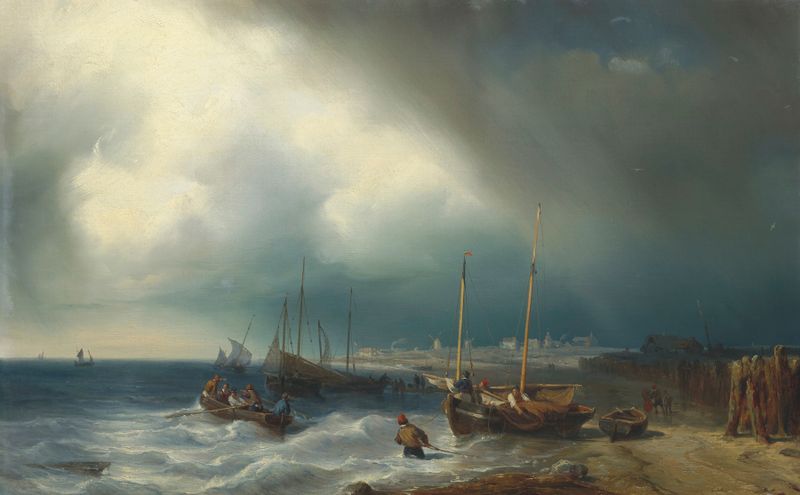
Can beauty exist without sorrow? In Storm in the Strait of Dover, tumultuous waves clash against the fragile boats, capturing the delicate balance between nature's ferocity and human vulnerability. Look to the tumultuous skies, where deep, brooding grays intermingle with flashes of stark white; they set the stage for the tempest. The churning sea draws your gaze immediately, with its violent strokes of blue and green, illustrating a world on the brink of chaos. Notice how the boats, painted with meticulous detail, sway precariously upon the waves, their sails straining against the storm—each nuance of color and brushstroke conveying both motion and emotion, striking a chord of unease and awe. Beneath the surface, the painting speaks to contrasts of innocence and experience.
The sailors, small against the backdrop of nature's wrath, embody a sense of determination that is both brave and heartbreaking. This juxtaposition evokes a poignant reflection on the fragility of human existence amid the vastness of nature. The serene horizon, barely visible through the storm, serves as a haunting reminder of hope in adversity, suggesting that beauty often lies intertwined with sorrow. Created during the mid-19th century, Meijer's work emerged in a time when Romanticism was reshaping artistic perspectives.
The emotional resonance of the natural world was being explored, as artists sought to reconcile beauty with the sublime experiences of their own lives. Meijer, painting in a tumultuous era where humanity faced social and environmental upheaval, captured this spirit, creating a significant piece reflective of both personal and collective struggles.