
Storm on the Ganges, with Mrs. Hastings near the Col-gon Rocks — History & Facts
What if silence could speak through light? The stillness of beauty often whispers louder than chaos, capturing a moment where nature and human presence dance delicately on the edge of turmoil. In this remarkable composition, the eye is immediately drawn to the turbulent waters of the Ganges, swirling with an intensity that conveys the impending storm. Look to the foreground, where Mrs. Hastings stands gracefully, her presence contrasting with the dynamic forces around her.
The careful brushwork details her attire, providing a quiet elegance against the backdrop of swirling foam and darkening skies. The rich, earthy tones of the rocks ground the scene, while flashes of light illuminate the scene, hinting at the beauty that persists even in chaos. Intriguingly, the juxtaposition of man and nature unfolds within the painting. Mrs.
Hastings, seemingly unperturbed by the brewing storm, embodies resilience amid turbulence, suggesting a deeper commentary on the human spirit’s capacity to endure. The interplay of light and shadow accentuates this tension, where beauty exists not only through what is visible but also in the unseen struggles against nature’s might. The rocks, imposing yet still, become silent witnesses to the unfolding drama, inviting contemplation on the relationship between humanity and the elements. William Hodges painted this work during the late 18th century, likely around his travels to India.
At that time, he sought to capture the exotic landscapes and cultures he encountered, reflecting the burgeoning interest in the East among European artists. The balance of beauty and nature's havoc resonates with Hodges' personal quest for artistic identity amid the transformative tides of the Romantic movement.
More Artworks by William Hodges
Browse all →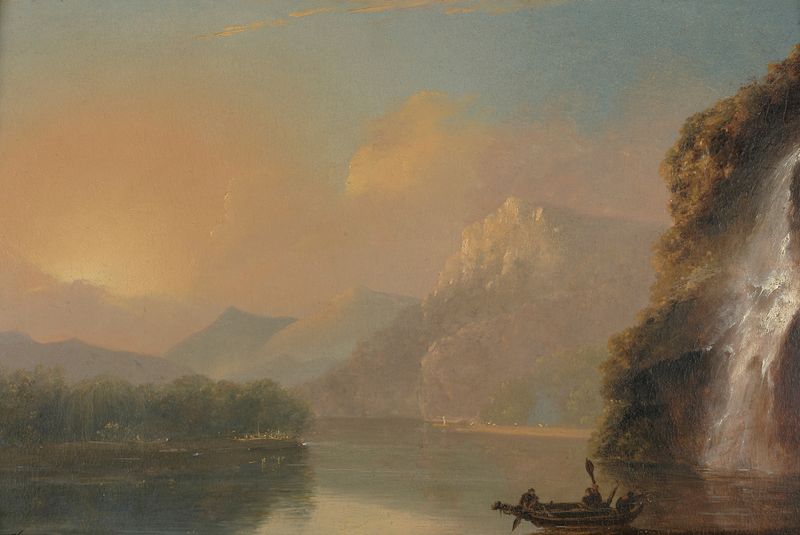
Waterfall in Dusky Bay with Maori canoe
William Hodges
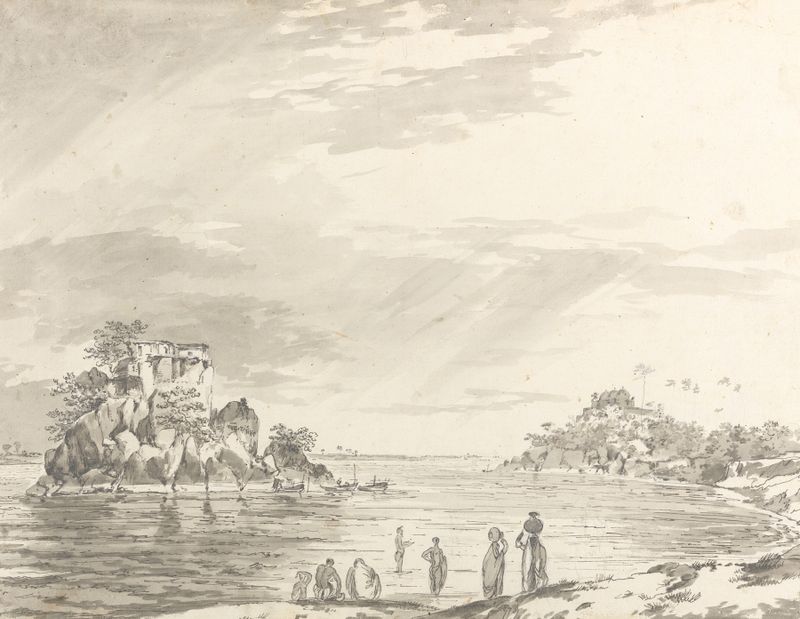
Original Drawings for Choix de Vues de L’Inde and Others Pl.15
William Hodges
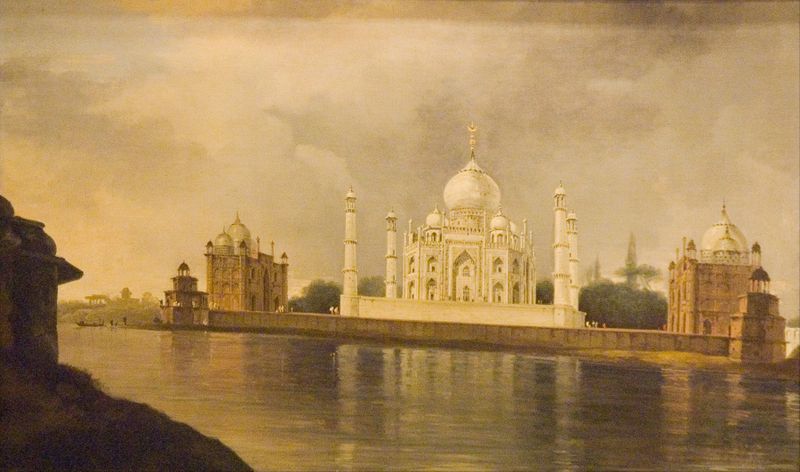
The Taj Mahal
William Hodges
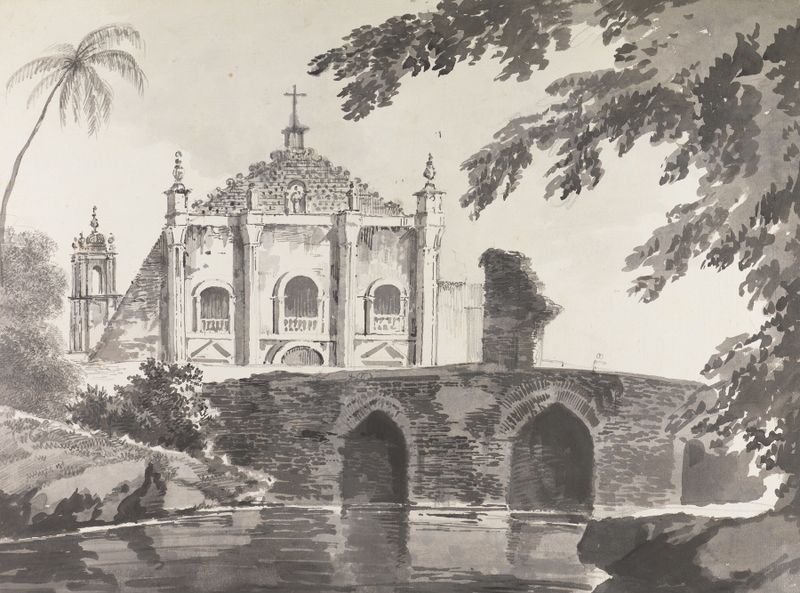
Original Drawings for Choix de Vues de L’Inde and Others Pl.50
William Hodges
Original Drawings for Choix de Vues de L’Inde and Others Pl.34
William Hodges
Original Drawings for Choix de Vues de L’Inde and Others Pl.03
William Hodges
Original Drawings for Choix de Vues de L’Inde and Others Pl.18
William Hodges
Original Drawings for Choix de Vues de L’Inde and Others Pl.10
William Hodges
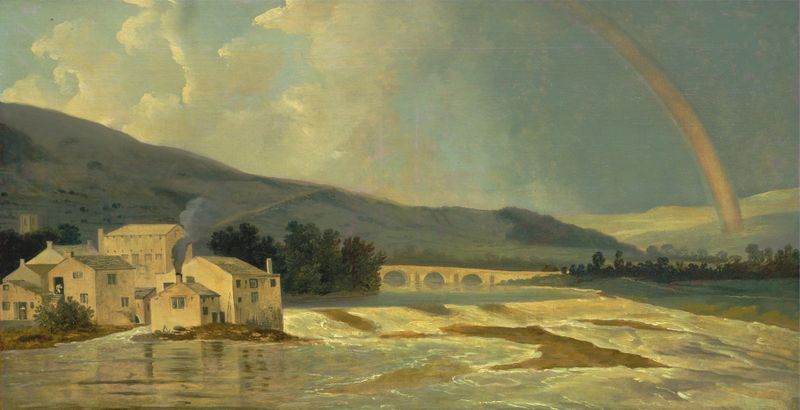
Otley Bridge on the River Wharfe
William Hodges
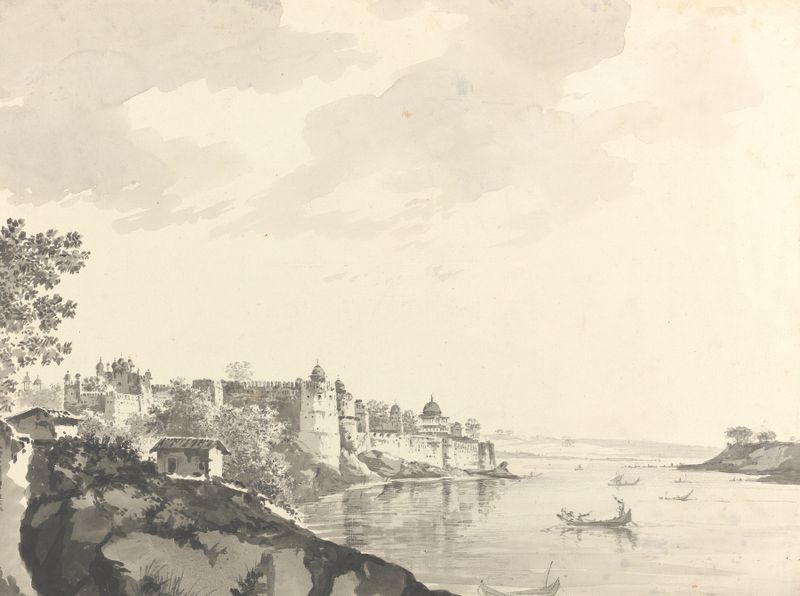
Original Drawings for Choix de Vues de L’Inde and Others Pl.08
William Hodges





