Stormy Sea — History & Facts
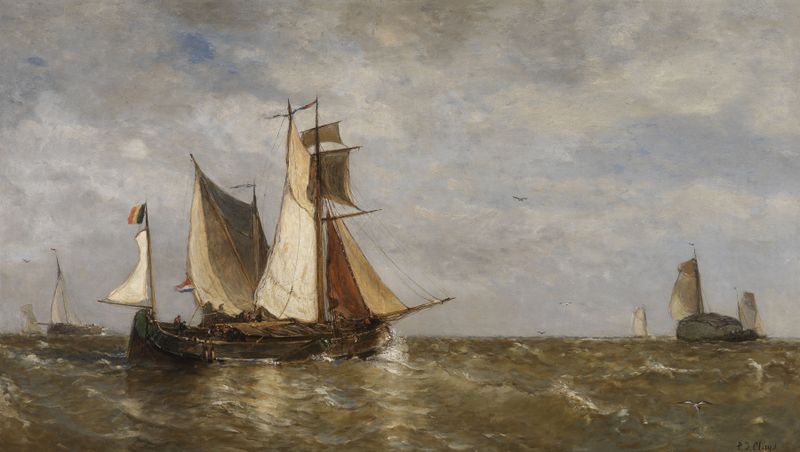
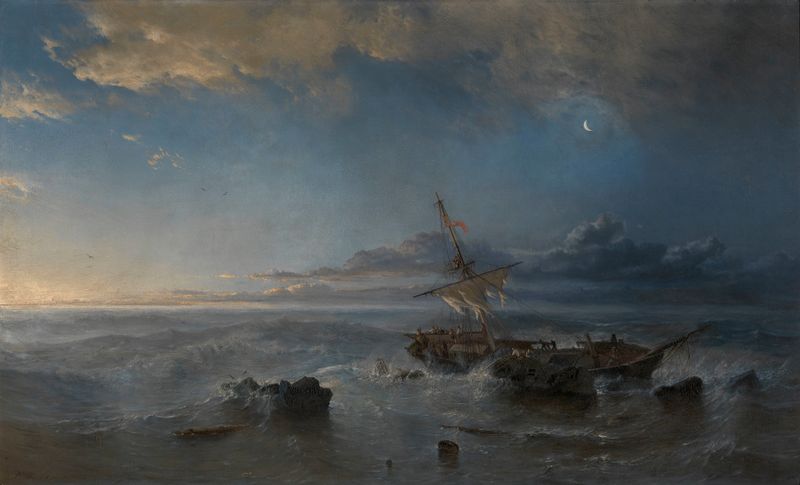
Did the painter know this moment would outlive them? In the swirling chaos of color and emotion, a tempest brews, inviting viewers into a world where desire and turmoil collide. Look to the center of the canvas, where dark blues and greens twist and churn, forming tumultuous waves that seem to pulse with life. Notice how the light, filtered through a veil of storm clouds, casts an eerie glow over the roiling sea, inviting both awe and trepidation. Each brushstroke conveys a sense of movement, as if the waves are reaching out, urging the viewer to feel their force.
The layering of colors not only adds depth but also evokes the raw power of nature, drawing the eye into a hypnotic dance of chaos. Amid the storm, hidden meanings emerge — a longing for calm in the face of nature's wrath, a desire to understand the uncontrollable forces that shape our lives. The stark contrasts between dark and light mirror the emotional tensions between despair and hope. It is a reminder of humanity's relentless pursuit of peace amidst conflict, resonating both with the individual and the collective experience of life’s storms. In 1875, Paul Jean Clay created this striking piece during a period marked by immense change and exploration within the art world.
Living in France, he was influenced by the burgeoning Impressionist movement, yet his own interpretations straddled the line between realism and abstraction. While grappling with personal challenges, he translated turbulent emotions into a visual language that captured the essence of nature’s beauty and ferocity.