The Day after the Shipwreck — History & Facts
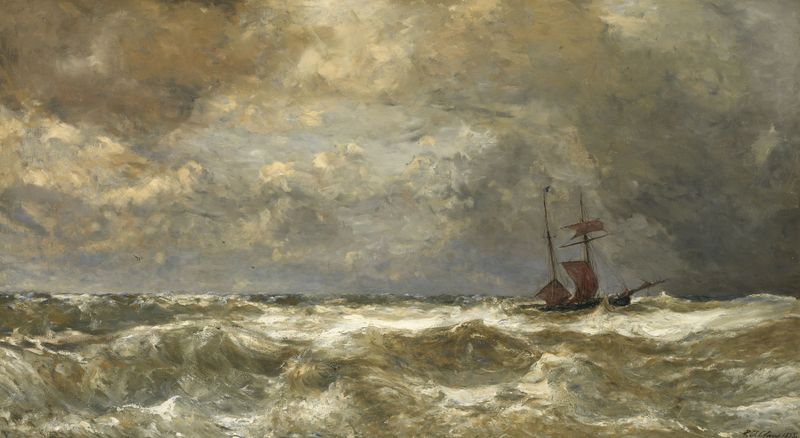
Who listens when art speaks of silence? In The Day after the Shipwreck, fragility is woven into every brushstroke, echoing the quiet aftermath of chaos. Look to the center of the canvas, where the wreckage lies strewn across the shoreline, jagged remnants stark against the softness of the sand. Notice how muted tones dominate, with grays and browns reflecting the somber mood, while hints of azure and seafoam whisper of the ocean’s restless presence just beyond. The composition draws your gaze toward the lonely figure on the shore, their silhouette framed by the expansive, foreboding sky, an embodiment of despair and resilience. Yet, it is not just the shipwreck that conveys emotional weight; the interplay of light and shadow reveals a deeper narrative.
The horizon, cloaked in mist, symbolizes both loss and the hope of new beginnings. The figure, gazing solemnly into the distance, evokes a longing for what has been lost and the uncertainty of what lies ahead. Each wave that crashes against the shore seems a reminder of the relentless passage of time, where fragility and survival collide in haunting silence. In 1853, Paul Jean Clay painted this piece during a period marked by personal strife and the evolving landscape of Romanticism.
Living in a France transitioning into modernity, he sought to capture the tension between nature’s beauty and its ferocity, reflecting both his inner turmoil and the zeitgeist of an era grappling with change. The painting stands not just as a testament to a moment but as an exploration of human vulnerability in the face of nature's indifference.