Street Scene in Munich — History & Facts
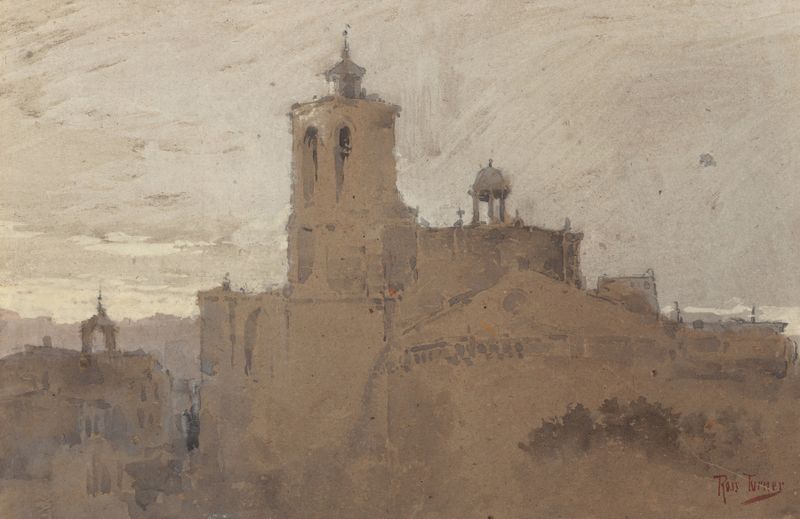
Can beauty exist without sorrow? In Street Scene in Munich, the artist captures a moment saturated with an undercurrent of revolution, hinting at the tension beneath the surface of everyday life. Look to the left at the bustling market stalls, where vendors display their vibrant wares. The rich reds and yellows of produce contrast sharply with the muted tones of the cobblestone street, inviting the viewer into a lively exchange of commerce and community. The figures move with a sense of purpose, their gestures animated by the rhythm of the city.
Notice how the sunlight filters through the trees, casting playful shadows that dance across the scene, emphasizing the fleeting nature of this moment. Yet, amid the vibrancy lies an unease—an unspoken awareness of the broader societal changes beginning to ripple through Europe. The expressions on the faces of passersby reveal an emotional complexity; there is joy, but also a hint of apprehension. The juxtaposition of light and shadow in the composition suggests the coexistence of hope and despair, evoking the duality of progress—a street alive with possibility, yet shadowed by the uncertainties of change. In 1880, Turner was working in Munich, a city at the crossroads of artistic innovation and social upheaval.
The era was marked by a burgeoning spirit of modernity, as the world was witnessing a shift towards industrialization and political reform. This backdrop influenced his palette and themes, as he sought to capture the vitality of urban life while acknowledging the transformative forces at play.