
Stroller at the beach — History & Facts
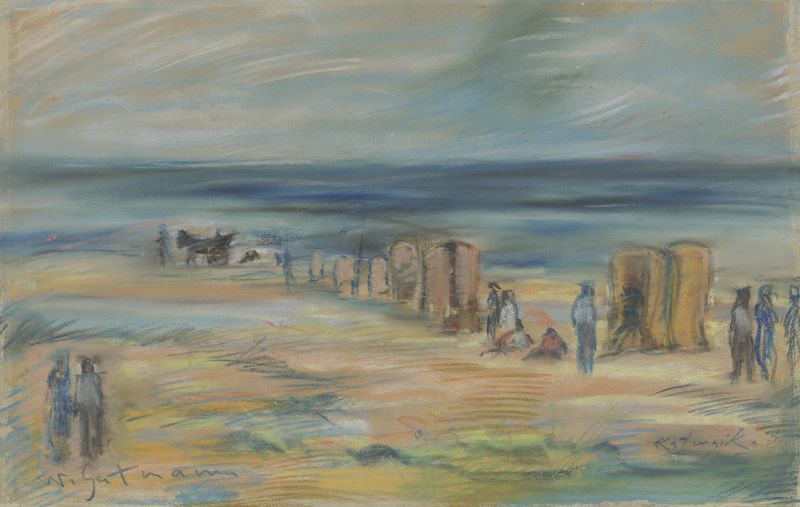
In the realm of art, color holds the power to evoke emotions and memories that linger long after the gaze has shifted. Focus first on the vibrant blues and sandy ochres that beckon from the canvas, drawing you into a sunlit world. The soft, cascading waves and the warm, textured beach create a harmonious interplay, leading your eyes toward the stroller situated at the water’s edge. Notice how the light dances upon the figures, casting gentle shadows that hint at a narrative unfolding in the moment; the mothers, the children, all caught in a serene embrace of nature’s beauty. Within this scene lies a tension between serenity and nostalgia.
The stroller, a symbol of innocence, stands as a bridge between youth and the fleeting nature of time. As the waves roll in and retreat, they evoke the ebb and flow of life—joys and sorrows intertwined. The way the figures are positioned suggests a protective circle, emphasizing both connection and the inevitable passage towards independence. In 1908, Wilhelm Gutmann painted this piece during a time marked by burgeoning modernity and the rise of impressionism.
Living in the throes of a rapidly changing world, he sought to capture the intimacy of everyday life infused with a touch of color that resonates with memory. As society began to embrace new ideas and perspectives, Gutmann's work reflects an awareness of the delicate balance between the present moment and the nostalgia that colors our experiences.
More Artworks by Wilhelm Gutmann
Browse all →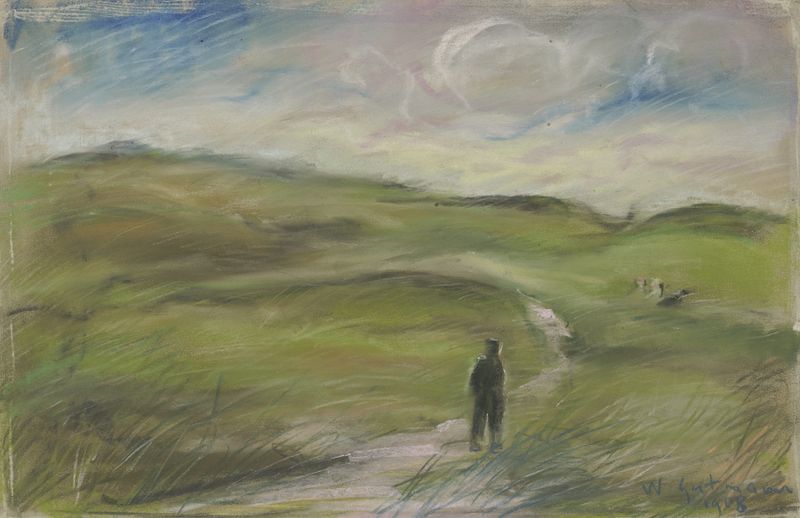
Dunes in the Netherlands
Wilhelm Gutmann

Beach chairs
Wilhelm Gutmann

Village street with cart
Wilhelm Gutmann
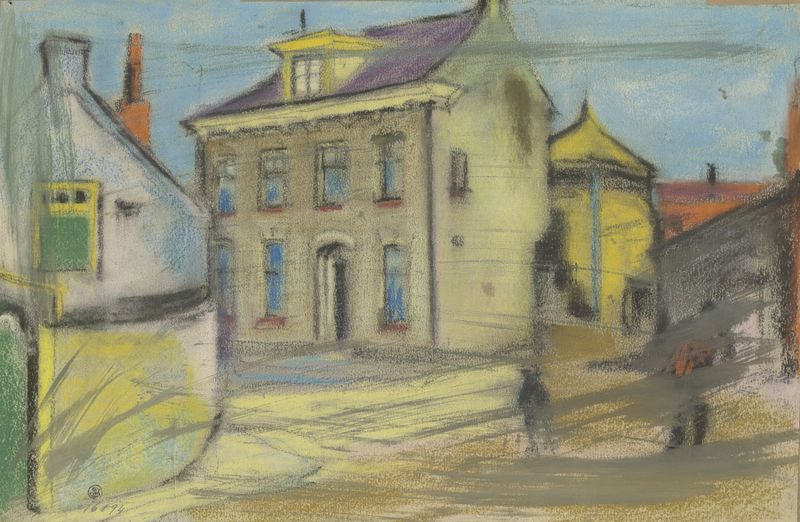
Straßenzug einer holländischen Stadt
Wilhelm Gutmann
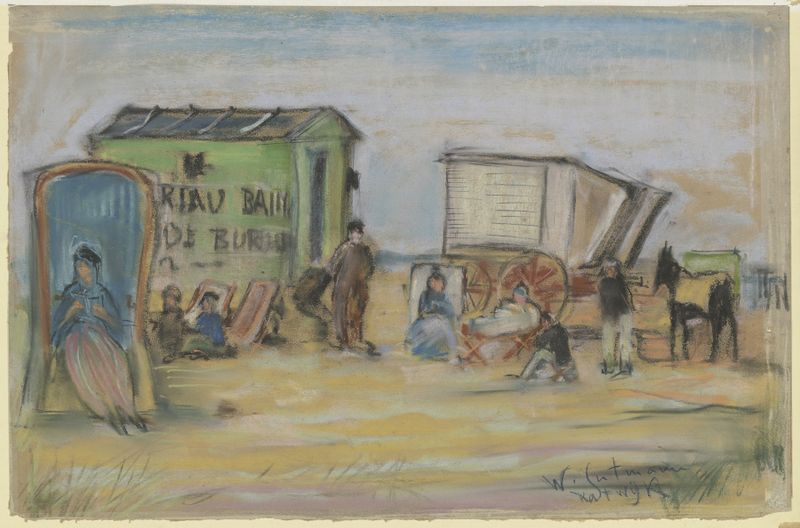
Badekarren in Katwijk
Wilhelm Gutmann

Bathing machine in Katwijk
Wilhelm Gutmann

Holländischer Bauernhof mit Wasserträgerin
Wilhelm Gutmann
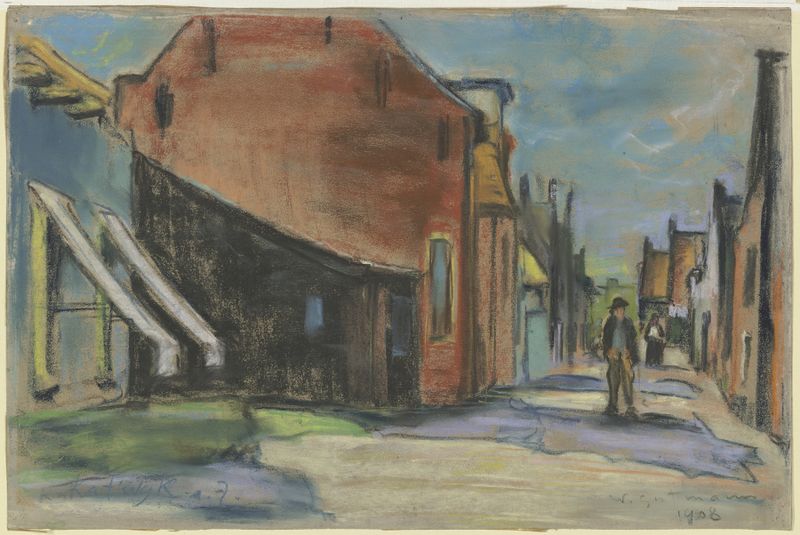
Street in Katwijk
Wilhelm Gutmann
Beach in Katwijk
Wilhelm Gutmann

Hof in Katwijk mit einer Frau
Wilhelm Gutmann





