
Village street with cart — History & Facts
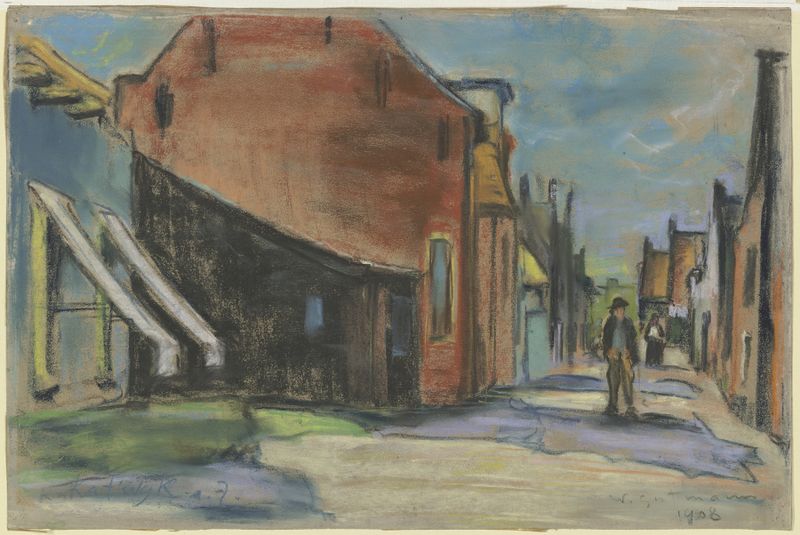
Can paint confess what words never could? In Village Street with Cart, the essence of time is distilled into a single moment, where whispers of history linger in every brushstroke. Look to the left at the sun-drenched cobblestones, their textured surfaces inviting you to step into the scene. Notice how the warm ochres and muted blues intermingle, creating a blend that speaks of both serenity and the passage of time. The cart, prominently placed, draws the eye with its rugged wooden wheels—a testament to labor and life in the village.
Its weathered surface hints at stories untold, while the distant houses frame the scene, their soft edges merging with the horizon and inviting contemplation of a simpler existence. The silent figures that inhabit this work evoke a melancholic nostalgia. Their gestures are subtle yet resonant, suggesting an unspoken bond with the land and one another. The interplay of light and shadow further accentuates the scene’s emotional depth, capturing fleeting moments of connection as well as isolation.
Each detail, from the fluttering leaves overhead to the gentle curve of the road, seems to embody the weight of time, reminding us of the transient nature of existence. Wilhelm Gutmann painted this piece in 1908, a period marked by significant social and artistic change. Based in Germany, he was deeply influenced by the burgeoning Impressionist movement, which sought to capture light and atmosphere. At this time, Gutmann was exploring the intersection of modernity and tradition, reflecting a world on the brink of transformation, where the familiar rhythms of village life were beginning to yield to the encroaching influences of urbanization.
More Artworks by Wilhelm Gutmann
Browse all →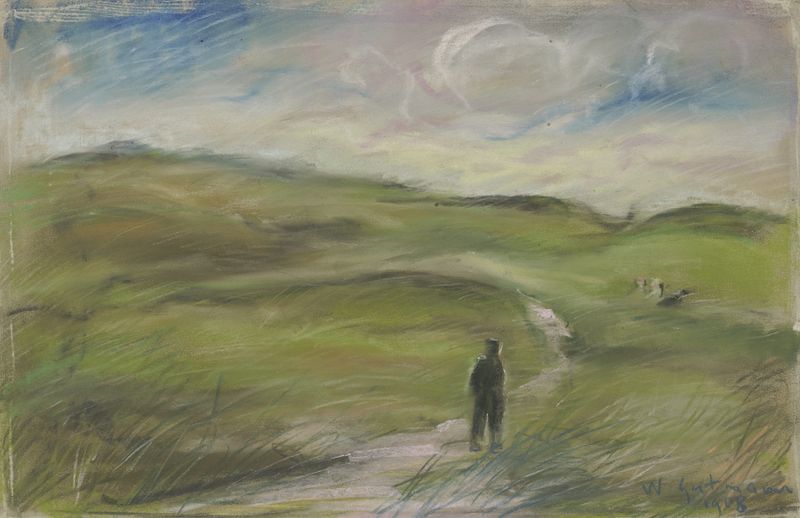
Dunes in the Netherlands
Wilhelm Gutmann
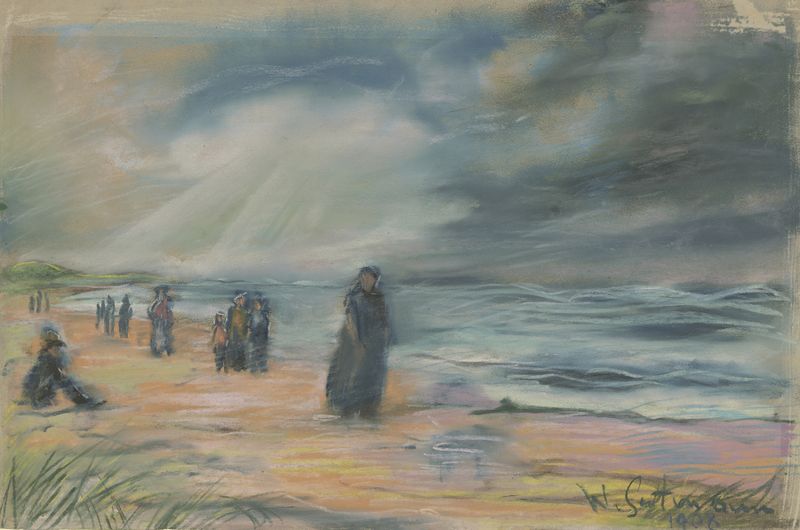
Stroller at the beach
Wilhelm Gutmann

Beach chairs
Wilhelm Gutmann
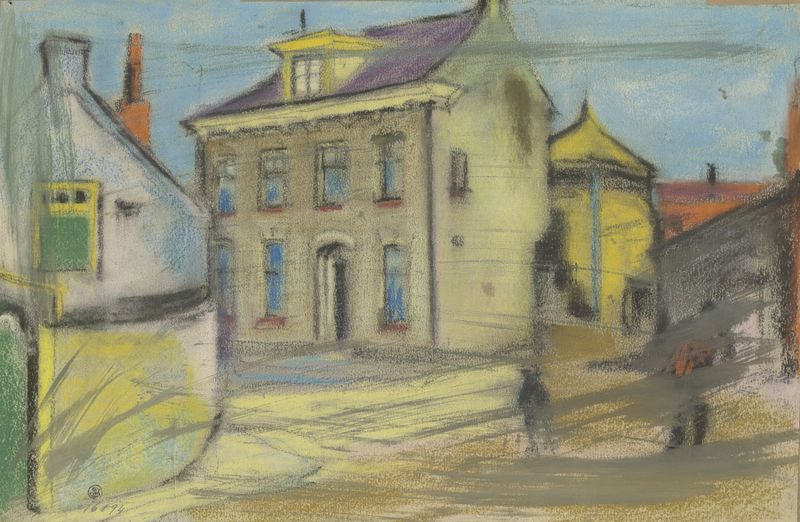
Straßenzug einer holländischen Stadt
Wilhelm Gutmann
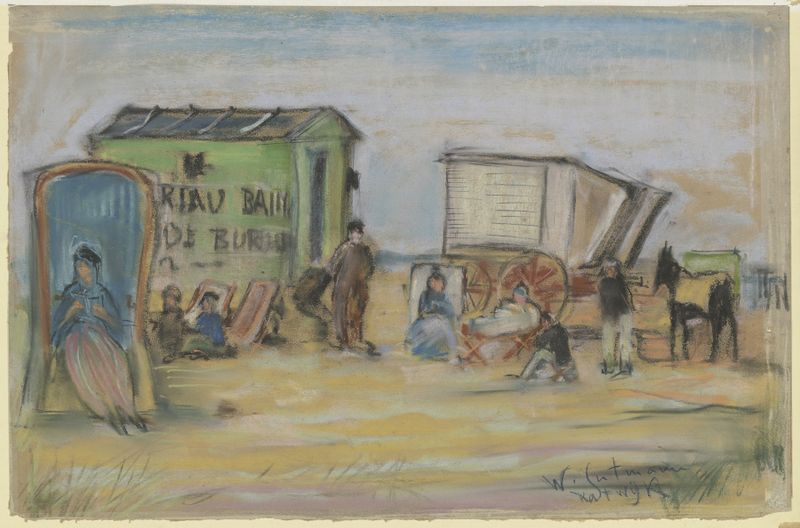
Badekarren in Katwijk
Wilhelm Gutmann

Bathing machine in Katwijk
Wilhelm Gutmann

Holländischer Bauernhof mit Wasserträgerin
Wilhelm Gutmann
Street in Katwijk
Wilhelm Gutmann
Beach in Katwijk
Wilhelm Gutmann

Hof in Katwijk mit einer Frau
Wilhelm Gutmann





