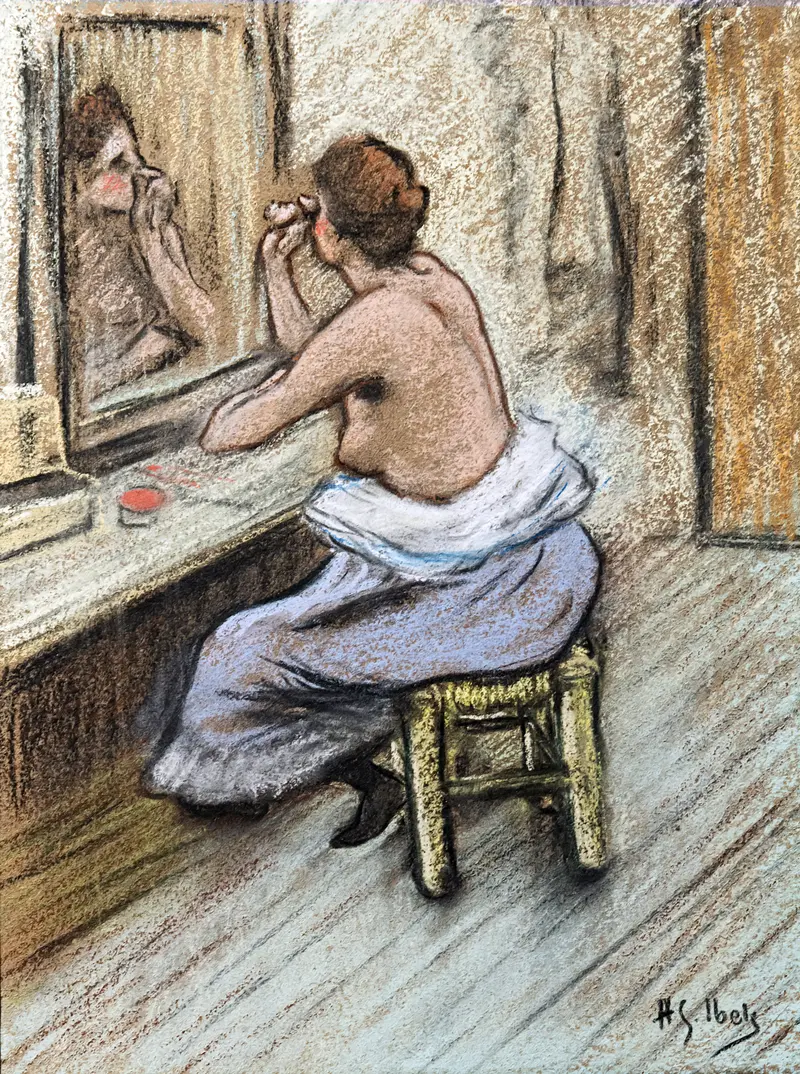
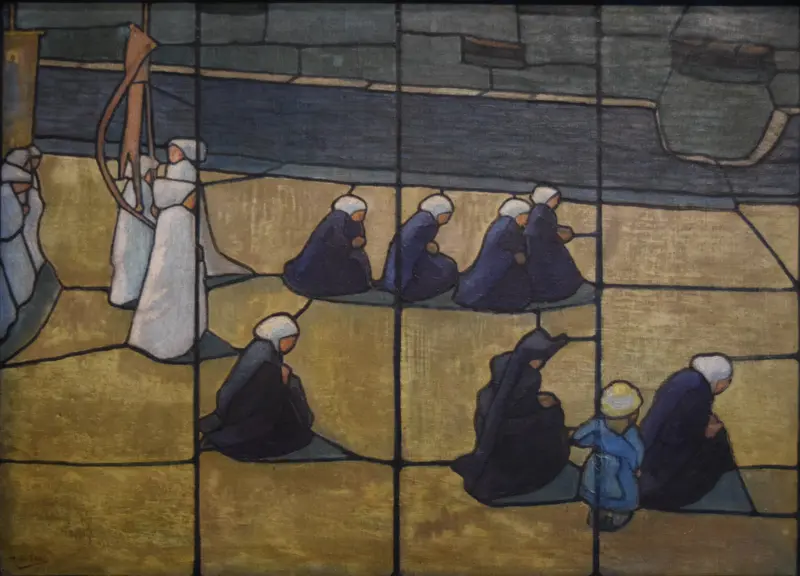
Study for La Cosmopolita, score page. — History & Facts
A page of music, but not as any composer would recognize it: here, the score becomes a stage for caricature, wit, and the restless energy of late nineteenth-century Paris. The eye is drawn at once to the bold, looping lines that stand in for musical notation, but quickly, figures emerge—dapper men and women, perhaps cosmopolitans themselves, their silhouettes animated as if caught mid-conversation or performance. The page is alive with movement and personality, each flourish of ink suggesting both melody and character, as if the music and the people who play it are inseparable.
The artist’s hand is unmistakably playful, the forms exaggerated, the mood bustling and urbane. Light and shadow are rendered with a few swift strokes, giving the whole scene a theatrical immediacy, as if the curtain has just gone up. Works like this—hybrids of illustration, satire, and musical homage—were the currency of fin de siècle Paris, where artists such as Henri-Gabriel Ibels moved easily between the worlds of cabaret, poster art, and the illustrated press. At the time, the boundaries between high and low art were dissolving; artists collaborated with composers, writers, and performers to capture the pulse of modern life.
The score page, once a symbol of order and tradition, here becomes a playground for modernity, its lines bending to the artist’s will. This particular study, photographed on 4 August 2021 and held in a private collection, is an example of the kind of ephemeral art that often escapes the notice of grand museums but shaped the visual language of its time. To look at it is to glimpse the spirit of a city and an era, alive in every line.