
Sunset In The Mediterranean From An Orient Steamer — History & Facts
What secret hides in the quiet of the canvas? Beneath the swirling colors and delicate brushstrokes lies a fragile moment, a whisper of time suspended between day and night. Look to the horizon, where vibrant oranges and soft pinks spill into deep blues, merging sky and sea in an embrace of intimacy. Notice how the steamer, positioned slightly off-center, seems to float upon this vivid expanse, its silhouette blending with the vastness. The gentle ripples of the water reflect the hues above, creating a sense of harmony and fluidity — a seamless union of nature and manmade beauty that invites contemplation. Yet, it’s the fragility of this scene that captivates deeply.
The ephemeral quality of the sunset hints at life's fleeting moments, while the solitary steamer evokes feelings of solitude and reflection. Subtle brushwork captures the wind's caress, and faint glimmers on the water suggest a longing for connection, both to the world and within oneself. Here, the interplay of light and shadow not only depicts a scene but also evokes a profound emotional landscape. In 1908, the artist created this work during a period of artistic exploration and personal introspection.
At the time, Goodwin was navigating a changing world, influenced by the vibrant colors of Impressionism while honing his unique style. As he painted from his vantage point on the steamer, he was likely reflecting on his own experiences, capturing not just a sunset, but a moment that resonates with the fragility of existence itself.
More Artworks by Albert Goodwin
Browse all →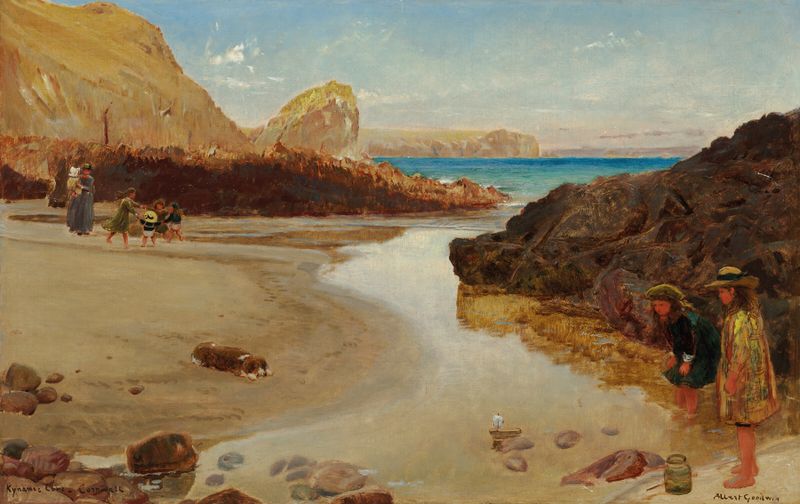
Kynance Cove, Cornwall
Albert Goodwin

Evening, St Hilda’s Abbey, Whitby, Yorkshire
Albert Goodwin

Sunset, Venice
Albert Goodwin
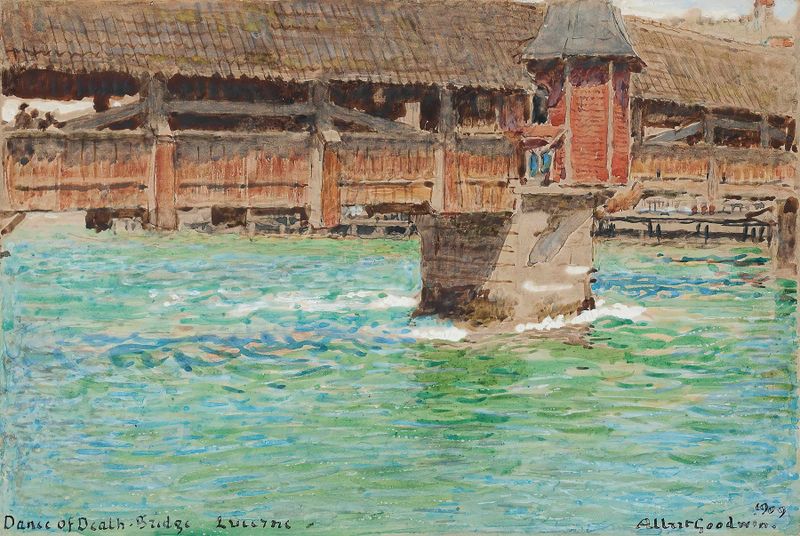
Dance Of Death Bridge, Lucerne
Albert Goodwin
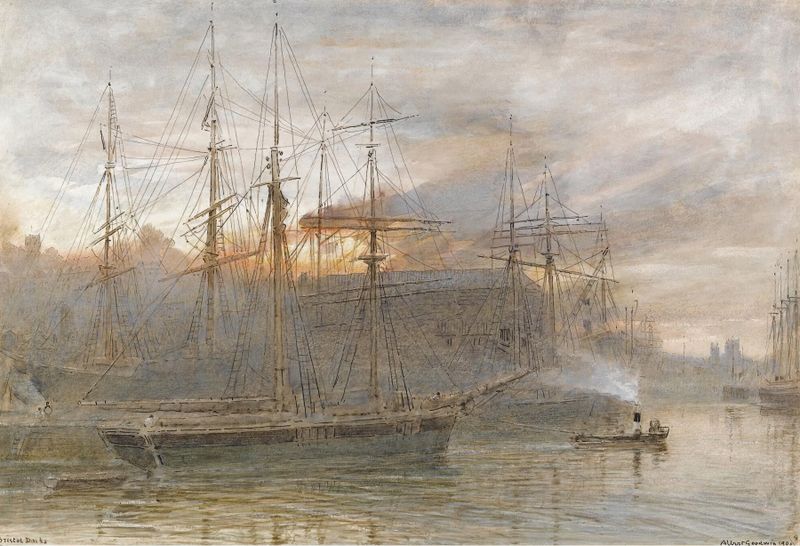
Bristol docks
Albert Goodwin

A view over Lake Lucerne
Albert Goodwin

Rockstone, Demerara, Guyana
Albert Goodwin

Autumn at Braunston, North Devon
Albert Goodwin

Night – faithful unto death
Albert Goodwin

Cabbage palms, Demerara, Guyana
Albert Goodwin





