Tal mit Bergbach — History & Facts
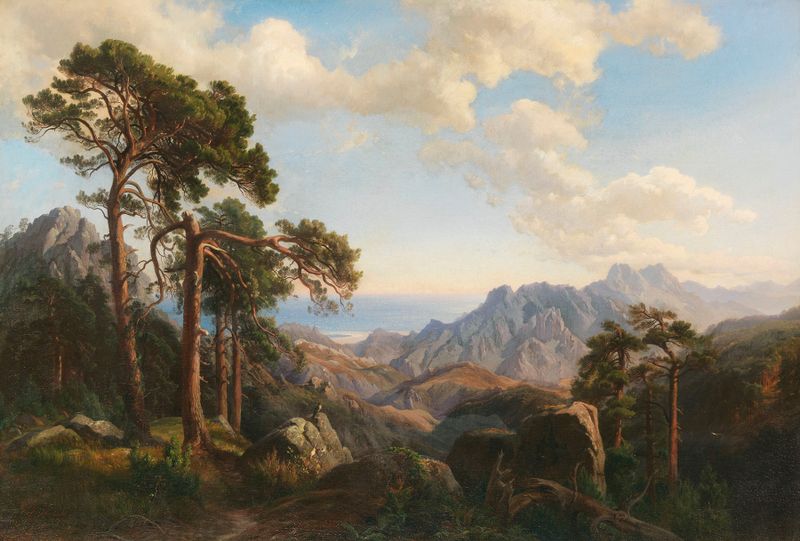
Did the painter know this moment would outlive them? In the stillness of a quiet valley, the soft rush of a brook whispers secrets of serenity, capturing the essence of an eternal pause in time. Focus first on the gentle meandering of the stream, which glimmers under an unseen light, beckoning the viewer to trace its path through the lush, vibrant greens of the surrounding foliage. The delicate brushwork evokes a sense of softness, while deeper hues invite contemplation. The composition draws the eye horizontally, creating an expansive feel that mimics the vastness of the natural world, contrasting the intricacy of nature's details with a profound sense of emptiness. Symbolism abounds in the interplay between light and shadow, where the shadows cast by the trees suggest a fleeting moment, hinting at transience amidst the stability of the landscape.
The brightness of the water’s surface contrasts with the darker recesses of the underbrush, representing the duality of visibility and obscurity. This tension between elements invites the viewer to reflect on the fleeting nature of existence, even within the calm embrace of the valley. Completed in 1860, the work emerged during a time of personal struggle for Hummel, who had returned to his native Germany after years of traveling through Europe. The Romantic movement was in full swing, prompting artists like him to celebrate nature while confronting the complexities of human emotion and existence.
This painting serves as a testament to his introspection and the universal themes that resonate through the ages.