Italienische Gebirgslandschaft — History & Facts
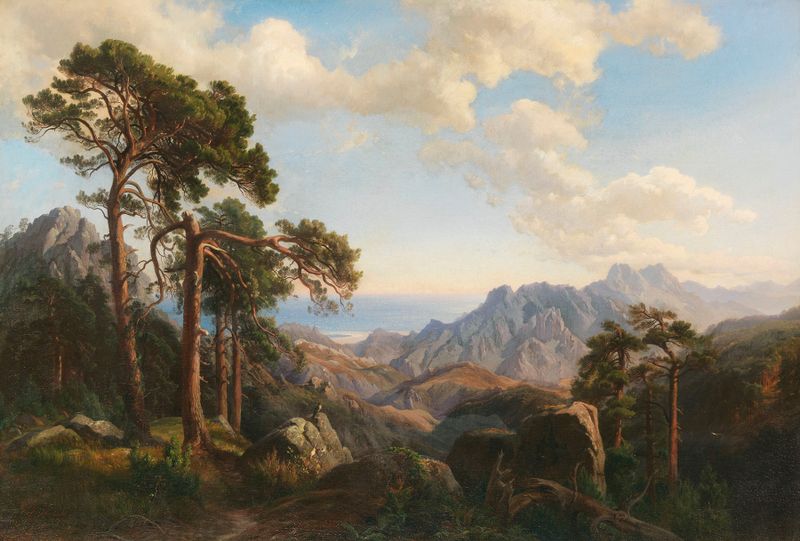
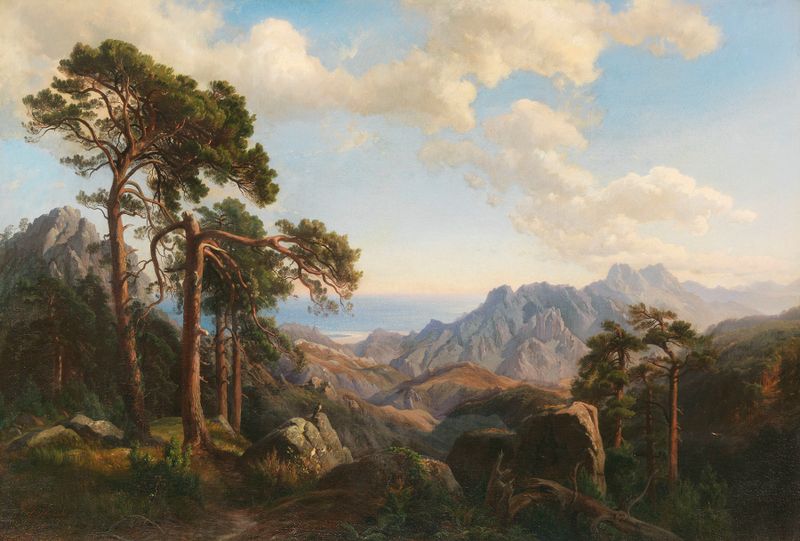
In the delicate interplay between dreams and reality, landscapes become the whispers of our innermost desires, inviting us to wander through their serene expanse. Look to the soft curves of the mountains where the emerald greens and muted blues blend seamlessly to create a tranquil vista. Notice how the light dances across the peaks, illuminating their rugged surfaces while casting gentle shadows in the valleys below. The painter's deft use of texture in the foreground draws you in, inviting your gaze to traverse the undulating terrain and find solace in the harmony of nature. As you delve deeper into the painting, you may uncover the emotional tensions that reside within this idyllic scene.
The juxtaposition of the vibrant, lively hues against the more somber, earth-toned shadows suggests an internal struggle between the splendor of the landscape and the weight of solitude. Hummel captures the ephemeral quality of dreams, hinting at fleeting moments of inspiration, while the distant mountains symbolize aspirations that remain just out of reach. During the period Hummel created this work, likely in the early 19th century, the Romantic movement was flourishing, emphasizing emotion and the sublime beauty of nature. As an artist active in Germany, he immersed himself in the landscapes that surrounded him, reflecting a longing for a deeper connection to the natural world.
In a time when industrialization was rising, his art offered a refuge, portraying the untouched beauty that many feared was fading away.