
Temple of Theseus, Athens — History & Facts
Could beauty survive in a century of chaos? The question hangs like a shadow over the silent ruins, where the Temple of Theseus stands, an eternal reminder of lost grandeur. Look to the left at the meticulously rendered columns, their ancient stonework alive with the echoes of time. Notice how the play of light and shadow dances across the surface, creating depth that draws the eye deeper into the structure's crumbling facades. The artist's careful brushstrokes depict rich earth tones, accentuating the solemn tranquility that envelops the scene, while the surrounding foliage hints at nature's slow reclamation of human endeavor. Deeper still, the painting conveys a poignant juxtaposition: the solid permanence of the temple against the ephemeral beauty of the landscape.
The vibrant greens of the trees stand in stark contrast to the weary stone, evoking feelings of both nostalgia and loss. Each detail, from the wildflowers sprouting through the cracks to the distant hills fading into a hazy horizon, emphasizes a haunting emptiness, a bittersweet reminder of what has been forsaken. In 1811, the artist captured this image during a time of great upheaval across Europe, as the echoes of the Napoleonic Wars reverberated. Foster was influenced by the neoclassical ideals that celebrated antiquity, striving to revive its beauty amidst the chaos of modernity.
His work reflects a yearning for stability and beauty, a counterpoint to the tumult of his era, making the temple not just a structure, but a symbol of endurance against the tides of history.
More Artworks by John Foster
Browse all →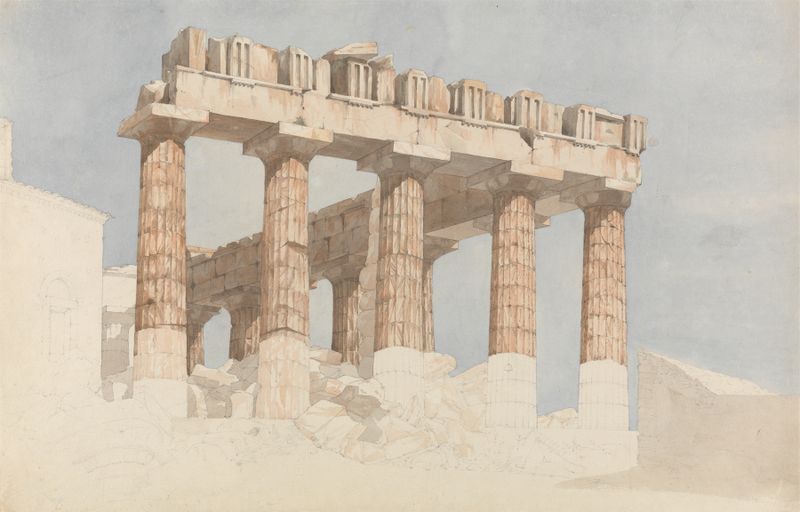

More Architecture Art
Browse all →
The statue of Liberty
Frédéric Auguste Bartholdi

View of Houses in Delft, Known as ‘The Little Street’
Johannes Vermeer

View of Houses in Delft, Known as ‘The Little Street’
Johannes Vermeer

The Cathedral in Rouen. The portal, Grey Weather
Claude Monet

The yellow house
Vincent van Gogh

The Church in Auvers-sur-Oise, View from the Chevet
Vincent van Gogh