
The Temple of Apollo Epicurius at Bassai, Phigalea — History & Facts
Where does light end, and longing begin? A question that resonates through the architectural elegance of ancient ruins, inviting viewers to ponder the passage of time. Look closely at the majestic structure depicted in the artwork, where the Temple of Apollo Epicurius stands proudly against a backdrop of rolling hills. The artist masterfully captures the interplay of light and shadow, highlighting the intricate Doric columns that reach upward toward the sky. Notice how the warm afternoon sun bathes the stone in a golden hue, illuminating its weathered surfaces while casting long, dramatic shadows that stretch across the foreground.
The palette, a harmonious blend of earth tones and soft blue skies, evokes a sense of serenity and timelessness. The painting conveys an emotional tension between permanence and decay. Each column, though stoic, hints at the passage of time, as cracks and eroded details bear witness to centuries gone by. The surrounding landscape, lush yet wild, suggests nature’s reclamation, blurring the line between man-made and organic.
Foster captures not just the physical structure, but also the yearning for connection to a glorious past, a testament to human ambition and the inevitable cycle of life and loss. Created in 1811, this work emerged during a period of burgeoning interest in classical architecture and the romanticism of antiquity. Foster, an English artist deeply influenced by the Neoclassical movement, painted this piece while exploring Greece and studying its ruins. The early 19th century was marked by a fascination with the ancient world, as artists sought to evoke nostalgia for a time when beauty and order reigned, a sentiment vividly reflected in this striking depiction of a temple dedicated to the gods.
More Artworks by John Foster
Browse all →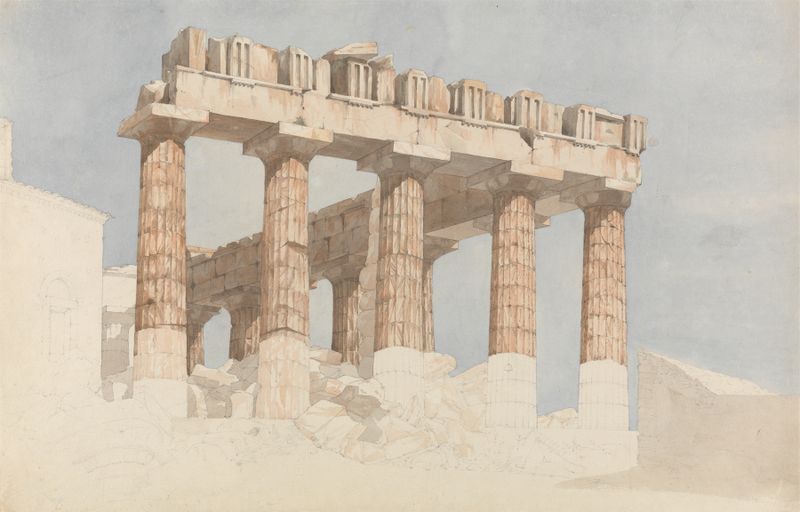
More Architecture Art
Browse all →
The statue of Liberty
Frédéric Auguste Bartholdi

View of Houses in Delft, Known as ‘The Little Street’
Johannes Vermeer

View of Houses in Delft, Known as ‘The Little Street’
Johannes Vermeer

The Cathedral in Rouen. The portal, Grey Weather
Claude Monet

The yellow house
Vincent van Gogh

The Church in Auvers-sur-Oise, View from the Chevet
Vincent van Gogh