
The Hippodrome, Constantinople — History & Facts
The echoes of forgotten hooves and whispers of long-vanished crowds linger in the ghostly traces of this grand structure, a dreamscape of a once-vibrant world. Look to the expansive arena at the center, where the viewer’s gaze is immediately drawn to the sweeping curves of ancient architecture. The earthy tones of the stone contrast against the vibrant blue of the sky, creating a stunning backdrop. Notice how the play of light and shadow dances across the columns, highlighting the intricate details that speak of history and grandeur.
Foster’s meticulous brushstrokes invite the viewer to feel the weight of time that hangs in the air, a reminder of the splendor that once was. Yet, beneath this beauty lies a profound stillness that evokes a sense of loss. The absence of life within the arena evokes a bittersweet nostalgia, a poignant awareness of what has faded away. The juxtaposition of the monumental structure against the emptiness of the space hints at the dreams that were once realized here, now reduced to mere memories held by the stones themselves.
Each corner of the painting resonates with untold stories, whispering of triumphs and failures from a bygone era. Between 1811 and 1813, the artist crafted this piece while absorbing the cultural richness of Europe. At this time, John Foster was influenced by the Romantic movement, which sought to capture the sublime and the historical through art. Engaged in the exploration of ruins and landscapes, he painted from a longing to connect with the past, bringing forth a sense of reverence for the places where dreams linger, waiting to be rediscovered.
More Artworks by John Foster
Browse all →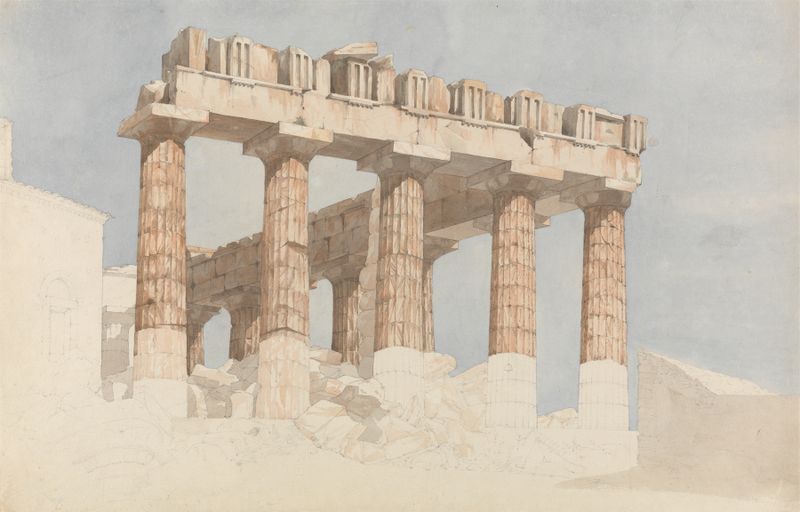

More Architecture Art
Browse all →
The statue of Liberty
Frédéric Auguste Bartholdi

View of Houses in Delft, Known as ‘The Little Street’
Johannes Vermeer

View of Houses in Delft, Known as ‘The Little Street’
Johannes Vermeer

The Cathedral in Rouen. The portal, Grey Weather
Claude Monet

The yellow house
Vincent van Gogh

The Church in Auvers-sur-Oise, View from the Chevet
Vincent van Gogh