
The East End and South Side of the Parthenon — History & Facts
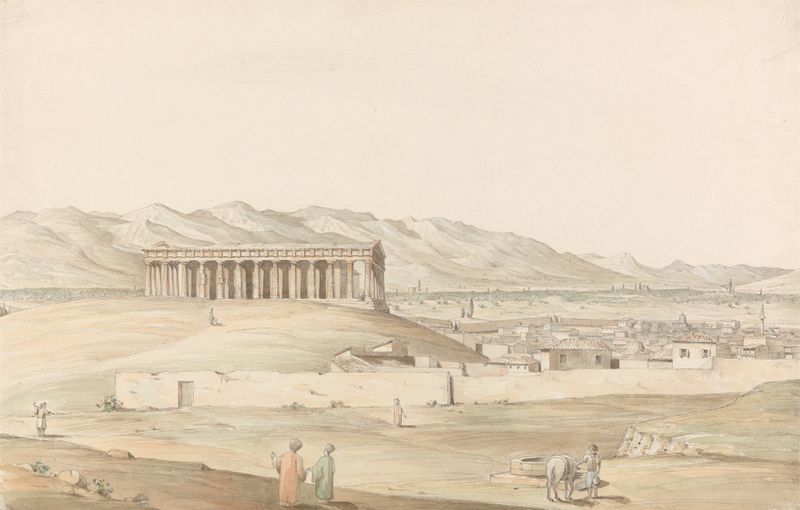
Could a single brushstroke hold eternity? In John Foster's The East End and South Side of the Parthenon, this question resonates deeply amid the portrayal of ancient ruins that stand as solitary sentinels of history, draped in the veil of time and loneliness. Focus first on the grand edifice itself, where light delicately caresses the weathered stone columns, highlighting their intricate details. The ethereal glow cascades down the facade, creating a stark contrast against the muted blues and grays of the sky. Notice how the foreground, with its scattered fragments of marble, leads the eye upward, establishing a dialogue between the remnants of the past and the celestial dome above.
The composition is masterfully balanced, guiding the viewer's gaze toward the enduring strength of the Parthenon, while the subtle textures breathe life into an otherwise desolate scene. As you delve deeper, consider the emotional tension woven through the juxtaposition of grandeur and decay. The sturdy columns speak of a once-thriving civilization, yet the surrounding emptiness evokes profound isolation, as if time has forsaken these ruins. The muted palette reflects a sense of nostalgia, echoing the loneliness that often accompanies the remnants of former glory, inviting contemplation of what has been lost and the stories that linger in silence. In 1813, Foster painted this work during a period of Romanticism, a movement that sought to capture the sublime and the emotional depth of nature and history.
Living in England, he was influenced by the cultural shifts of the time—both an awakening to classical ideals and a burgeoning sense of national identity. The Parthenon, as depicted, serves not only as a testament to classical architecture but also as a poignant reminder of transience in an ever-changing world.
More Artworks by John Foster
Browse all →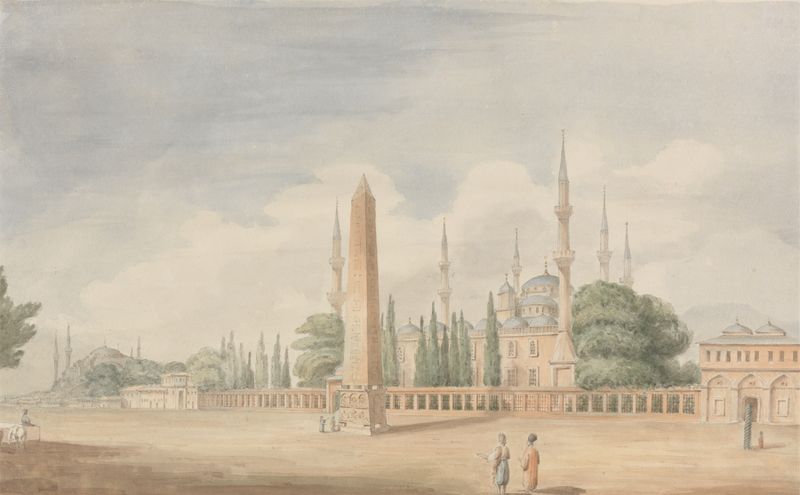

More Architecture Art
Browse all →
The statue of Liberty
Frédéric Auguste Bartholdi

View of Houses in Delft, Known as ‘The Little Street’
Johannes Vermeer

View of Houses in Delft, Known as ‘The Little Street’
Johannes Vermeer

The Cathedral in Rouen. The portal, Grey Weather
Claude Monet

The yellow house
Vincent van Gogh

The Church in Auvers-sur-Oise, View from the Chevet
Vincent van Gogh