
Tenant Farm in the Snow — History & Facts
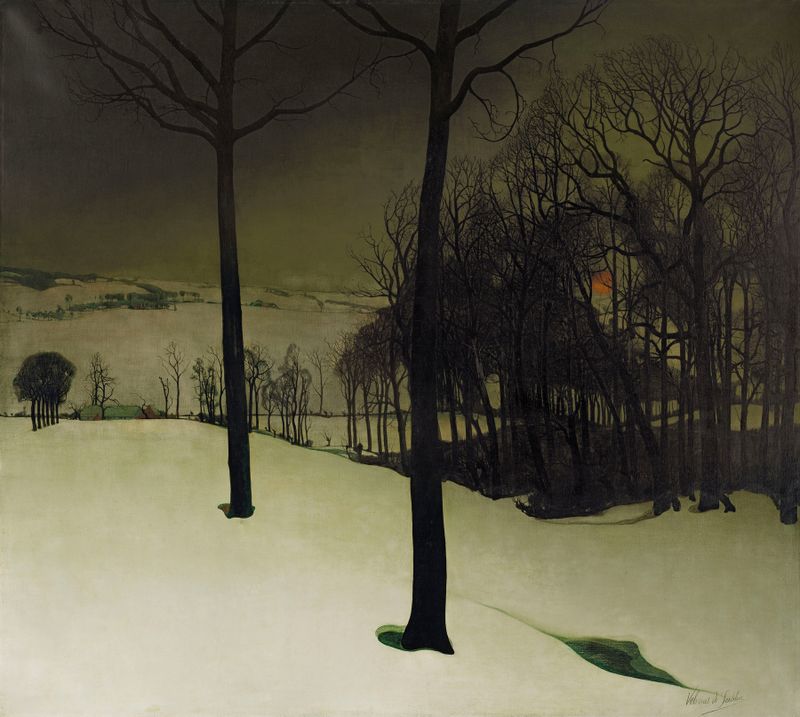
Can beauty exist without sorrow? The silent expanse of snow conceals stories of struggle and resilience, whispering a poignant truth beneath its glistening surface. Look to the center of the composition, where the humble tenant farm stands resilient against a backdrop of relentless winter. Notice how the white snow blankets the landscape, contrasting with the warm, earthy tones of the farmhouse, its windows radiating a soft glow that hints at life within. De Saedeleer’s brushwork, with its textured strokes, invites your eye to traverse the gentle contours of the hills, leading you to the horizon where the sky blurs into a muted palette of blues and grays. The work reveals deep emotional layers through its contrasting elements.
The starkness of the snow versus the warmth of the building reflects the delicate balance between hardship and home, survival and solace. Each shadow cast by the trees suggests solitude, while the faint trail leading towards the farmhouse speaks to the daily journeys made by those who inhabit this remote space. The visual tension between the vast, empty whiteness and the intimate structure encapsulates a deeper narrative of perseverance amidst nature's unforgiving beauty. In 1907, De Saedeleer embarked on this evocative painting while immersed in the vibrant artistic milieu of Belgium.
He was influenced by the Symbolist movement, seeking to capture the emotional resonance of the landscape around him. This period of his life was marked by a dedication to portraying the rural experience, as industrialization began to alter the lives of farmers and their environments. Through this artwork, he articulated the quiet dignity found in a life intertwined with nature, reflecting the complexities of creation in a world often overshadowed by change.
More Artworks by Valerius De Saedeleer
Browse all →
Snow Landscape in Flanders
Valerius De Saedeleer

Before Spring
Valerius De Saedeleer
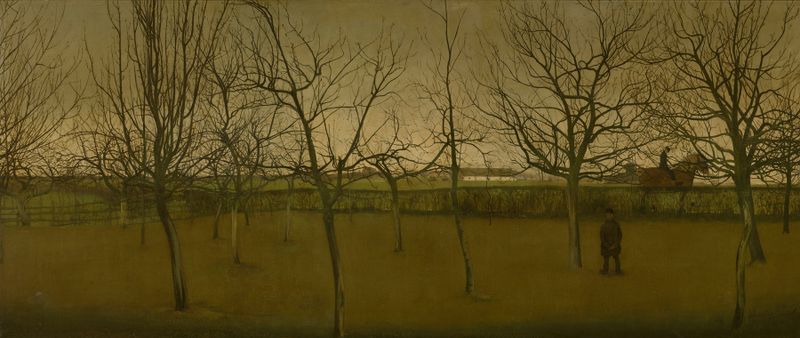
An Orchard in Winter
Valerius De Saedeleer

The River; Bright Spells
Valerius De Saedeleer

End of a gloomy day
Valerius De Saedeleer
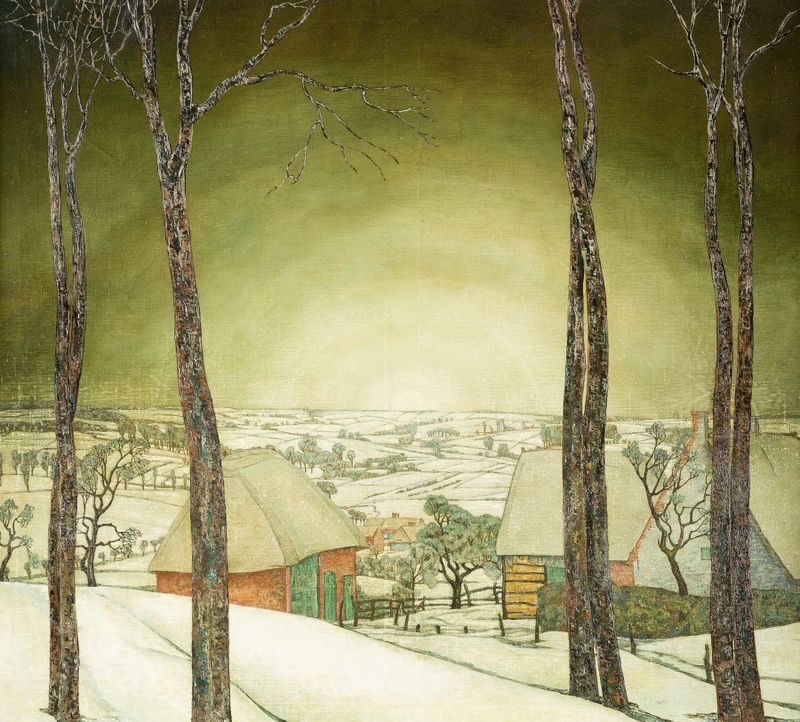
Winter landscape
Valerius De Saedeleer

Storm Clouds over the Windmill in Tiegem
Valerius De Saedeleer
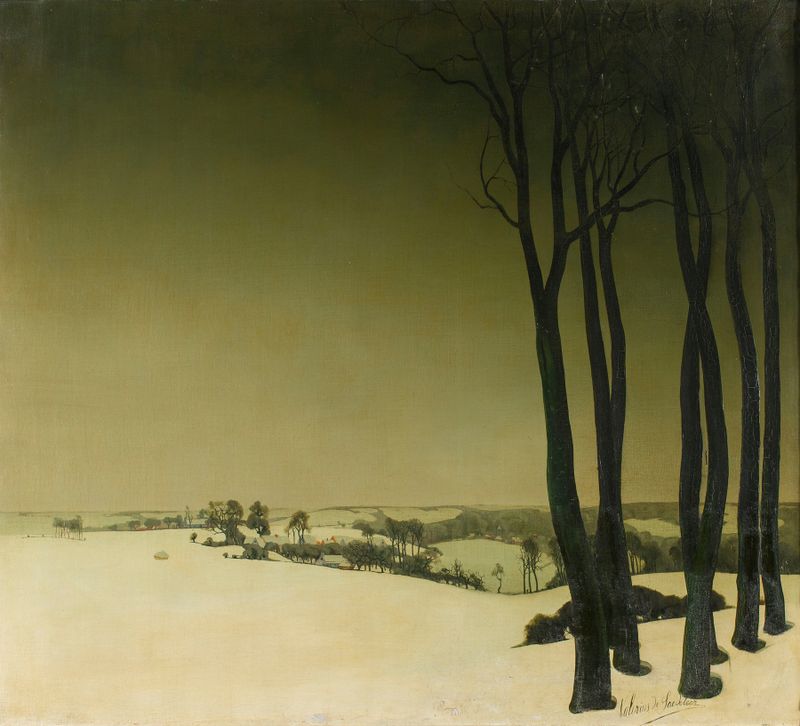
The Big Trees
Valerius De Saedeleer
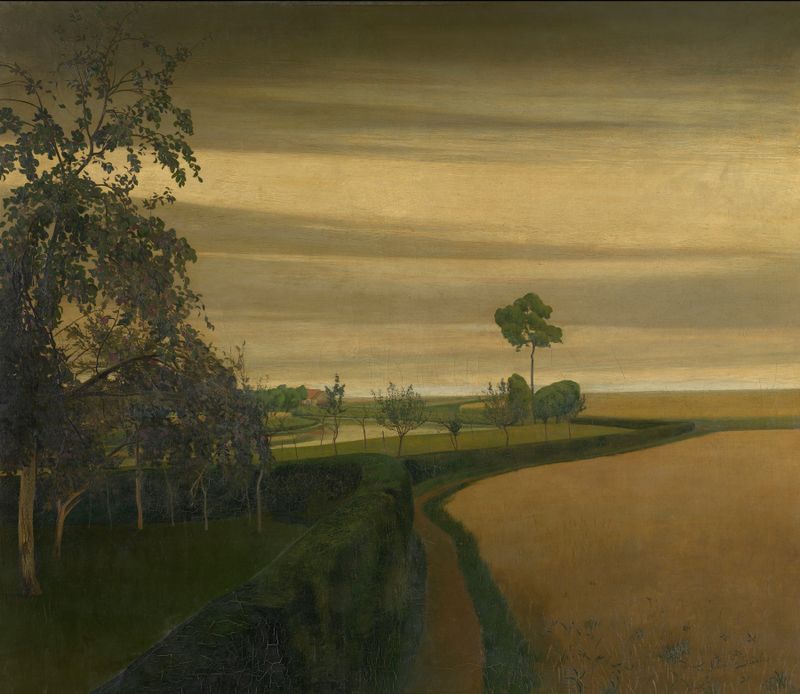
The End of a Gloomy Day
Valerius De Saedeleer
Het bos in de winder (Forest in the Winter)
Valerius De Saedeleer





