
Terre labourée en hiver, avec un homme portant un fagot — History & Facts
Where does light end, and longing begin? In the heart of Terre labourée en hiver, avec un homme portant un fagot, this question resonates deeply, inviting introspection and connection. Look to the left at the solitary figure, hunched against the chill, as he carries a bundle of twigs, embodying the laborer's perseverance amidst winter's grasp. Notice how the muted blues and browns dominate the canvas, yet subtle warmth emanates from the earth itself, hinting at life beneath the frost. The brushwork is loose yet deliberate, blurring the lines between man and nature, evoking a sense of unity and struggle, while the low winter sun casts long shadows that stretch like memories across the field. Delve deeper, and you'll uncover the contrast between the harshness of the season and the quiet determination etched on the man's face.
The stark landscape juxtaposes with the intimate act of gathering, suggesting a desire for sustenance, both physical and spiritual. Each brushstroke not only captures the frost-laden ground but whispers of hope—an undeniable yearn for renewal and warmth that lingers in the cold air. In 1877, Pissarro painted this piece while living in Éragny, a small village in France. During this period, he was deeply involved in the Impressionist movement, seeking to capture the essence of rural life in a rapidly changing world.
His commitment to portraying the dignity of laboring individuals reflects both his artistic ideals and a profound empathy for the struggles faced by the working class, thus grounding this winter scene in a broader social context.
More Artworks by Camille Pissarro
Browse all →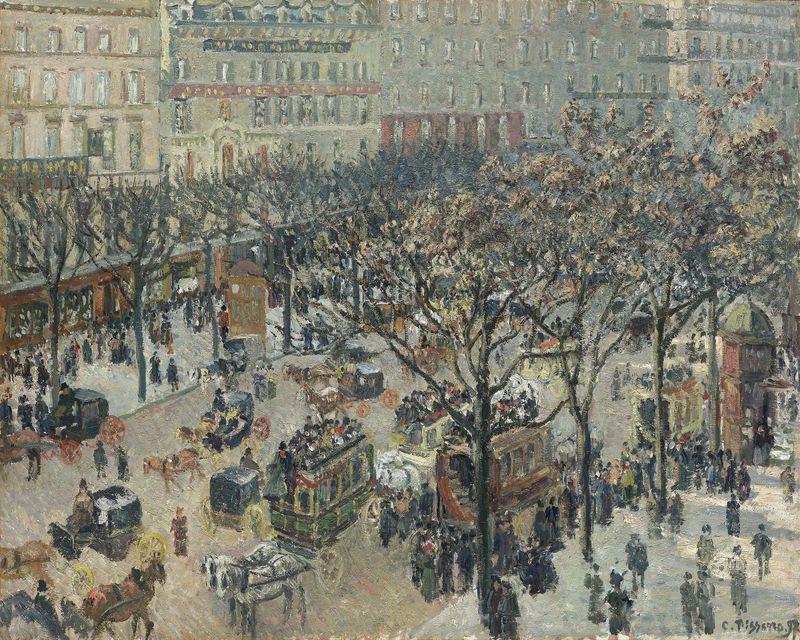
Boulevard des Italiens,Morning_Sunlight
Camille Pissarro
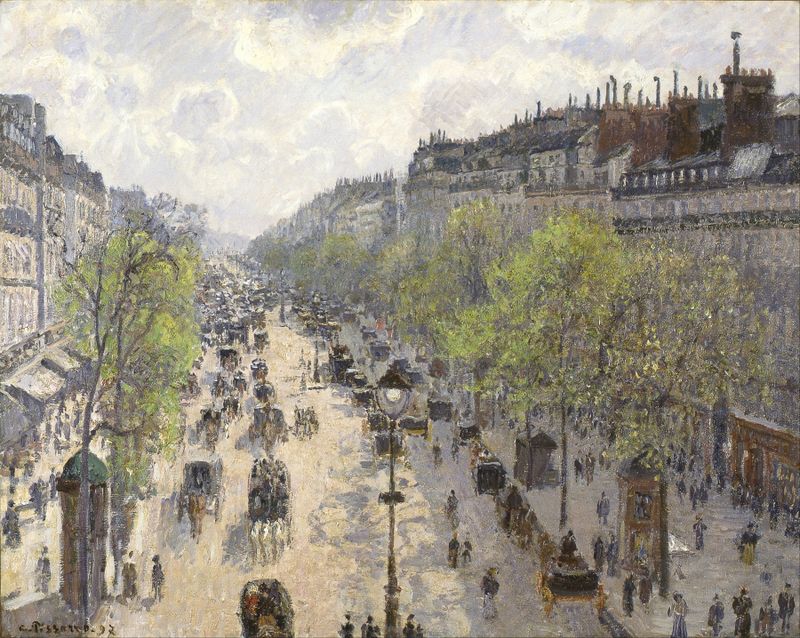
Boulevard Montmartre, Spring
Camille Pissarro
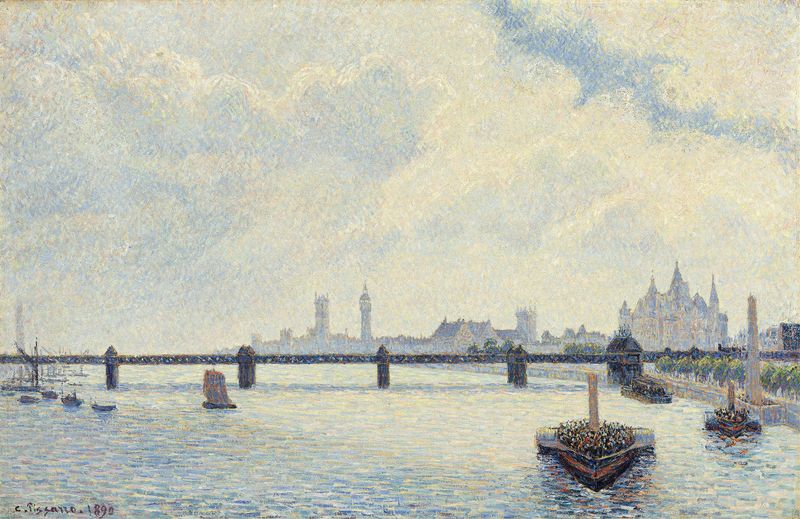
Charing Cross Bridge,London
Camille Pissarro
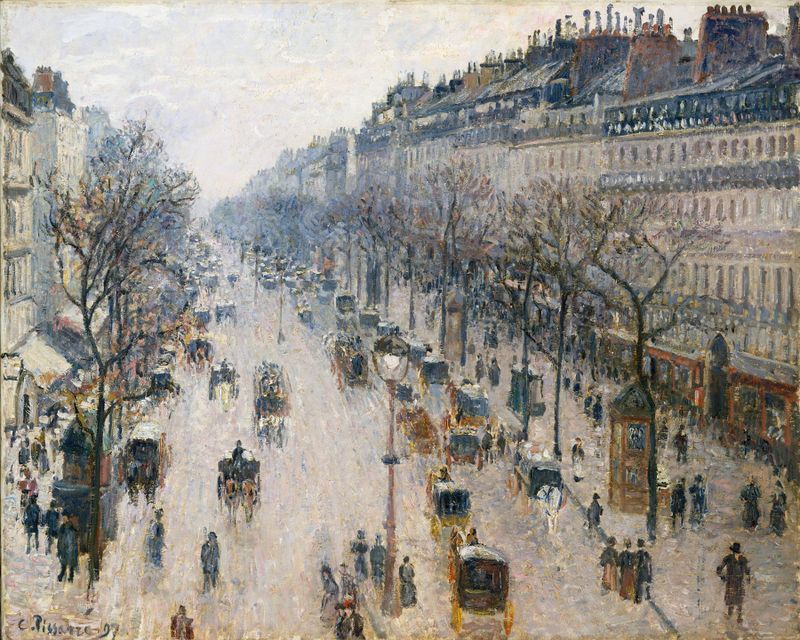
The Boulevard Montmartre on a Winter Morning
Camille Pissarro
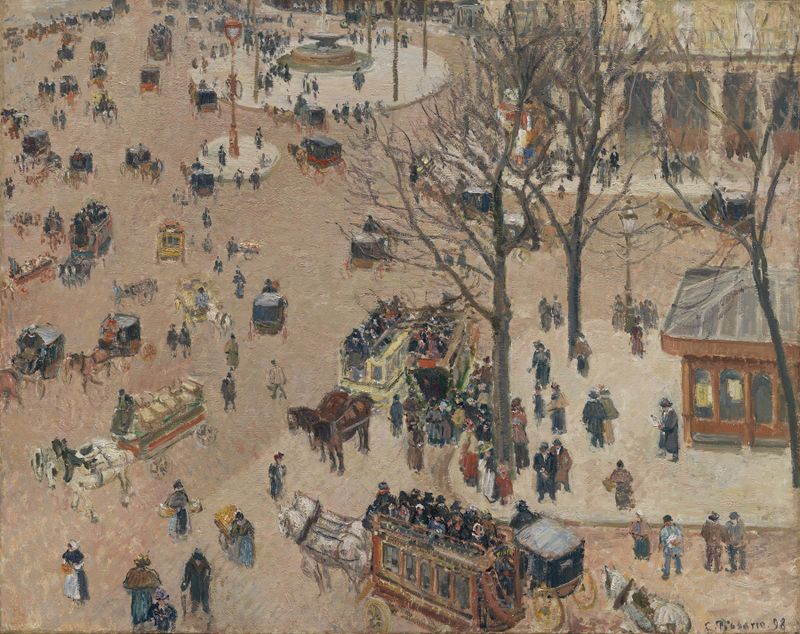
La Place du Théâtre Français
Camille Pissarro

Rue Saint-Lazare, Paris
Camille Pissarro
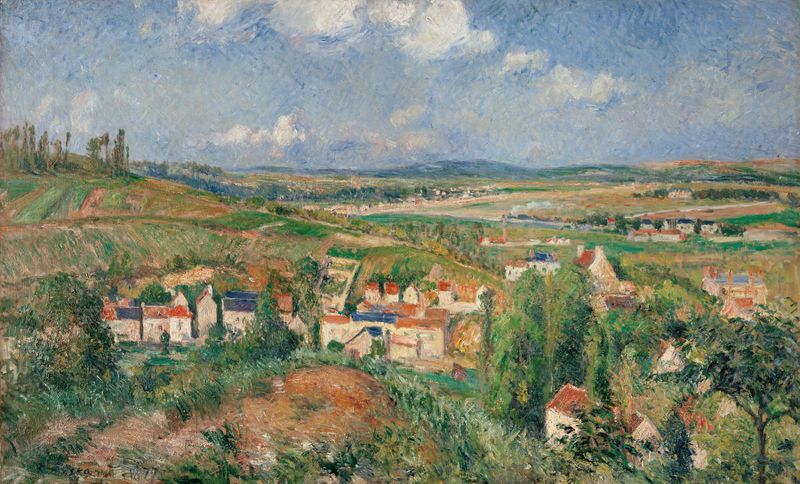
L’hermitage En Été, Pontoise
Camille Pissarro

Place du Theatre Francais,Fog Effect
Camille Pissarro
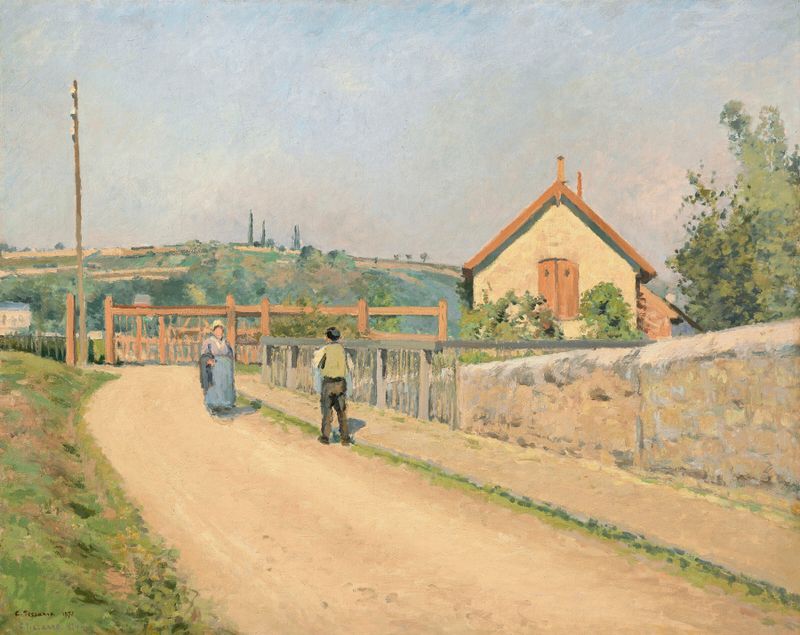
La barrière du chemin de fer, aux Pâtis près Pontoise
Camille Pissarro
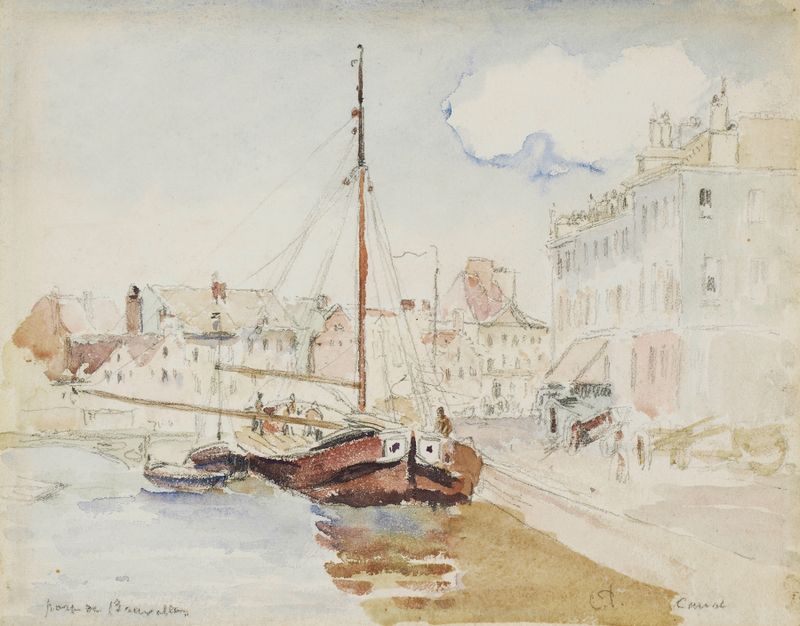
Port de Bruxelles
Camille Pissarro





