Thaw — History & Facts
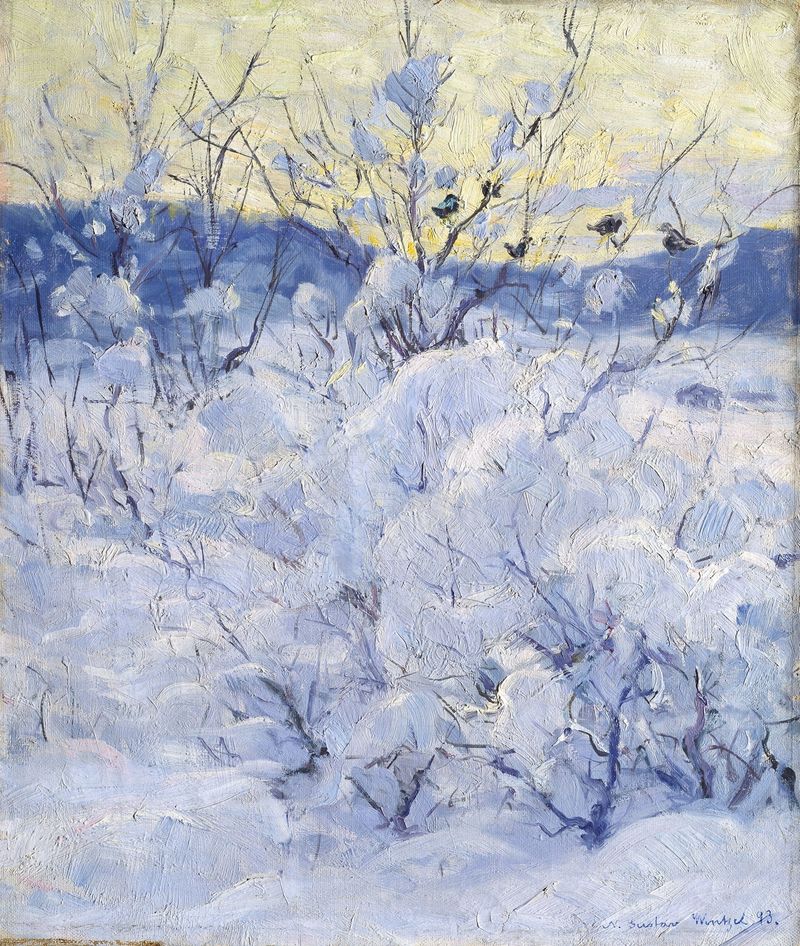
In the delicate interplay of hues and texture, color breathes life into silence, inviting us into a deeper understanding of human emotion. Look to the left at the vibrant greens and blues that unfurl in a gradient, suggesting the thawing of winter's grasp. Notice how the figures emerge from the cool shadows — their faces illuminated by the warm glow of a hidden sun, symbolizing rebirth and newfound warmth. The artist’s brushstrokes blend seamlessly, creating a soft yet palpable atmosphere, urging the viewer to engage with the nuanced transition from icy despair to the hopeful awakening of spring. Delve into the subtleties within the composition: the juxtaposition of the rigid, cold elements against the fluidity of color evokes a sense of struggle and resilience.
The figures, though seemingly at rest, convey an underlying tension as they reach for each other, embodying a longing for connection amidst the emotional thaw. Each stroke reveals an intimate narrative of vulnerability and renewal, resonating with anyone who has experienced their own seasons of change. Gustav Wentzel created this work in 1894, during a period marked by personal exploration and a growing interest in the natural world within the artistic community. Residing in Norway, Wentzel was influenced by the Symbolist movement, which emphasized emotional depth and a connection to nature.
In this context, Thaw stands as a poignant reflection of the artist's journey, capturing the essence of transformation both in nature and within the human soul.