Landscape with a House — History & Facts
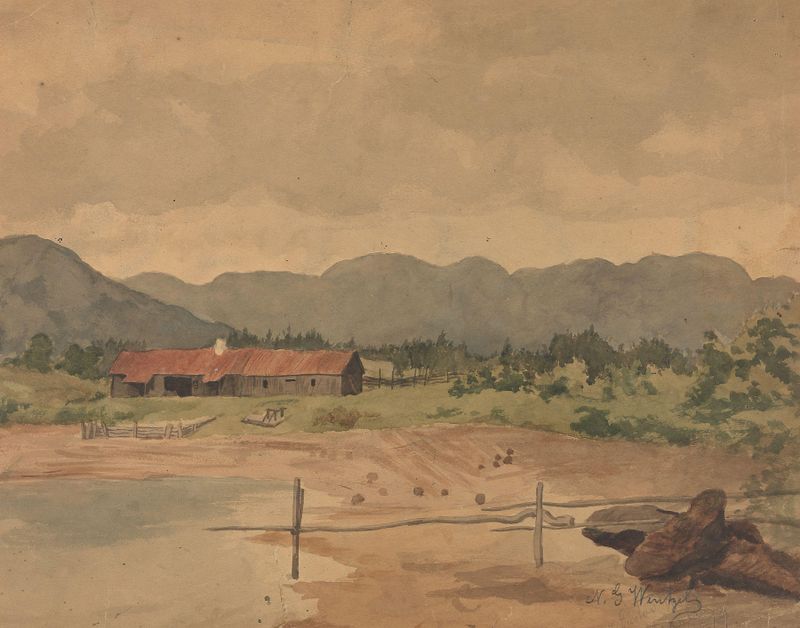
In the hands of a master, melancholy transforms from mere sadness into a poignant reflection of existence, inviting us to dwell on the quiet beauty found in solitude. Focus first on the expansive canvas, where gentle hues of green and soft earth tones combine to create a serene landscape that cradles a modest house. Notice how the brushstrokes dance across the surface, each one a whisper of the unseen winds that ripple through the foliage. The house, modest yet central, draws your gaze with its inviting warmth, contrasting against the coolness of the surrounding nature, suggesting a stillness that is both comforting and haunting. Within this tranquil setting lies an undercurrent of emotional tension.
The idyllic landscape hints at a forgotten past, evoking a sense of nostalgia for moments long gone. The solitary house, nestled amid the vibrant green, may symbolize isolation or the yearning for connection. Shadows cast by the trees hint at the passage of time, inviting the viewer to ponder the stories that unfold within its walls and the echoes of laughter or sorrow that have graced its rooms. Created in an unknown time, the painting emerges from a period when Wentzel was deeply engaged with nature, capturing the essence of life through the lens of introspection.
His works reflect the late 19th-century shift toward realism, where artists sought to depict scenes that resonate emotionally. In a world increasingly consumed by industrialization, this landscape stands as a testament to the enduring beauty of simplicity and the deep emotional landscapes within us all.