
The Assault of Gimry on October 17, 1832 — History & Facts
Who listens when art speaks of silence? In The Assault of Gimry on October 17, 1832, Franz Roubaud offers a powerful meditation on conflict and the echoes of history, beckoning viewers to reflect on the weight of loss and the struggle for transcendence. Look to the foreground where a group of grim-faced warriors stands resolute. Their dynamic poses suggest both urgency and desperation, while the smoldering ruins behind them serve as a contrasting backdrop. Notice how pale ochres and rusty reds dominate the color palette, infusing the scene with a sense of impending doom.
The way light dances off fragmented surfaces, casting shadows in the deep recesses of the landscape, amplifies the emotional resonance of human tenacity against overwhelming odds. Amidst the chaos, subtle details reveal deeper meanings: the distant mountain silhouette represents an unattainable hope, while the rugged terrain symbolizes the harsh realities of conflict. The tension between the warriors’ fierce expressions and their battered surroundings speaks to the human spirit's struggle to transcend adversity. In this frozen moment, each figure embodies a collective memory, a haunting reminder of sacrifices made and battles fought. Roubaud created this work in 1891, reflecting a time when he was deeply engaged with themes of historical narratives and national identity.
Living in Russia and influenced by the tumultuous events surrounding him, he sought to illuminate the past's significance through dramatic storytelling. As the art world grappled with modernity, Roubaud’s dedication to history and its heroes preserved the echoes of their struggles for future generations.
More Artworks by Franz Roubaud
Browse all →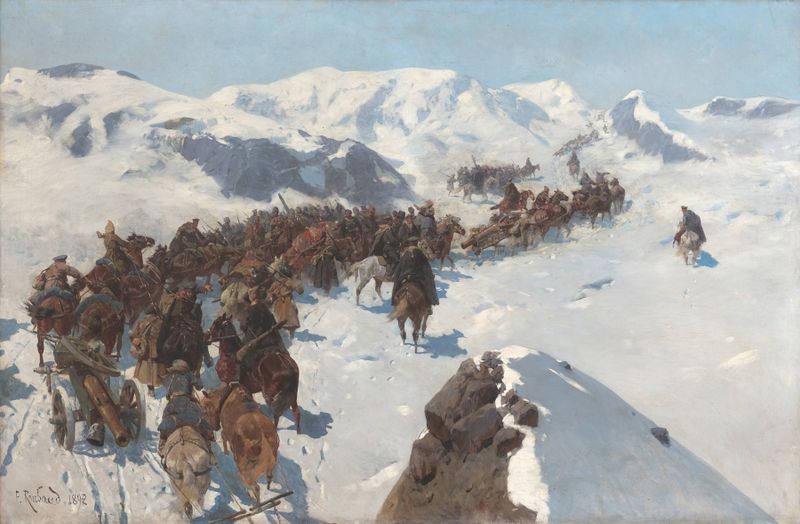
More Historical Art
Browse all →
The Night Watch Militia Company of District II under the Command of Captain Frans Banninck Cocq
Rembrandt van Rijn

Lincoln Memorial
Henry Bacon

The Third of May 1808
Francisco de Goya

Isaac and Rebecca, Known as ‘The Jewish Bride’
Rembrandt van Rijn

The Charge of the Mamelukes (1814)
Francisco de Goya

De vier ruiters van de apocalyps
Albrecht Dürer