
The Avenue — History & Facts
In the stillness of an avenue, movement speaks louder than words, revealing layers of life in the spaces between. Focus first on the gentle curve of the tree-lined path that draws the eye through Cameron's composition. The intricate play of light and shadow filters through the foliage, creating a dappled effect that breathes life into the scene. Rich hues of green and brown mingle with warm golden tones, inviting the viewer to step into this serene corridor where nature thrives and time stands almost still. Yet, amidst the tranquility, a tension simmers.
The seemingly casual placement of figures, perhaps lost in thought or caught in conversation, hints at stories untold. Notice how the broad trunks of the trees act as silent sentinels, framing the intimate interactions below, while a subtle breeze seems to ripple through the leaves, suggesting an unseen movement that contrasts with the static nature of the painted scene. This duality evokes a sense of nostalgia, as if the viewer is both participant and observer in life’s unfolding drama. Painted in 1905, this work reveals a pivotal moment in David Young Cameron's career, as he embraced the plein air movement that swept across Europe.
At this time, he was increasingly moving away from traditional landscapes and focusing on capturing the intimacy of natural scenes. The world was changing rapidly, and within this serene avenue, the artist encapsulated the delicate balance between stillness and the inevitable flux of life surrounding it.
More Artworks by David Young Cameron
Browse all →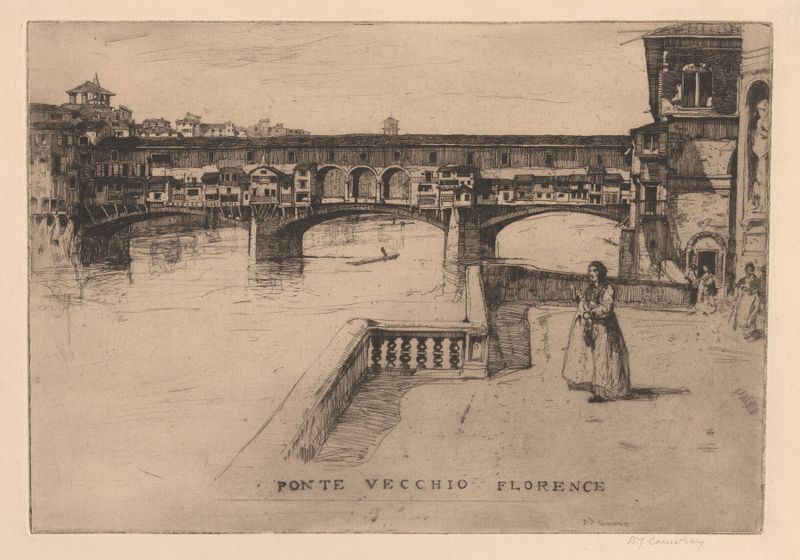
Ponte Vecchio
David Young Cameron

The Deanery, Winchester
David Young Cameron
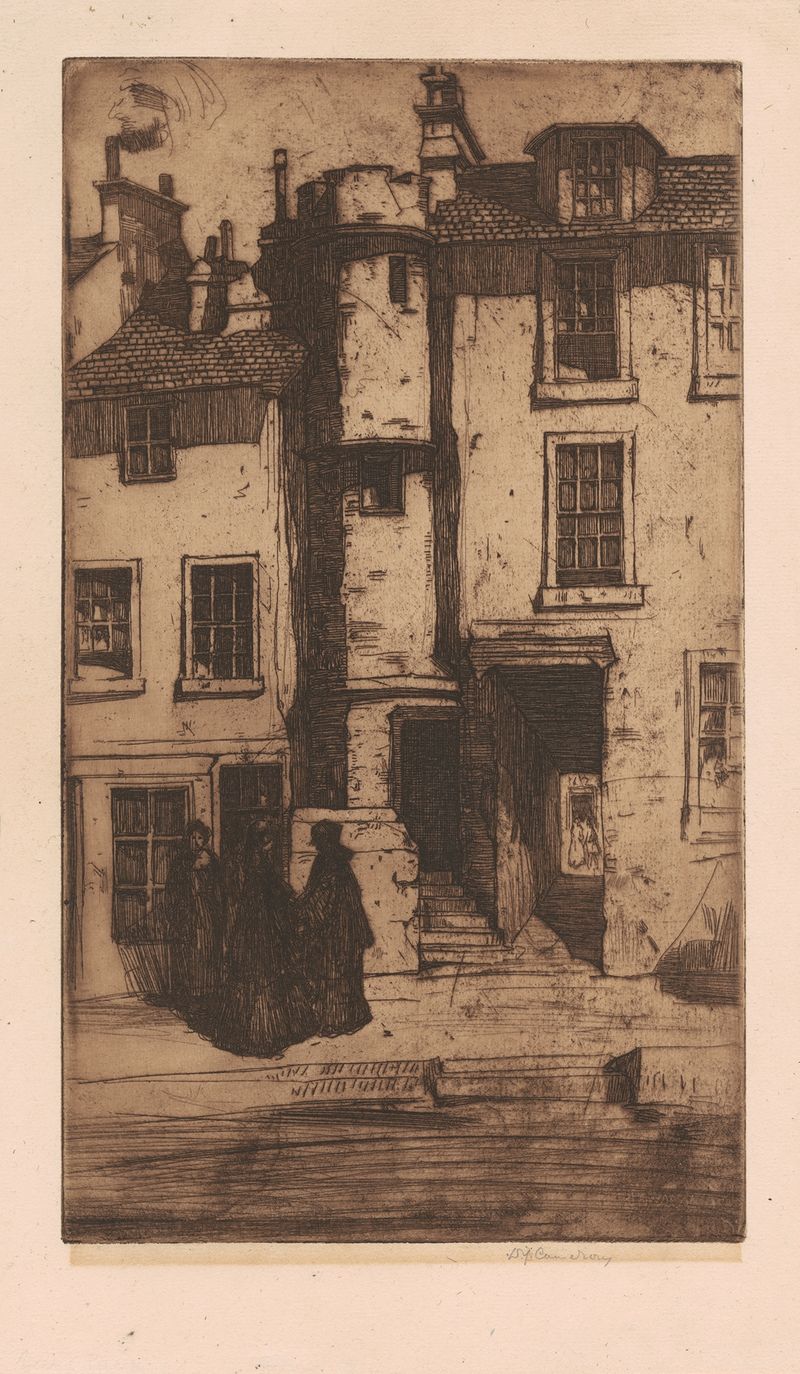
Old Houses, Stirling
David Young Cameron
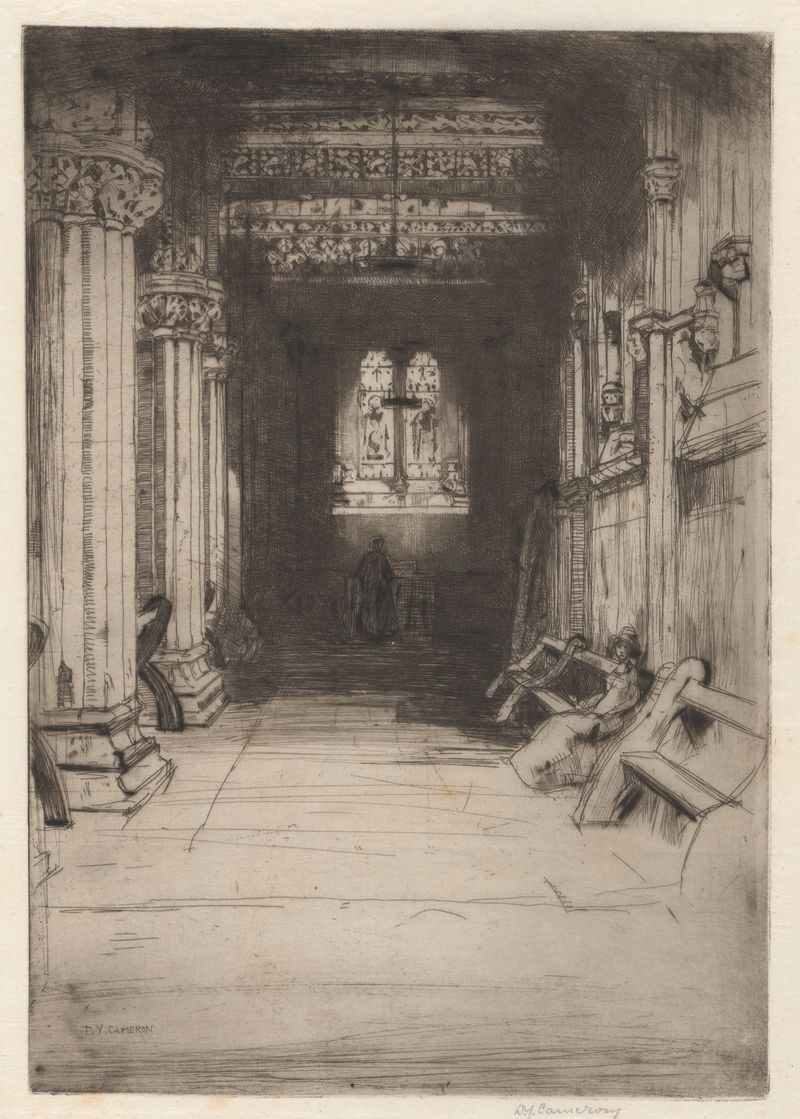
Rosslyn Chapel
David Young Cameron

The Old Museum, Beauvais
David Young Cameron
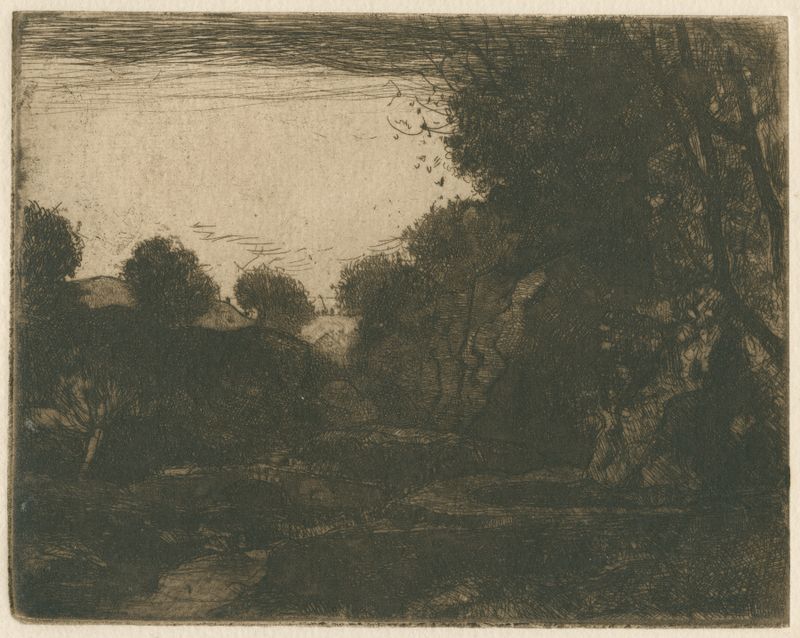
On the Bradford
David Young Cameron

The Smithy
David Young Cameron
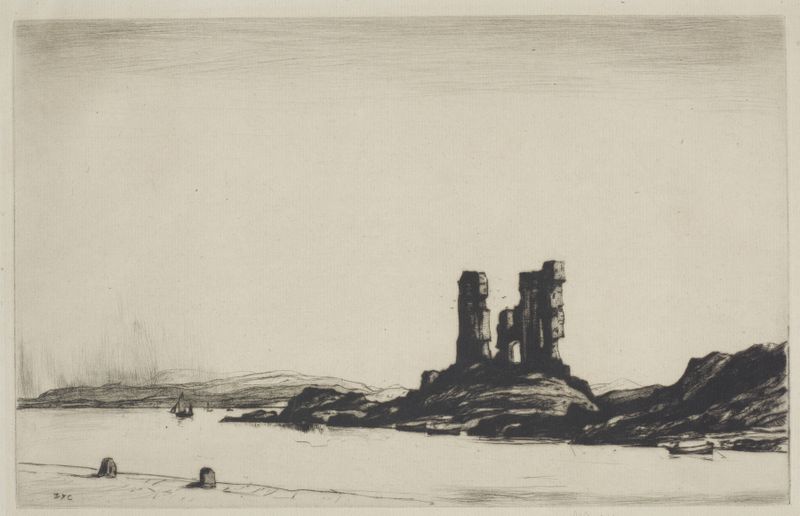
Castle Moyle
David Young Cameron
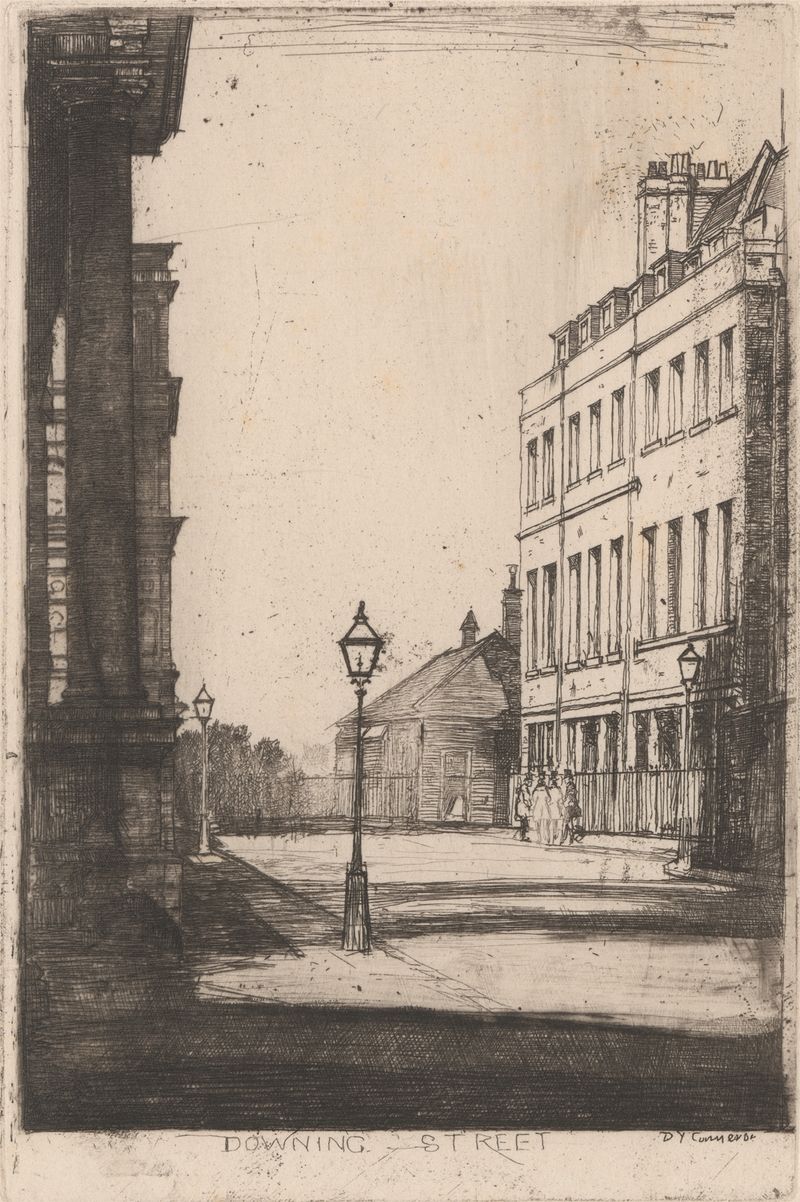
Downing Street
David Young Cameron

Glasgow Cathedral
David Young Cameron





