
The Banks of the Marne in Winter — History & Facts
When did color learn to lie? In a world where the chill of winter prevails, a vision unfolds, blurring the lines between reality and dream. The Banks of the Marne become a stage for a frosted tableau, inviting reflection and transport. Here, the viewer is caught in the spell of a quiet, snowy landscape, where nature whispers secrets only the heart can decipher. Look to the center, where the river’s gentle curve leads the eye through a tapestry of white and muted earth tones.
The pale sky, brushed with soft grays, envelops the scene, while the snowflakes shimmer like tiny jewels scattered across the ground. Notice how the artist's deft strokes evoke movement, as treetops sway slightly, suggesting a breeze that seems to resonate with the stillness around it. The contrasting colors of the trees—dark and stoic against the ethereal backdrop—draw tension into this serene moment. Here, the juxtaposition of warmth and cold creates a profound emotional landscape.
The earthy browns of the trees fight against the pristine whites of the snow, hinting at the struggle between life’s persistence and the harshness of winter. The painting captures not only the beauty of a moment frozen in time but also the deeper pulse of nature’s cycle—where even in the starkness of winter, life lingers beneath the surface, waiting for the thaw. Created in 1866, this work emerges from a period when Pissarro was honing his Impressionist style, embracing a focus on light and atmosphere. Living in France, he was influenced by the evolving art movements around him, blending traditional techniques with a fresh perspective.
This painting reflects his desire to capture the transient beauty of everyday life, as well as his own experiences navigating an ever-changing world.
More Artworks by Camille Pissarro
Browse all →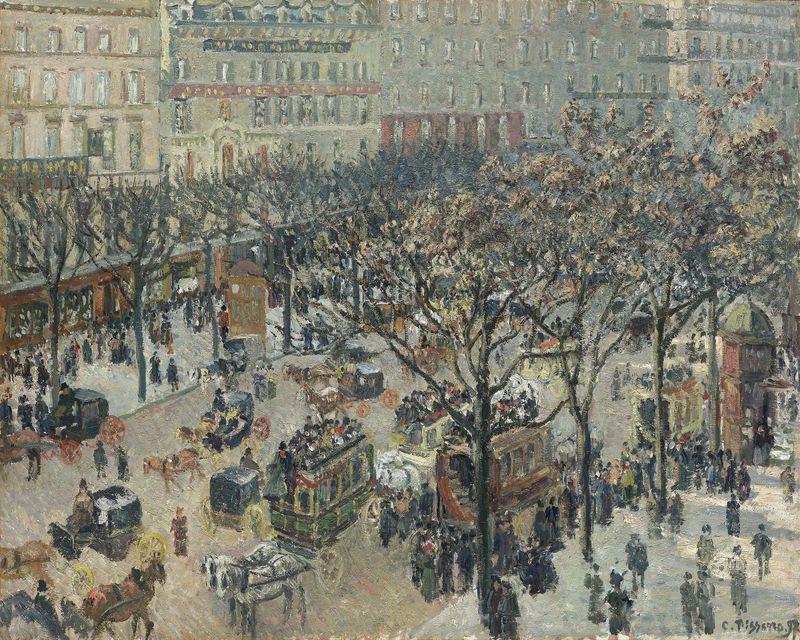
Boulevard des Italiens,Morning_Sunlight
Camille Pissarro
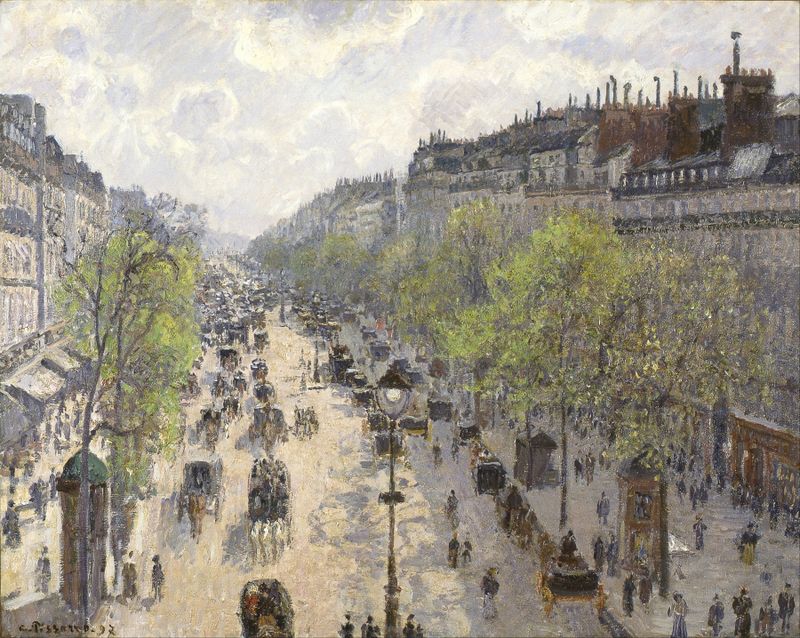
Boulevard Montmartre, Spring
Camille Pissarro
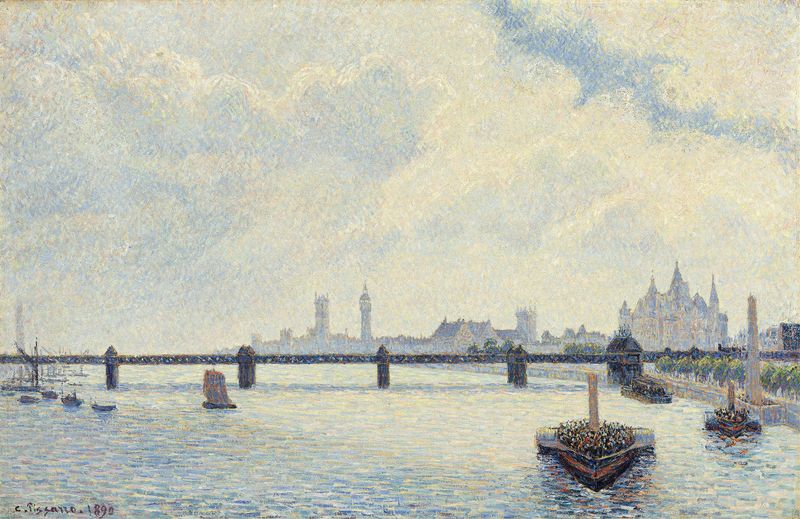
Charing Cross Bridge,London
Camille Pissarro
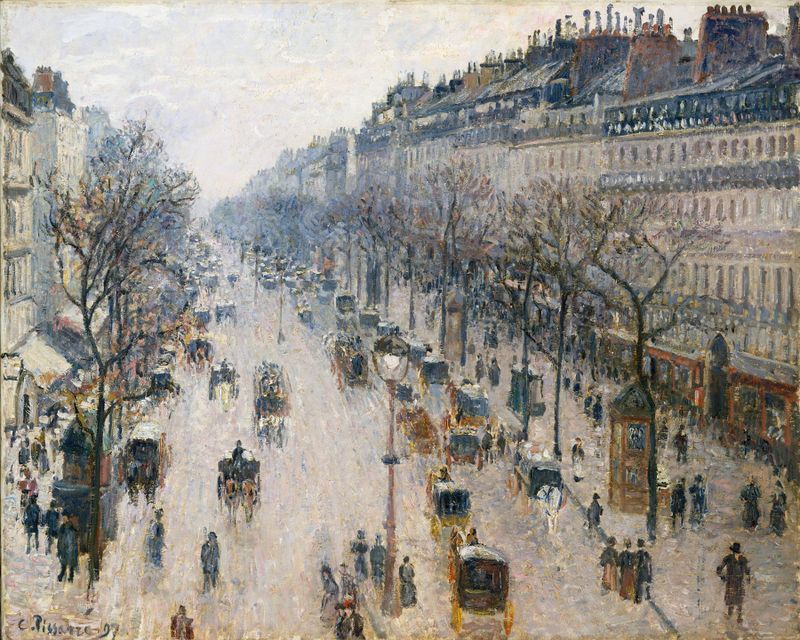
The Boulevard Montmartre on a Winter Morning
Camille Pissarro
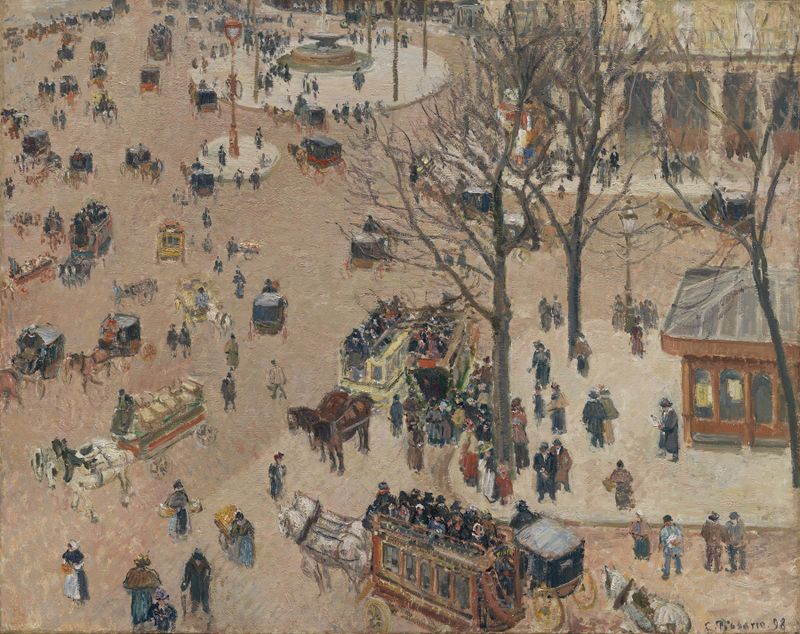
La Place du Théâtre Français
Camille Pissarro

Rue Saint-Lazare, Paris
Camille Pissarro
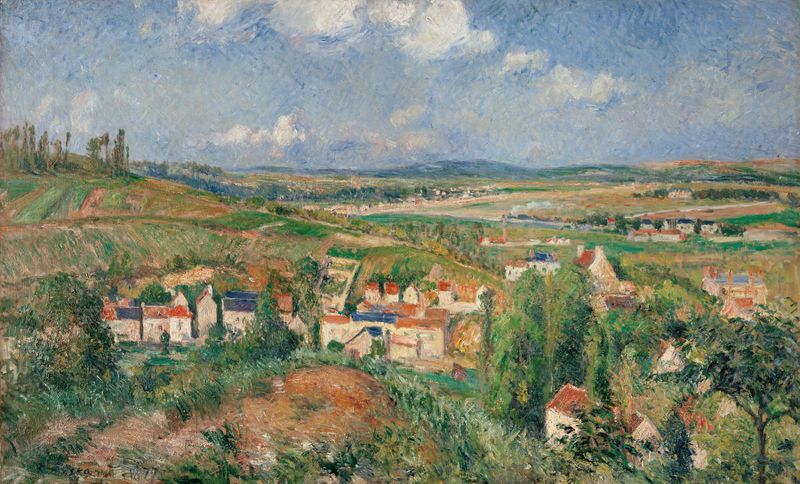
L’hermitage En Été, Pontoise
Camille Pissarro

Place du Theatre Francais,Fog Effect
Camille Pissarro
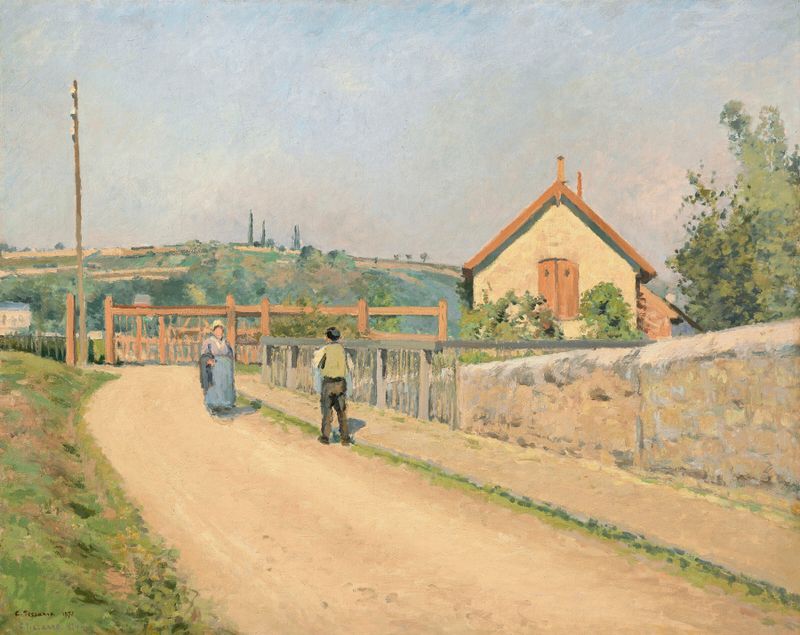
La barrière du chemin de fer, aux Pâtis près Pontoise
Camille Pissarro
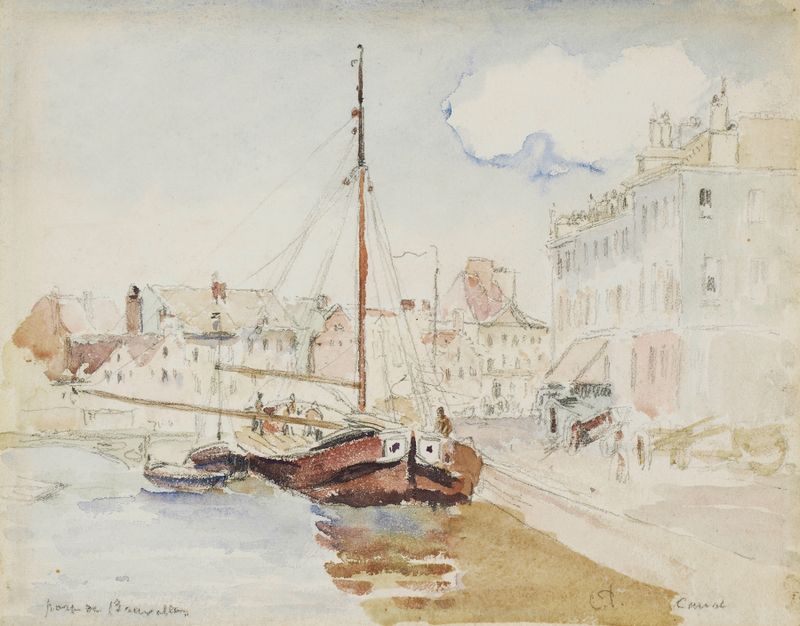
Port de Bruxelles
Camille Pissarro





