
The Barbican — History & Facts
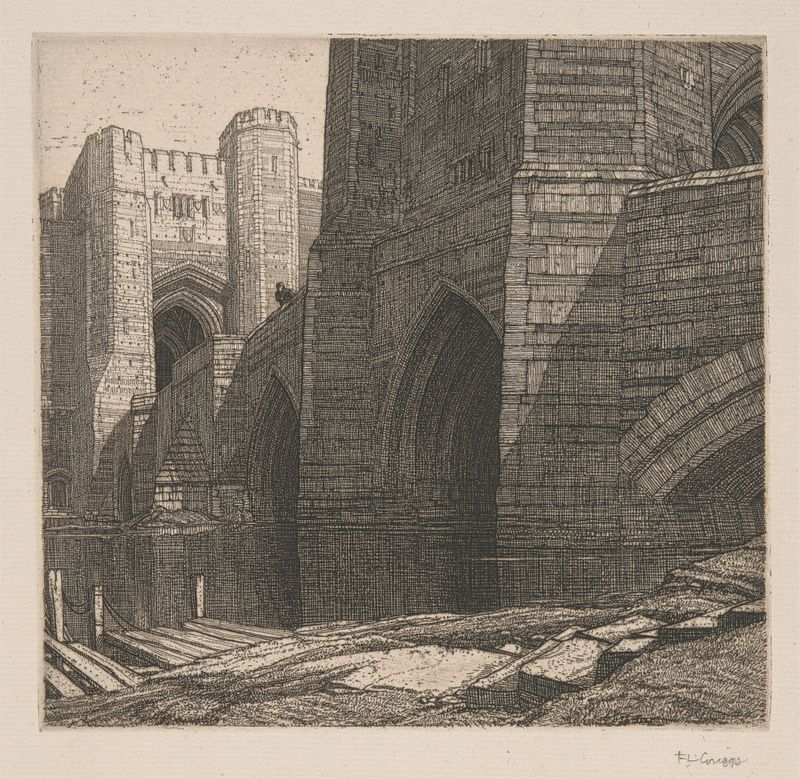
Can paint confess what words never could? In The Barbican, the boundaries of reality blur, inviting the viewer into a realm where tranquility meets the pulse of life. Focus on the central archway, where soft light filters through, casting elongated shadows that dance across the cobblestone. Griggs employs a muted palette of earthy tones, expertly contrasting the cool grays of the buildings with the warm hues of the sunlit stones. Notice how the delicate strokes suggest not only the texture of the ancient walls but also the weight of history that lingers in the air.
This composition, framed by the natural symmetry of the arch, draws the eye inward, leading us through a passage that speaks of time and place. In this serene setting, the artist captures a moment of transition—between day and night, the past and the present. The ethereal light evokes a sense of transcendence, hinting at the spiritual journey of those who pass through this space. Every brick tells a story, whispering secrets of lives lived and lost, while the absence of figures invites reflection on solitude amidst the echoes of existence.
The overall ambiance creates a tension between the permanence of the architecture and the transient nature of human experience. Frederick Landseer Maur Griggs painted The Barbican in 1920 during a period of personal and artistic exploration. Living in England amidst the post-World War I recovery, he sought to capture a sense of peace and continuity through his work. This painting exemplifies his interest in architectural subjects and the interplay of light and shadow, reflecting a broader movement in art that embraced both realism and emotional depth during this transformative time.
More Artworks by Frederick Landseer Maur Griggs
Browse all →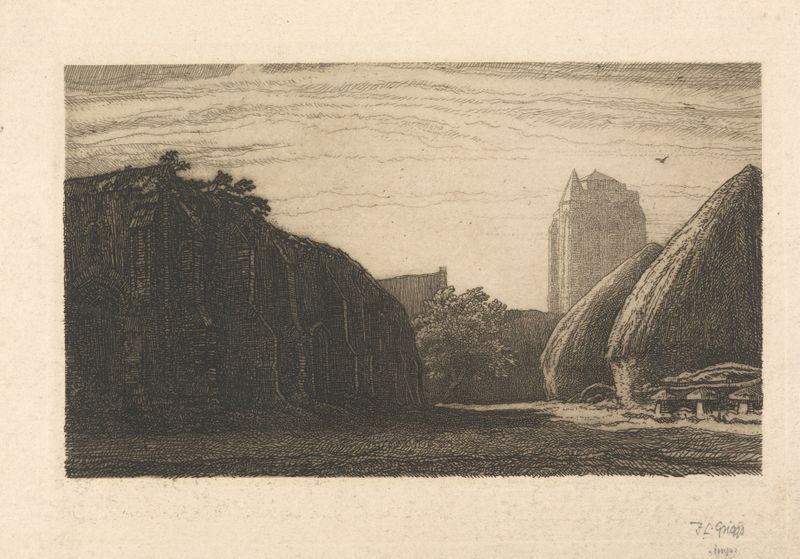
Maur’s Farm
Frederick Landseer Maur Griggs
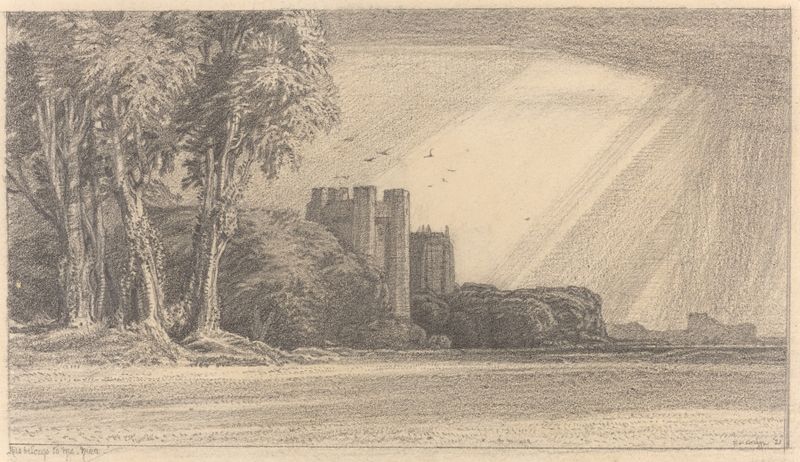
Landscape with Castle
Frederick Landseer Maur Griggs
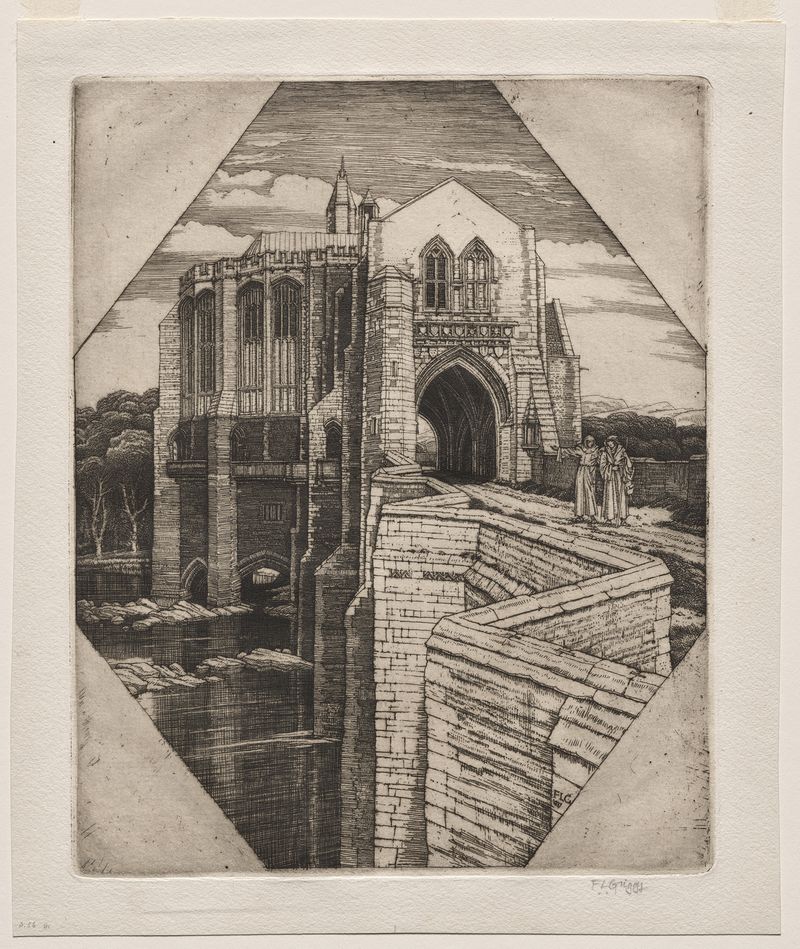
St. Botolph’s Bridge No. 2 1937
Frederick Landseer Maur Griggs
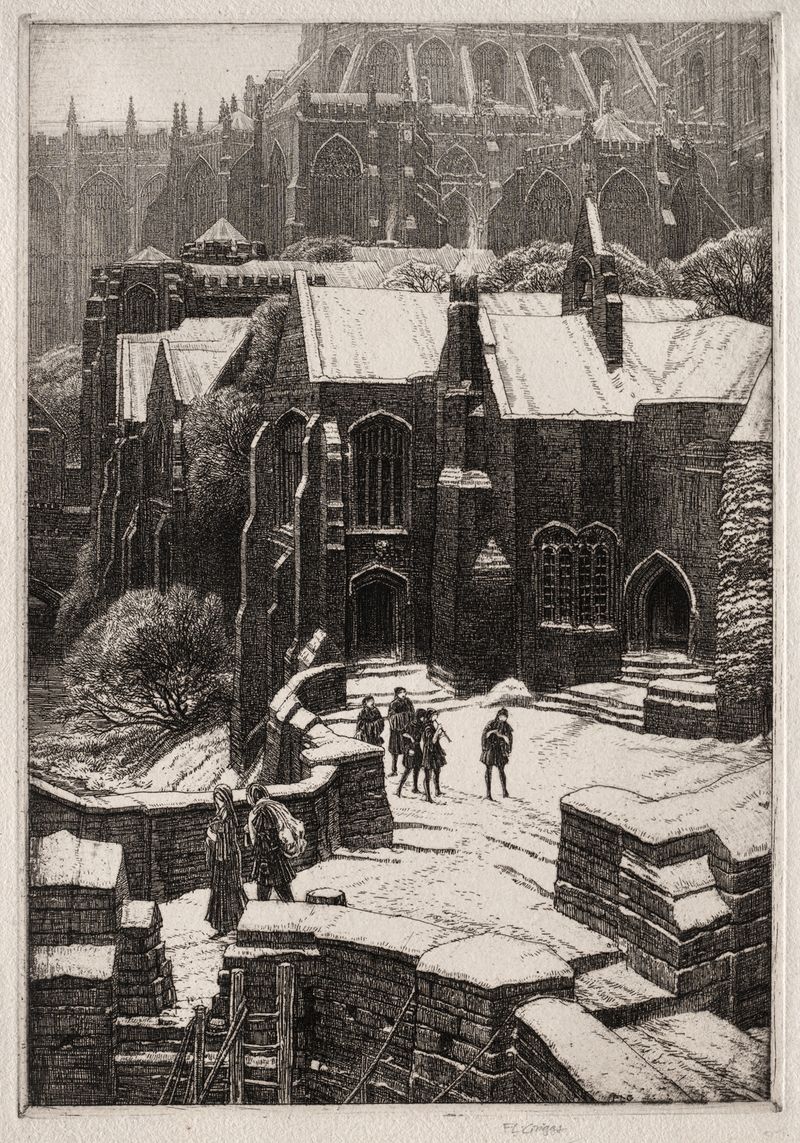
The Almonry
Frederick Landseer Maur Griggs

The Cresset
Frederick Landseer Maur Griggs
The Barbican
Frederick Landseer Maur Griggs

Maur’s Farm
Frederick Landseer Maur Griggs
Priory Farm
Frederick Landseer Maur Griggs

St. Wendred’s March
Frederick Landseer Maur Griggs
St. Wendred’s, March
Frederick Landseer Maur Griggs
More Architecture Art
Browse all →
The statue of Liberty
Frédéric Auguste Bartholdi

View of Houses in Delft, Known as ‘The Little Street’
Johannes Vermeer

View of Houses in Delft, Known as ‘The Little Street’
Johannes Vermeer

The Cathedral in Rouen. The portal, Grey Weather
Claude Monet

The yellow house
Vincent van Gogh

The Church in Auvers-sur-Oise, View from the Chevet
Vincent van Gogh