The Barque Sylph, Beloging To Mr. Alexander Robertson Off The Macao, China — History & Facts
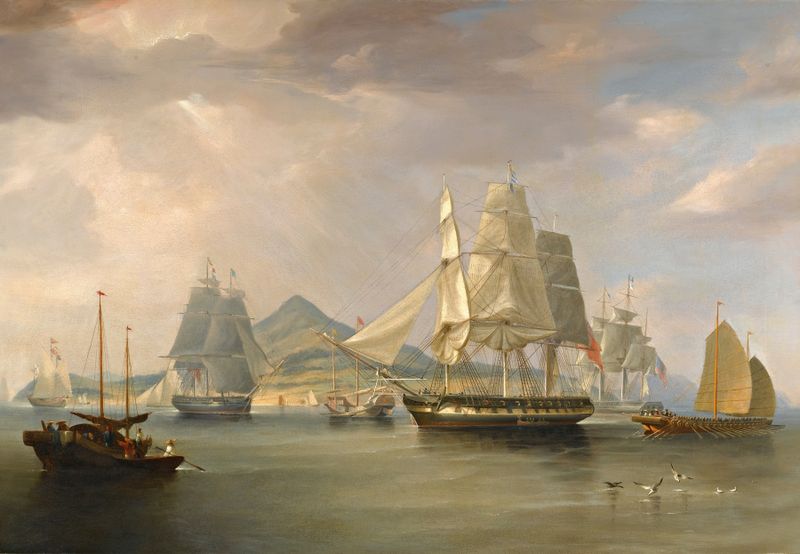
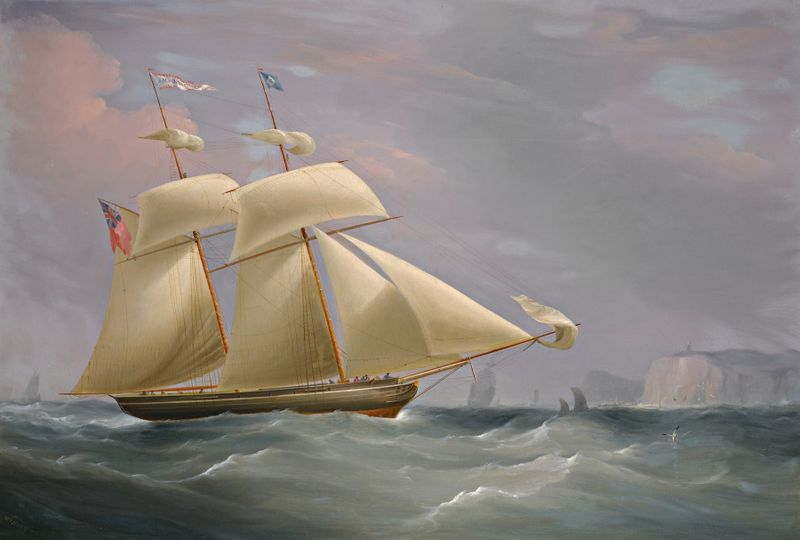
The void between presence and absence whispers through the gentle sway of the boats captured in the stillness of the sea. Here, we confront a world where water cradles memory, and the horizon seems to stretch infinitely, echoing the transient nature of life itself. Focus on the meticulously rendered ship, The Barque Sylph, anchored gracefully against the backdrop of a tranquil seascape. Notice how the light dances upon the water’s surface, mirroring the soft hues of blue and white that dominate the canvas.
The carefully composed layout invites the viewer’s eye to trace the ship’s elegant lines and sails, each stroke imbued with the skillful precision of the artist. The subdued palette evokes a sense of calm, while the billowing sails bring a hint of movement to this otherwise serene scene. Yet, beyond the beauty lies a poignant contrast. The ship, a vessel of adventure and exploration, exists in solitude, suggesting both freedom and the vulnerability of the mariner's life.
The gentle waves lap against the hull, invoking feelings of longing and nostalgia for the journeys yet to be embarked upon or the ones left behind. Every element, from the distant shoreline to the sky’s gentle gradient, harmonizes in a reflection of the delicate balance between existence and the void. William John Huggins created this work during a time when maritime exploration was at its height. While specific details of the date remain elusive, Huggins was active in the early to mid-19th century, a period rich with the expansion of trade routes and a burgeoning fascination with the sea.
This painting embodies not just the physicality of a ship, but also the dreams and aspirations of a generation captivated by the promise of distant lands.