The Opium Ships At Lintin, China — History & Facts
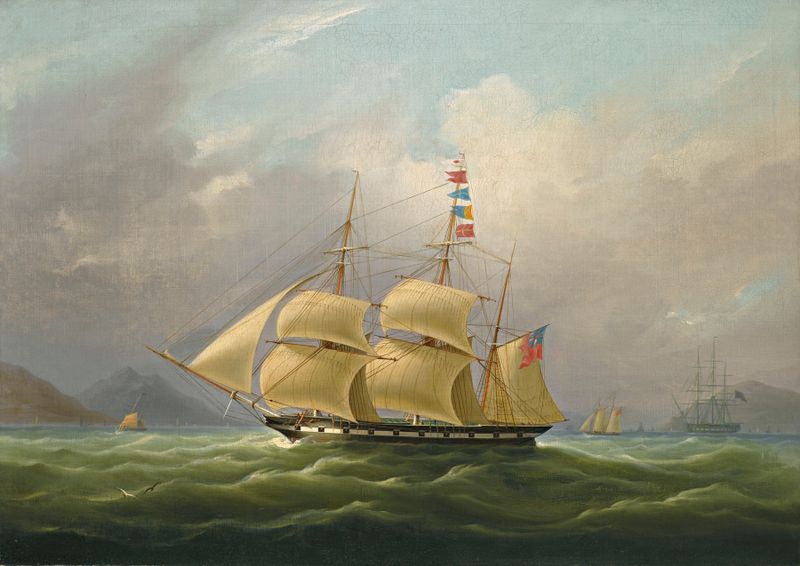
Is this a mirror — or a memory? The vast expanse of water and sky blends seamlessly, evoking both the serenity and sorrow that accompany the trade of opium during a tumultuous period in history. Look to the left at the billowing sails of the ships, their white canvas stark against the muted grays of an overcast sky. The delicate brushwork creates a sense of movement, suggesting the ships are not just vessels but participants in a larger narrative. Notice how the light reflects off the water, illuminating the hulls with a ghostly sheen, perhaps symbolizing the hidden darkness of their purpose — trafficking in grief. The juxtaposition of stillness and the rippling water hints at deeper emotional tensions.
While the ships stand poised against the horizon, they are laden with the weight of suffering, an unseen cargo that profoundly contrasts with the beauty of the scene. The nuanced palette evokes melancholy, leaving the viewer to ponder the human cost behind the trade; each wave may carry stories of loss, addiction, and despair. When The Opium Ships At Lintin, China was created in 1824, William John Huggins found himself at the forefront of maritime art in Britain. The opium trade was burgeoning, and the complexity of colonial relationships was shaping both commerce and culture.
Huggins, skilled in capturing the essence of the sea, used this moment to depict not just vessels and water, but the moral ambiguity that lay beneath the surface of progress.