The Topsail Schooner Amy Stockdale Off Dover — History & Facts
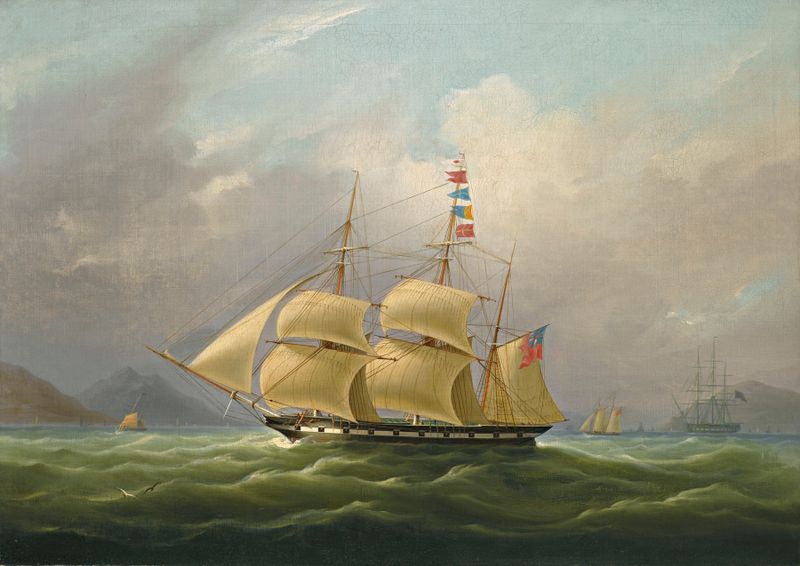
What secret hides in the quiet of the canvas? A stillness that belies the movement of maritime life, each brushstroke imbued with a melancholic whisper of adventure lost. Look to the left to see the graceful curves of the topsail schooner, Amy Stockdale, elegantly poised against the expansive, muted sky. The soft blues and grays meld seamlessly, evoking a sense of longing and nostalgia. Notice how the delicate brushwork captures the interplay of light on the water, shimmering like fleeting memories, while the ship itself—anchored yet distant—draws the viewer's gaze toward the horizon, suggesting both journey and separation. In this evocative scene, hidden meanings emerge from the contrast between the vibrant vessel and the shadowy backdrop.
The interplay of light and shadow reflects the dual nature of the sea—both a place of freedom and a harbinger of sorrow. The distant coastline, barely visible, serves as a reminder of home, casting a veil of bittersweet longing over the composition. Each wave appears to carry whispers of stories untold, evoking an emotional tension that resonates with anyone who has ever yearned for distant shores. Painted in 1838, this work emerged during a period of maritime exploration and burgeoning trade, as William John Huggins found himself immersed in the artistic community of London.
The artist captured scenes of seafaring life, while grappling with the impermanence of the moment—a theme that echoed in the lives of many during the industrial revolution. Through his art, he not only memorialized the ships of the era but also offered a poignant reflection on the passage of time and the melancholy inherent in human aspiration.