
The Battle of Fleurus, 1622 — History & Facts
Amidst a vast expanse of muted greens and browns, the clash of armies unfolds under a tumultuous sky. Soldiers, clad in armor glinting with the light of a low sun, charge forward, their faces etched with determination and fear. The air is thick with the tension of impending conflict, where each gesture — a raised sword, a rallying shout — holds a universe of longing for victory, for survival, for glory. Focus on the central scene, where the two factions collide in a fierce struggle.
Notice how the artist captures the chaos with swirling brushstrokes that mirror the frantic energy of battle. The muted palette emphasizes the gravity of the moment, while splashes of red and gold convey the violence and valor of the warriors. To the left, a flag billows defiantly, drawing the eye and symbolizing hopes and aspirations as it flutters amidst the din of war. Yet, within this grand battle, subtle details whisper deeper narratives.
Look closely at the expressions of the soldiers; while some are fierce and resolute, others reveal a flicker of doubt and desperation. The haunting shadows cast by the tumultuous clouds overhead contrast with the bright flashes of weaponry, suggesting that beneath the heroics lies a profound human yearning — not just for victory, but for meaning in the face of chaos. Created between 1630 and 1640, this work emerged during a time of political upheaval and artistic exploration in the Low Countries. Peter Snayers, a prominent battle painter, sought to immortalize the struggles of his time, reflecting not only the historical events but also the emotional undercurrents that defined the human experience in warfare.
More Artworks by Peter Snayers
Browse all →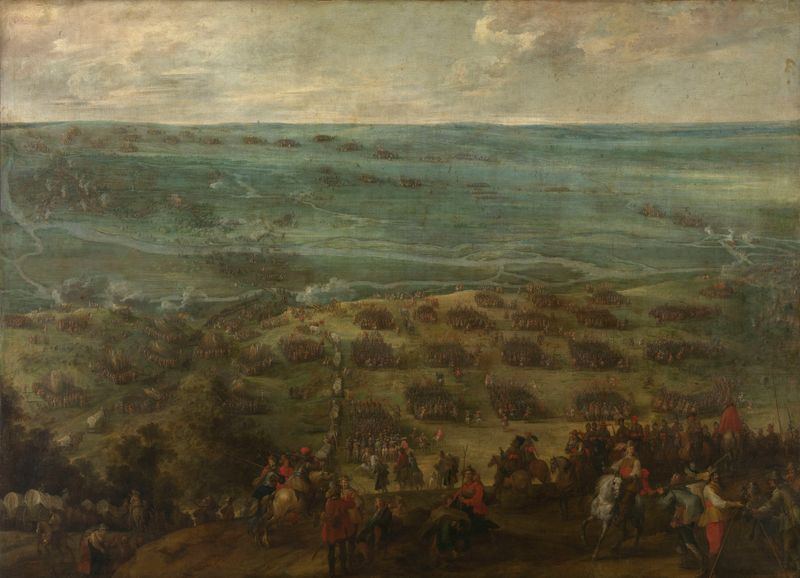
More Historical Art
Browse all →
The Night Watch Militia Company of District II under the Command of Captain Frans Banninck Cocq
Rembrandt van Rijn

Lincoln Memorial
Henry Bacon

The Third of May 1808
Francisco de Goya

Isaac and Rebecca, Known as ‘The Jewish Bride’
Rembrandt van Rijn

The Charge of the Mamelukes (1814)
Francisco de Goya

De vier ruiters van de apocalyps
Albrecht Dürer