The Calm — History & Facts
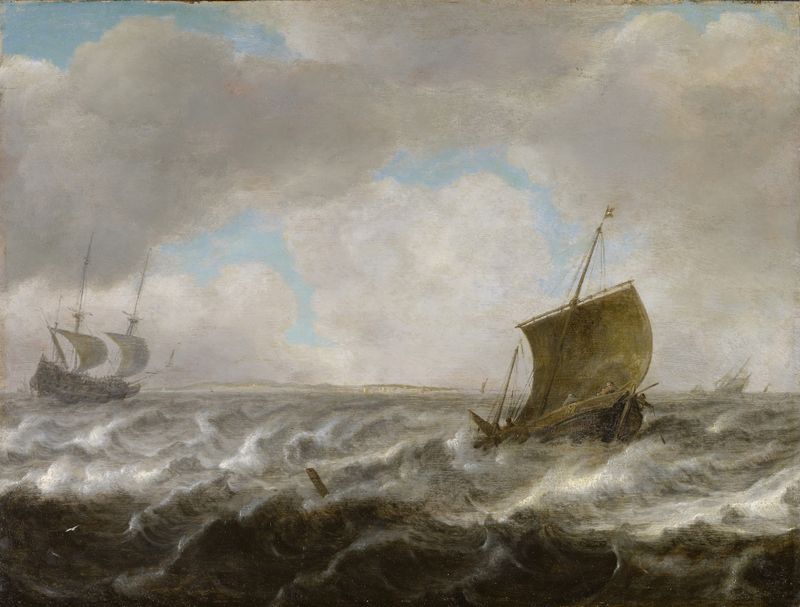
In the stillness of The Calm, the fragility of existence is captured with haunting beauty. The tranquil waters reflect a world suspended between the ephemeral and the eternal, inviting contemplation of our own mortality amid the gentle embrace of nature. Look to the center of the canvas, where the horizon line blurs softly into the sky, a delicate gradient of blues and grays. The water is a mirror, meticulously rendered, creating an illusion of infinite space.
Notice how the light dances on the surface, casting ethereal shimmer that contrasts against the shadowy silhouettes of distant ships. The subtle strokes evoke a sense of serenity while hinting at the impending uncertainties of life, each ripple a reminder of what is fleeting. Deeper meanings arise from the juxtaposition of calmness and the unseen depth beneath the surface. The distant vessels, barely visible, speak of journeys untaken or destinies awaited.
The muted palette suggests a world that is both inviting and melancholy, where the stillness belies the chaos of human emotion. Here, nature’s beauty exists alongside the inevitability of change, prompting reflections on our place within this vast and changing landscape. Julius Porcellis painted The Calm during the 17th century, a period marked by significant shifts in European art and society. Active in the Netherlands, Porcellis was influenced by the maritime themes that dominated Dutch painting.
This work reflects both his dedication to serene landscapes and the broader artistic exploration of light and water that characterized the era, serving as a poignant reminder of our transitory existence amid the beauty of the natural world.