Ships in distress off a rocky coast — History & Facts
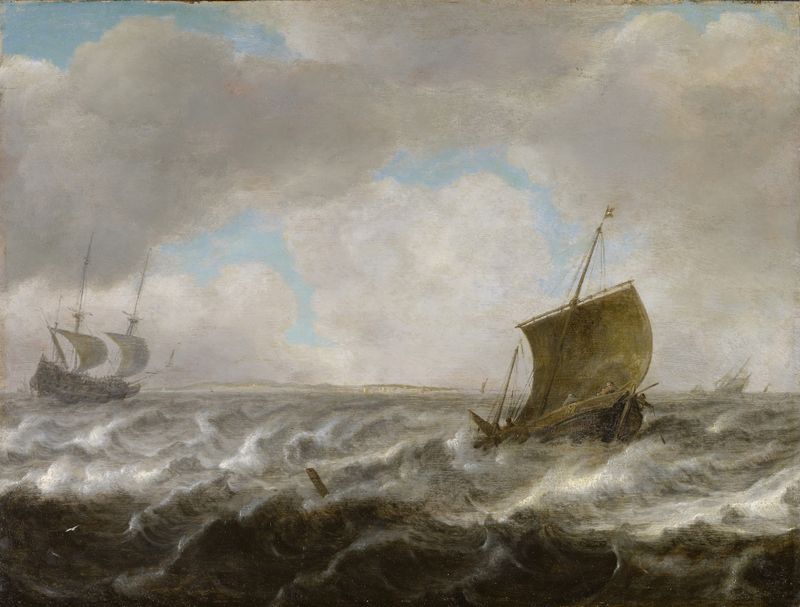
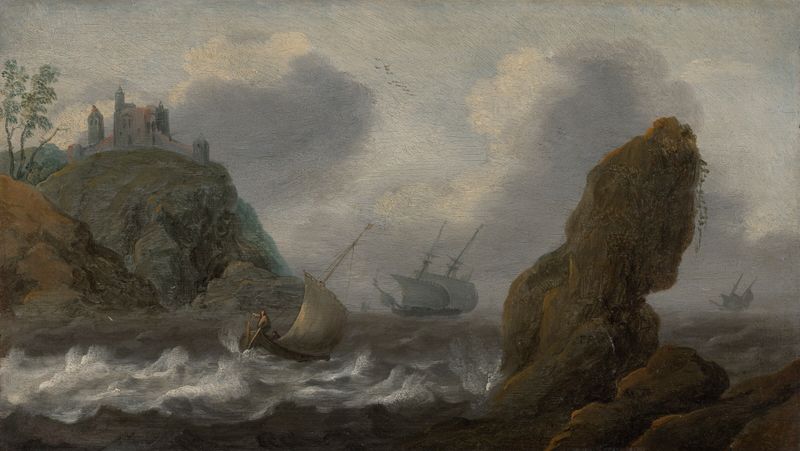
Could beauty survive in a century of chaos? In the tempestuous embrace of nature, where the sea battles the steadfast rocks, loneliness finds its expression in the struggle of the ships. Each vessel, small against the vastness, faces not only the raging waters but also the isolation of its own fate. Look to the left at the crashing waves, their foamy crests reflecting hints of both light and fear. Notice how the ship’s sails, taut and straining against the wind, guide the viewer's eye toward the horizon where the darkness looms.
The muted palette of blues and grays emphasizes the overwhelming power of nature, while the jagged rocks stand like sentinels, indifferent to the plight of those adrift. The meticulous brushwork reveals not just the tumult of the storm but the quiet desperation of solitude intertwined with beauty. Within this chaos lies a deeper commentary on the human condition. The ships, though grounded in isolation, symbolize resilience against overwhelming odds.
The composition invites a reflection on the tension between the struggle for survival and the inexorable pull of loneliness, as each vessel grapples with its own destiny amidst nature’s indifference. The play of light against dark not only highlights the physical dangers but also evokes the emotional weight of solitude faced by those at sea. Julius Porcellis painted this work during a time when maritime themes were gaining prominence in Dutch art. The late 16th to early 17th centuries were marked by artistic exploration and innovation, reflected in the way artists like Porcellis captured the sublime power of the sea.
His focus on ships—often portrayed in perilous situations—mirrored the uncertainties of his time, both on a personal and broader cultural scale.