The Storm — History & Facts
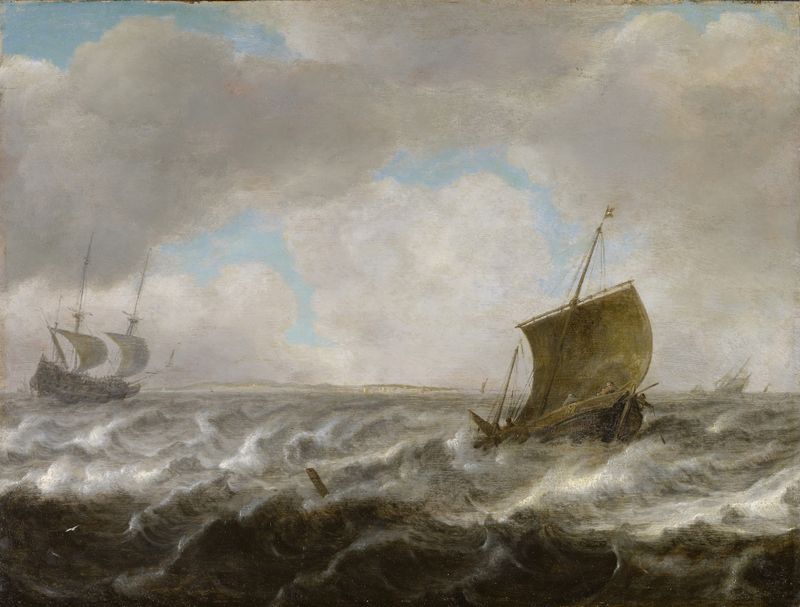
In this silence, we find a paradox; beneath the surface of calm, emotions churn and swirl, begging for expression. Look closely at the horizon where the tumultuous clouds gather, dark and brooding. The brushwork reveals a tempest brewing, with thick strokes of deep grey and ominous blue that seem to pulse with energy. Notice how the light manages to sneak through the cracks, illuminating the roiling water below, casting a fleeting glimmer in stark contrast to the impending storm.
The restless sea, captured in motion, reflects the chaotic sky above, blurring the lines between the elements, inviting viewers to feel the tension of the moment. Within this tumult lies a deeper narrative. The contrast between the tranquil foreground and the threatening sky evokes a tension that resonates profoundly with human experience — the constant balancing act between serenity and turmoil. Each wave, caught in mid-crash, symbolizes the unpredictable nature of life itself, while the horizon represents both hope and impending chaos.
Here, stillness is but a breath away from the storm’s fury, embodying the silence that precedes the inevitable eruption of emotion. Julius Porcellis painted this piece during a time when the art world was evolving, likely influenced by the Dutch Golden Age’s fascination with landscapes and seascapes. His work reflects the intricate relationship between nature's beauty and its ferocity, embodying the dualities of existence. Little is documented about the specific circumstances surrounding this piece, yet it stands as a testament to his mastery in capturing the sublime tension of the natural world.