
The Cascades At Tivoli — History & Facts
In the gentle embrace of nature, fear lurks just beyond the tranquil surface, waiting to ensnare the unguarded heart. Look to the left at the verdant greens that cascade down into the crystalline waters, forming a natural curtain that both invites and conceals. The painting’s soft palette of blues and greens immerses the viewer in a serene yet unsettling serenity, where delicate light filters through the trees, casting shadows that beckon contemplation. Notice how the intricate brushwork captures the texture of the foliage, each stroke alive with pulsating energy, while the distant ruins hint at a lost civilization, urging us to ponder the passage of time. The contrast between the lush surroundings and the crumbling architecture signifies a profound tension between beauty and decay.
There is a haunting stillness in the air, as if the specter of fear resides within the idyllic scene, reminding us of nature's unpredictable power. The tranquility invites a moment of reflection, yet the viewer cannot escape the anxiety of impermanence, feeling the weight of history and the fragility of existence in every glance. Hubert Robert created The Cascades at Tivoli during a period rich with the nostalgia of ruins and the sublime beauty of nature. Painting in the late 18th century, he was influenced by the burgeoning Romantic movement, which embraced emotions and the natural world's rawness.
At this time, Robert was navigating a complex art world, championing the picturesque while grappling with the Romantic themes that would define a generation, allowing his landscapes to serve as reflections of both beauty and fear.
More Artworks by Hubert Robert
Browse all →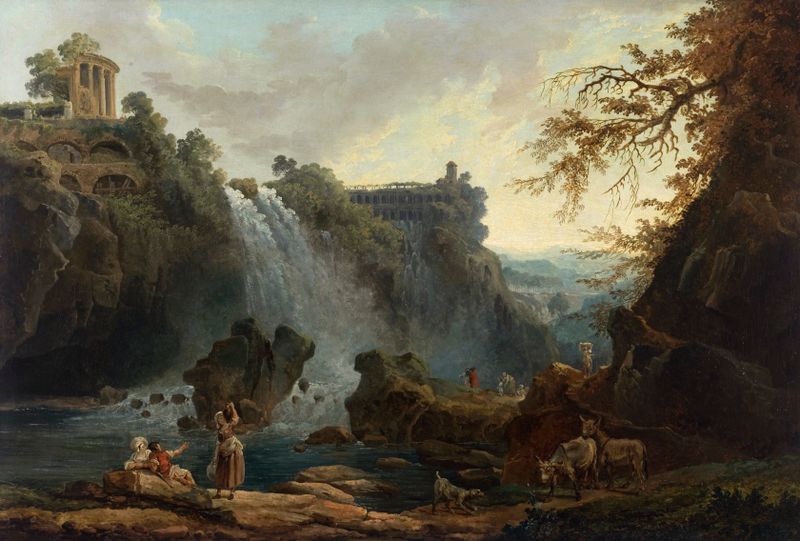
Les Cascatelles de Tivoli
Hubert Robert
Roman Ruins, Villa Pamfili
Hubert Robert

The Rustic Bridge, Château de Méréville, France
Hubert Robert

The Portico of a Country Mansion
Hubert Robert

Architectural Capriccio
Hubert Robert

The Obelisk
Hubert Robert
The Antique Gallery
Hubert Robert

L’incendie de l’Opéra, vu des jardins du Palais-Royal, le 8 juin 1781
Hubert Robert
The Grotto of Posillipo
Hubert Robert

Architectural Capriccio with ruins of the Temple of Saturn and the Colosseum in the background
Hubert Robert





