
The Cemetery Gate (The Churchyard) — History & Facts
In the stillness of existence, we often find ourselves caught between reality and a yearning beyond it — an ecstasy that vibrates in the quiet spaces of our lives. Focus on the ethereal glow emanating from the horizon in The Cemetery Gate. The subdued earth tones and muted greens invite your gaze to the darkened archway, where the gate stands partially ajar, suggesting passage and beckoning contemplation. Notice how the light plays upon the misty landscape, casting a soft halo that frames the entrance.
Every brushstroke appears intentional, offering a contrast between the weight of nature and the delicacy of the fleeting moment. Within the scene lies a tension between life and death, movement and stillness. The inviting path beyond the gate contrasts with the somber gravestones studding the foreground, evoking a bittersweet longing for what lies beyond. This juxtaposition is a reflection on the human condition — the desire to embrace the infinite while remaining tethered to the finite.
The gate, both a literal and metaphorical threshold, gains significance as a symbol of hope and uncertainty intertwined. Created between 1825 and 1830, Friedrich painted this piece during a period of profound personal exploration and artistic evolution in German Romanticism. Living in a time marked by existential contemplation, he sought to express the sublime through nature and architecture. This work encapsulates a moment where the artist's inner struggles and the wider cultural milieu converged, capturing the essence of longing that resonates through generations.
More Artworks by Caspar David Friedrich
Browse all →
Wanderer above the Sea of Fog
Caspar David Friedrich
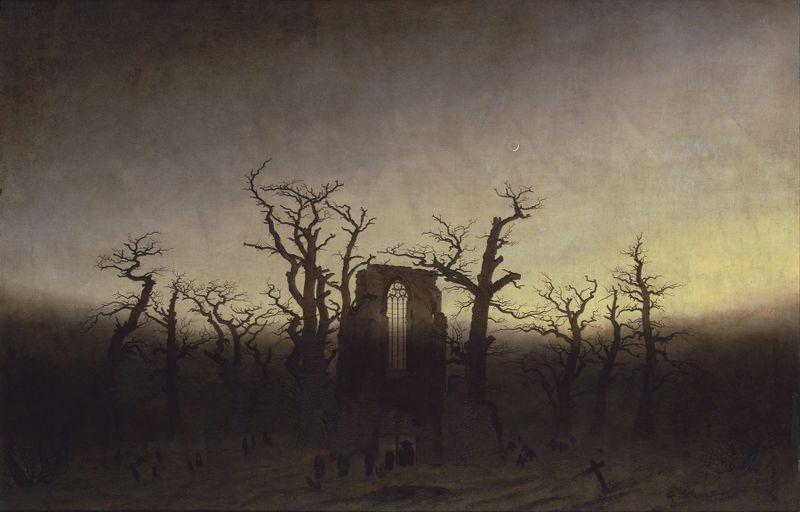
The Abbey in the Oakwood
Caspar David Friedrich
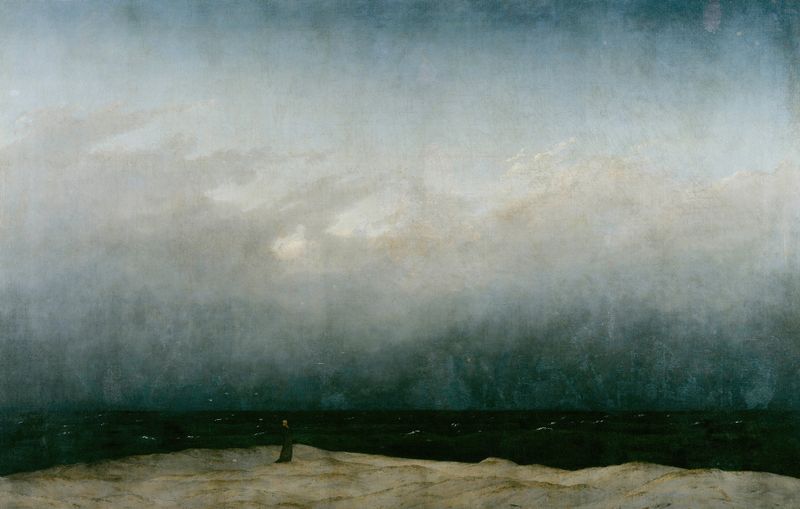
The Monk by the Sea
Caspar David Friedrich
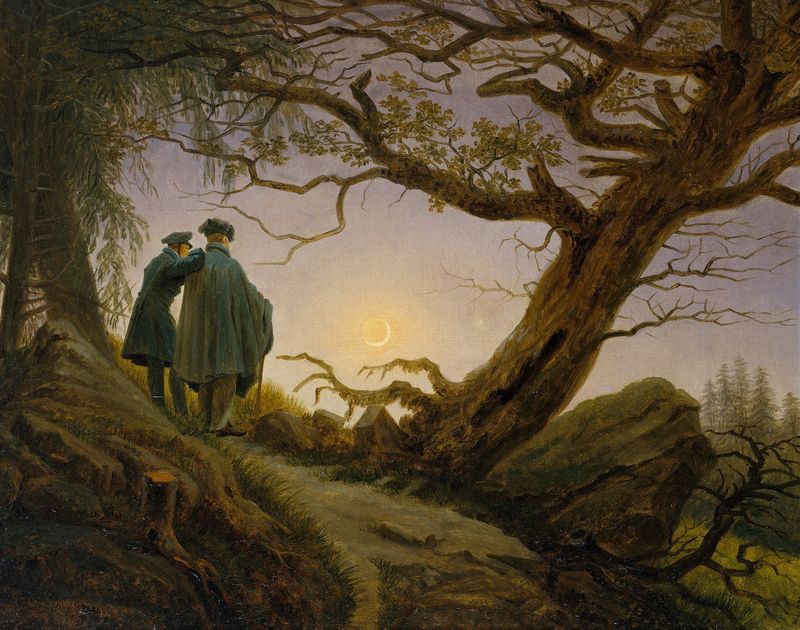
Two Men Contemplating the Moon
Caspar David Friedrich
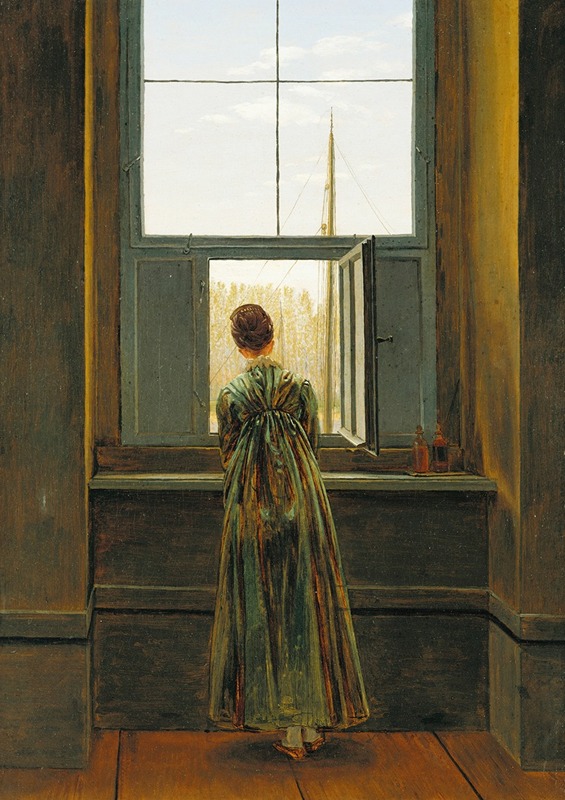
Woman at a Window
Caspar David Friedrich
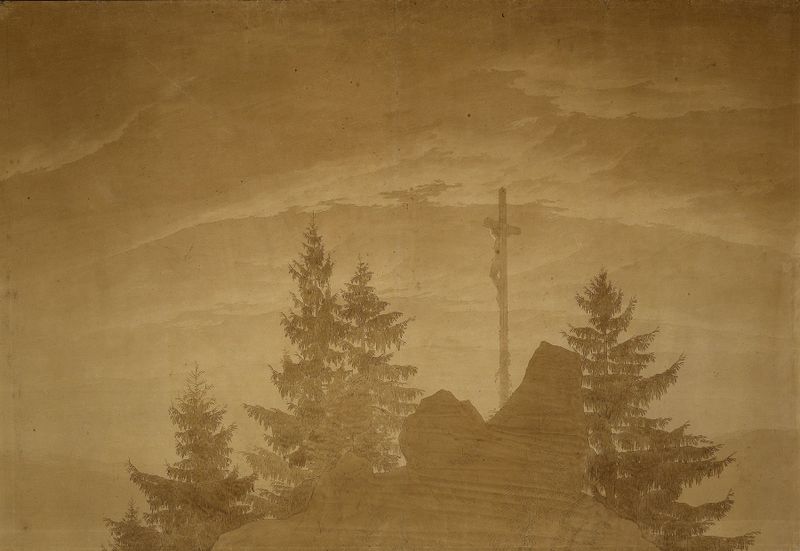
Cross in the Mountains
Caspar David Friedrich
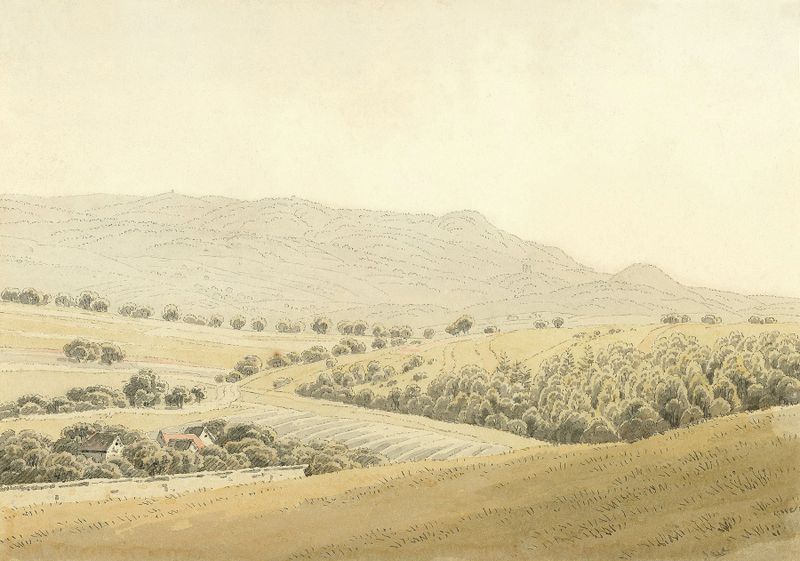
Mittelgebirgslandschaft
Caspar David Friedrich
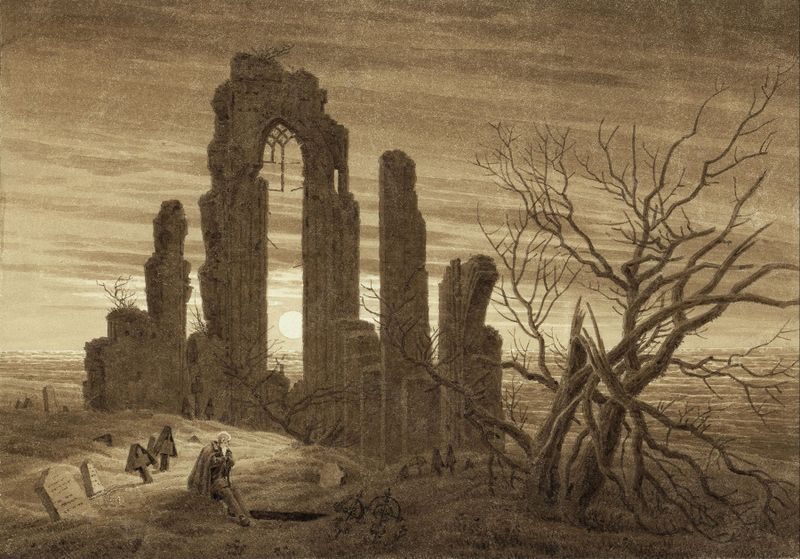
Winter – Night – Old Age and Death (from the times of day and ages of man cycle of 1803)
Caspar David Friedrich
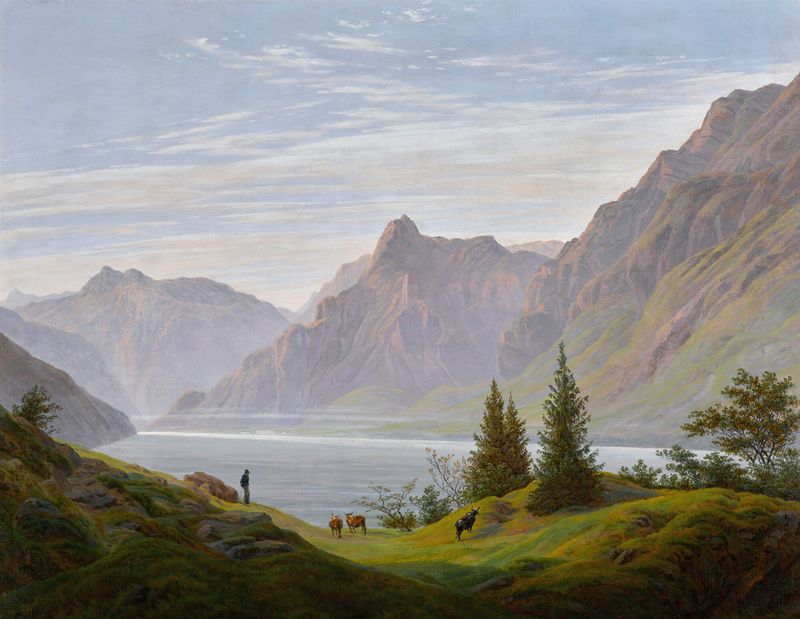
Landschaft mit gebirgsee, morgen
Caspar David Friedrich
Northern Sea in the Moonlight
Caspar David Friedrich





