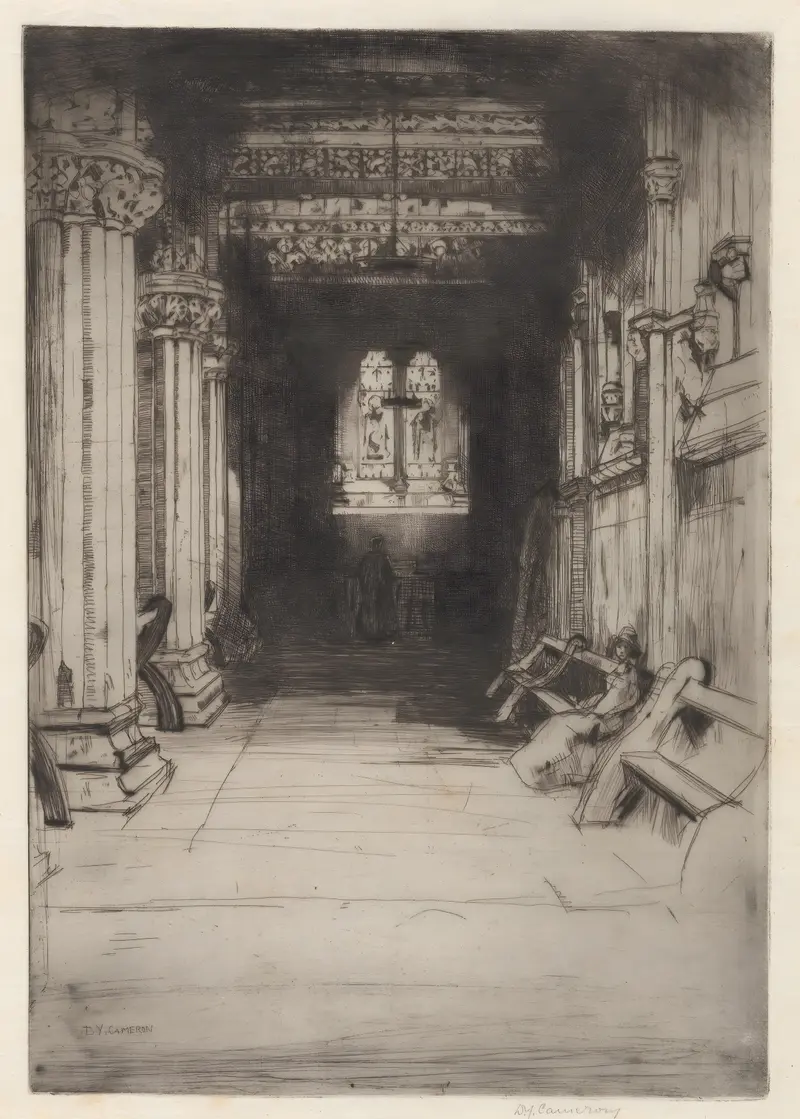
The Chapel and Founder’s Tomb, Charterhouse — History & Facts
Within the stillness of the chapel, beauty transcends the physical realm, inviting contemplation and reverence. Look to the center of the composition, where the tomb lies peacefully, its stone surface echoing the weight of history. Surrounding it, the soft play of light filters through stained glass, casting vibrant hues that dance across the muted tones of the chapel's interior. The meticulous brushwork captures the intricate details of both architecture and sepulcher, drawing the viewer into a sacred space where time seems suspended. In this tranquil setting, the juxtaposition of hard stone and ephemeral light speaks to life's fragile beauty.
The rich textures evoke a sense of permanence, while the fleeting colors suggest the passage of time and the transitory nature of existence. Every corner of the painting whispers stories of the past, contrasting solemnity with a profound sense of grace, urging the viewer to ponder their own relationship with mortality and memory. David Young Cameron created this work between 1894 and 1910, during a period marked by a burgeoning interest in the interplay of light and shadow. As he painted in Scotland, the art world was embracing movements that emphasized the atmospheric qualities of landscapes and interiors.
This was a time when artists sought to convey deeper emotional experiences, a pursuit that resonated profoundly within the walls of this chapel, echoing the solemn beauty of life and remembrance.
More Artworks by David Young Cameron

Ponte Vecchio
David Young Cameron
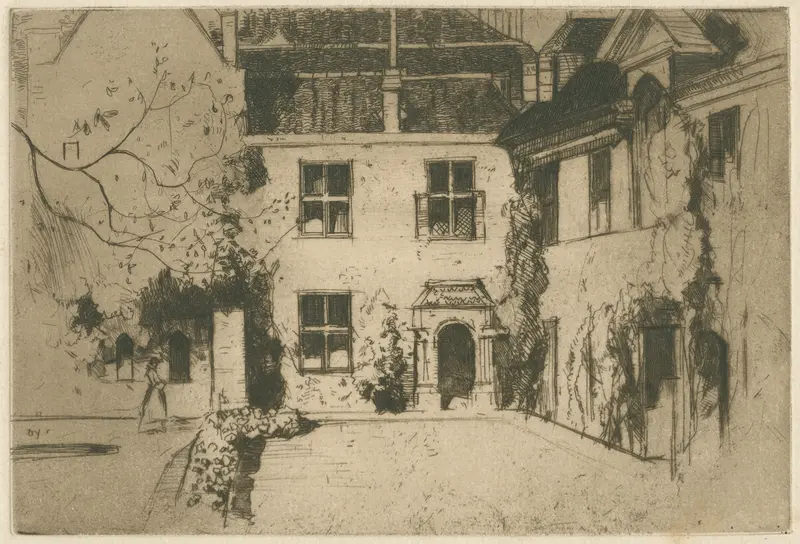
The Deanery, Winchester
David Young Cameron
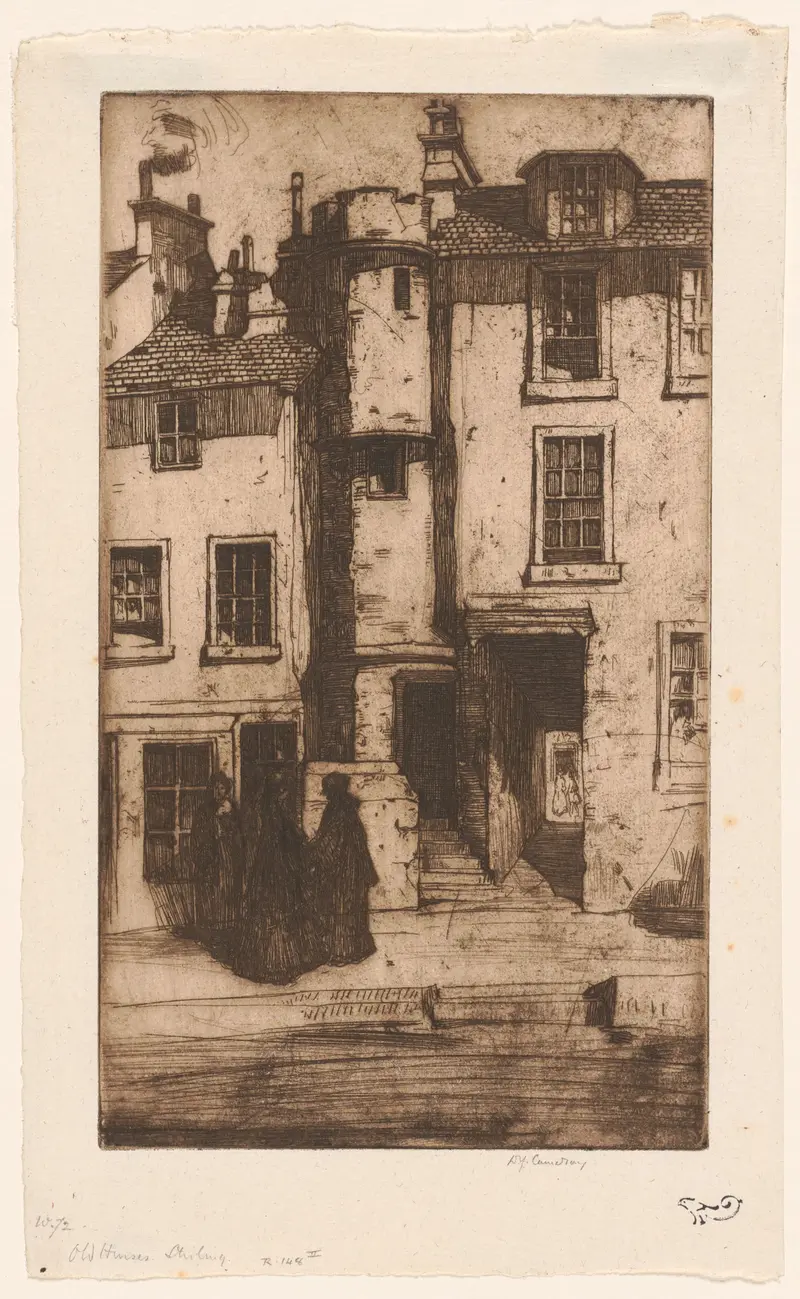
Old Houses, Stirling
David Young Cameron
Rosslyn Chapel
David Young Cameron
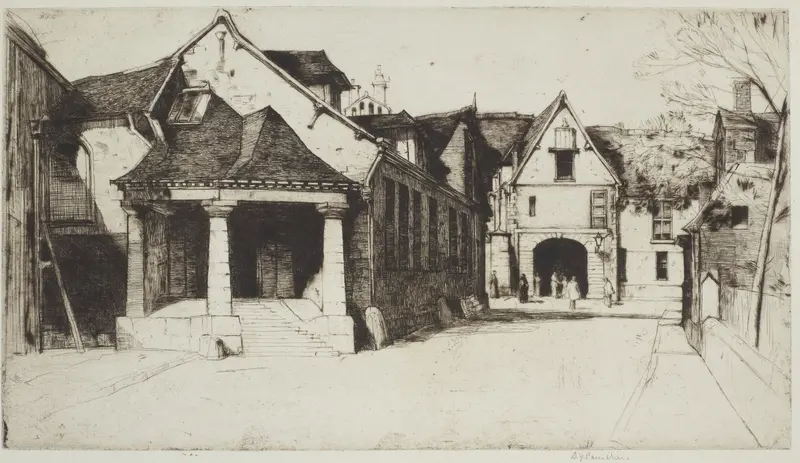
The Old Museum, Beauvais
David Young Cameron
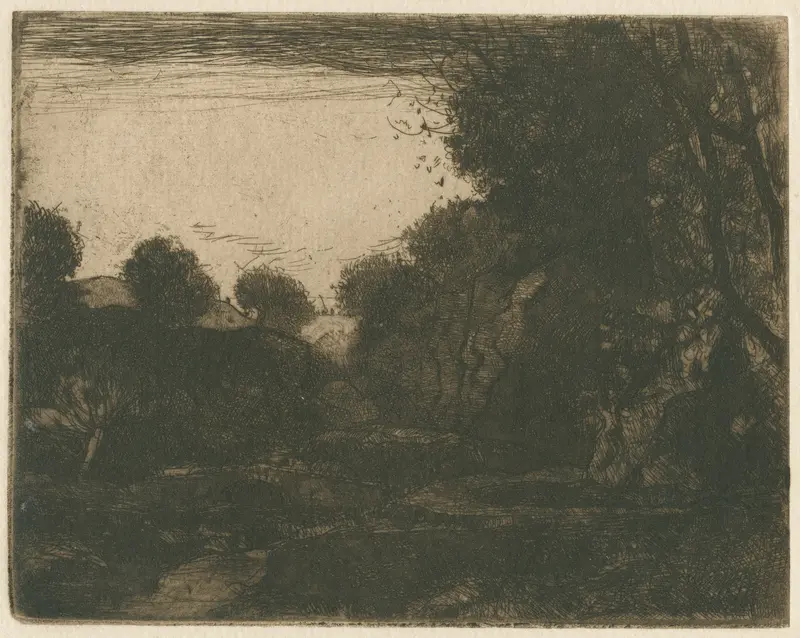
On the Bradford
David Young Cameron
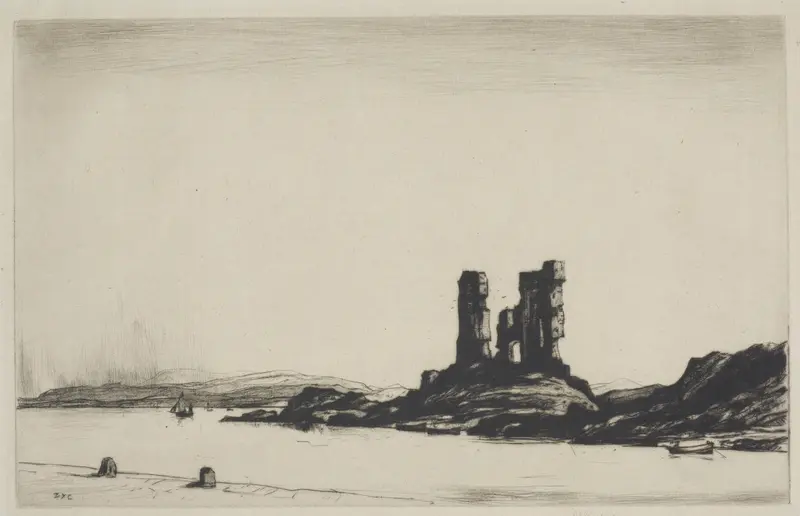
Castle Moyle
David Young Cameron
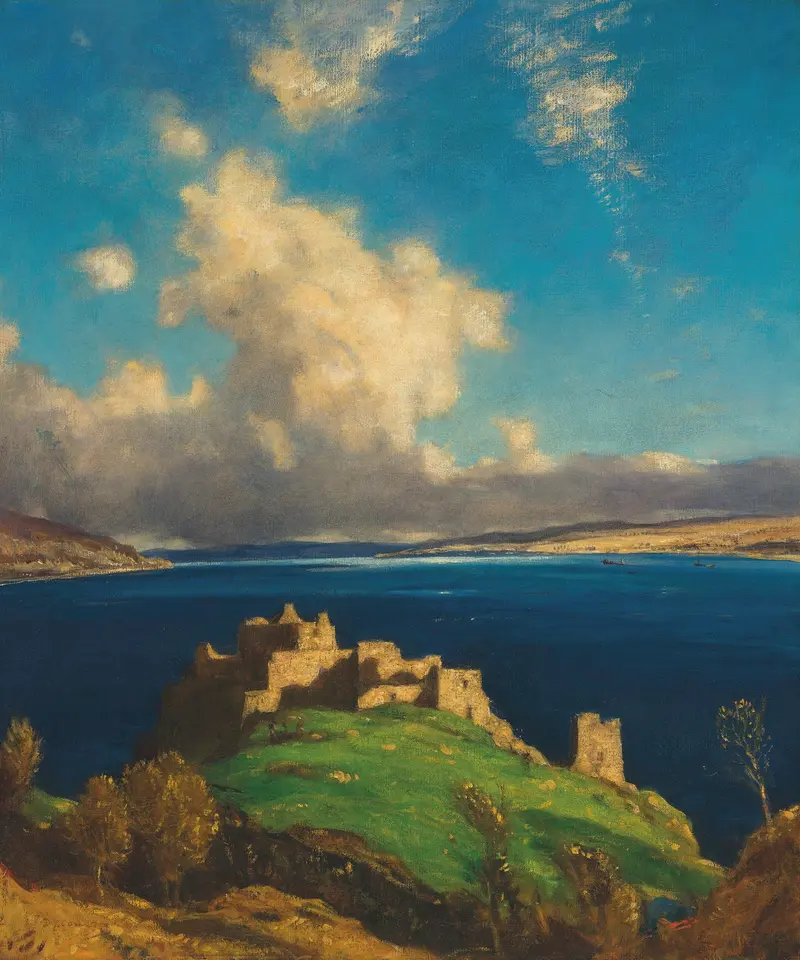
Castle Urquhart and Loch Ness
David Young Cameron
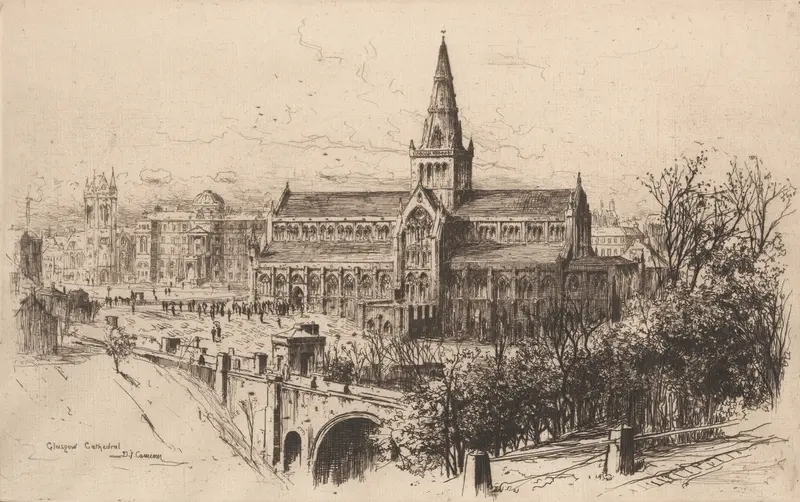
Glasgow Cathedral
David Young Cameron
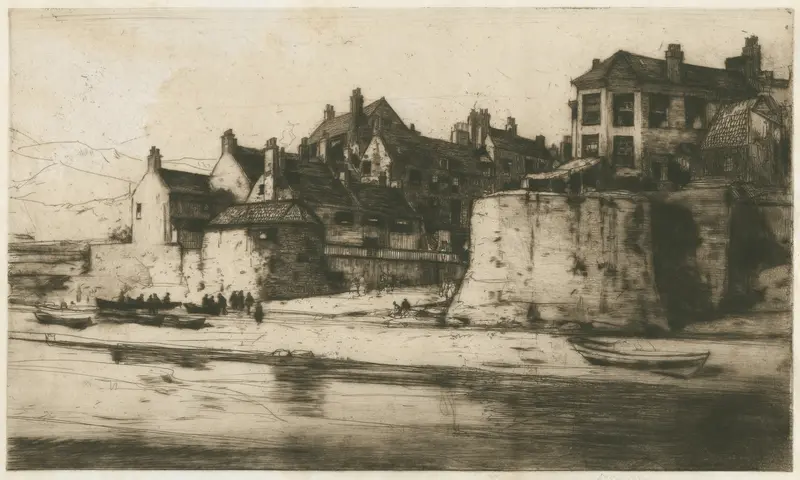
Robin Hood’s Bay
David Young Cameron