
The Close Of A Summer Day — History & Facts
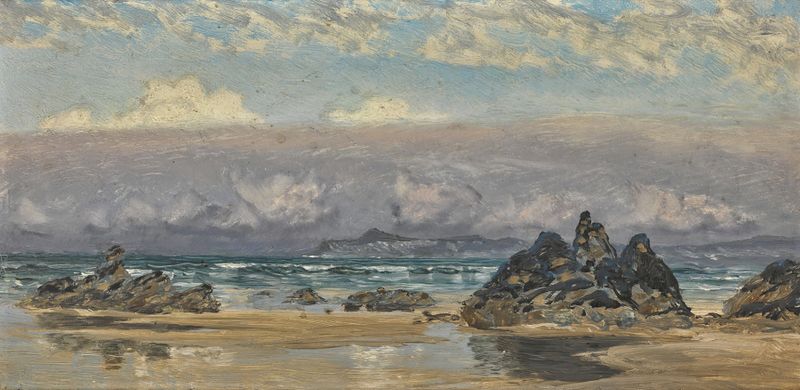
Can beauty exist without sorrow? In The Close Of A Summer Day, the answer lingers in the air, haunting and profound. The painting invites contemplation of fleeting moments as the day fades, casting shadows that suggest an inevitable decay, a reminder of life's transience. Look to the horizon, where the sun sinks slowly, its vibrant oranges and deep purples blending into a tranquil twilight. Notice how the light dances on the water, creating shimmering reflections that seem to whisper secrets of the day's end.
The brushwork is meticulous, with each wave and cloud rendered in delicate detail, drawing the viewer's eye to the interplay of color and form. The scene is serene yet charged, a perfect balance that captures the essence of summer’s departure. Examining the figure in the foreground, we sense a subtle tension—the figure is turned away from the viewer, lost in thought, perhaps mourning the passing of another summer. This isolation amidst the surrounding beauty evokes a poignant contrast between joy and melancholy, suggesting that every bright moment carries an undercurrent of loss.
The lush landscape surrounding him is vibrant yet hints at decay, with leaves just beginning to turn, symbolizing the cycle of life and the inevitable passage of time. Painted in 1880, during a period of personal transformation for John Brett, this work reflects his engagement with the Pre-Raphaelite movement and his preoccupation with nature. At this time, Brett was exploring the boundaries of realism and emotion in art, striving to capture the ephemeral beauty of nature while facing the realities of life’s impermanence. The painting not only embodies his artistic ambitions but also resonates with the broader themes of change and loss prevalent in the world around him.
More Artworks by John Brett
Browse all →
The Cornish Coast Near Newquay
John Brett

A View of Felixstowe
John Brett
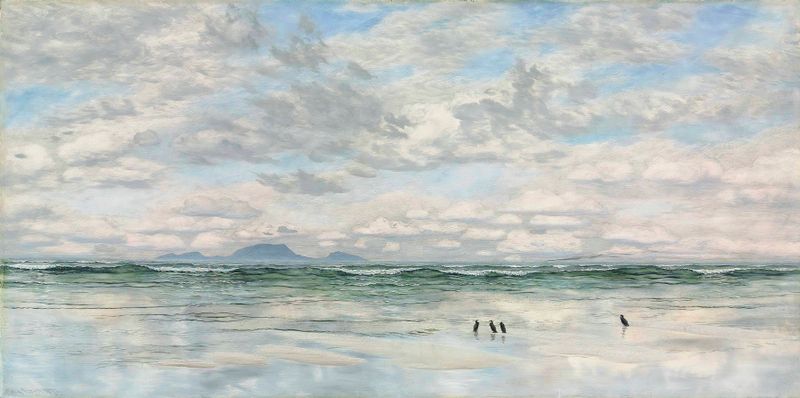
A Summer Day, Whitesands Bay, Pembrokeshire, South Wales
John Brett

Heavy Squall off the Start Lighthouse
John Brett

Kynance
John Brett

Entrance To Yarmouth Harbour
John Brett
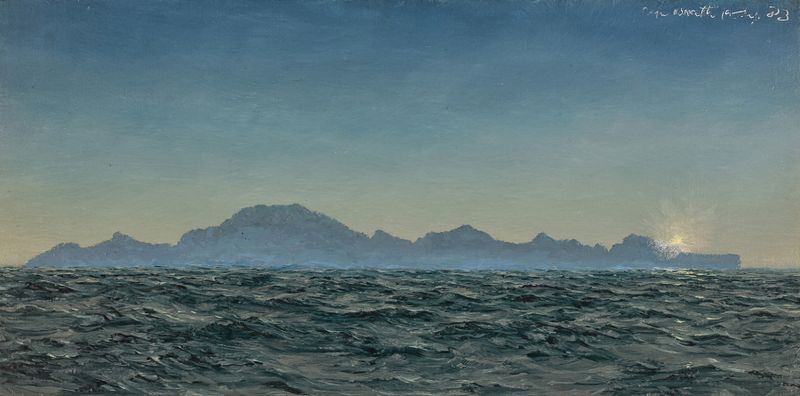
Cape Wrath
John Brett
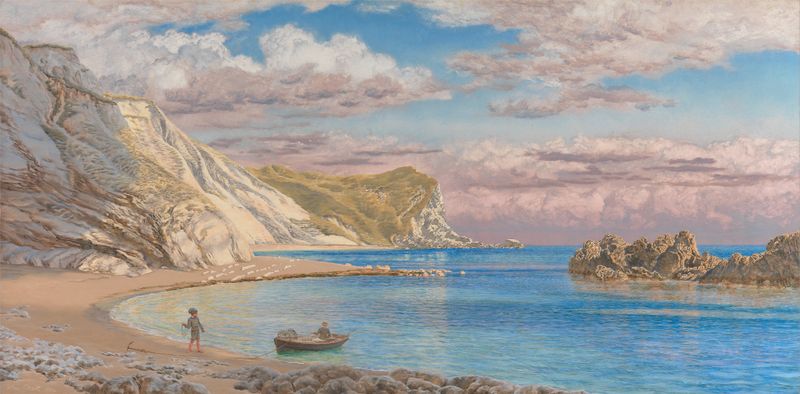
Man of War Rocks, Coast of Dorset
John Brett
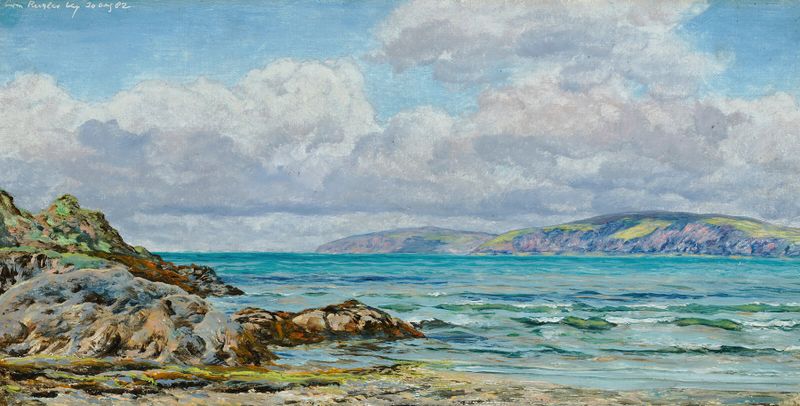
Cwm-yr-Eglwys Bay
John Brett
Newquay, Cornwall
John Brett





