
A View of Felixstowe — History & Facts
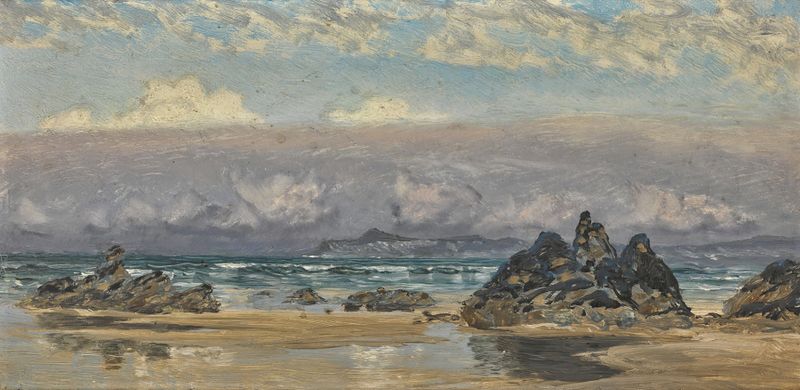
What secret hides in the quiet of the canvas? In A View of Felixstowe, the stillness of the sea and the muted skies whisper of a longing, a memory that haunts the horizon. Look to the foreground at the soft, rolling waves, each stroke of paint meticulously crafted to capture their gentle swell. Notice how the light cascades across the water's surface, illuminating flecks of white foam that dance like fleeting thoughts. The composition invites you to trace the shoreline, where the delicate brushwork blurs the boundary between land and sea, evoking a sense of continuity and loss intertwined. As you explore further, consider the ominous clouds gathering in the distance, hinting at an impending storm.
This contrast between the serene foreground and the turbulent sky mirrors an emotional dichotomy. Each element, from the solitary boat anchored near the shore to the distant cliffs, encapsulates themes of solitude and the inevitability of change. The painting's muted palette reflects a melancholic beauty, echoing the artist's own sense of longing. John Brett created this work in 1893 while living in England, a period marked by both personal and artistic transformation.
He was known for his devotion to capturing the natural world with precision, yet during this time, he was grappling with the evolving art movements around him and his place within them. The piece reflects not only his technical skill but also a deep emotional resonance, inviting viewers to contemplate their own experiences of loss and memory.
More Artworks by John Brett
Browse all →
The Cornish Coast Near Newquay
John Brett
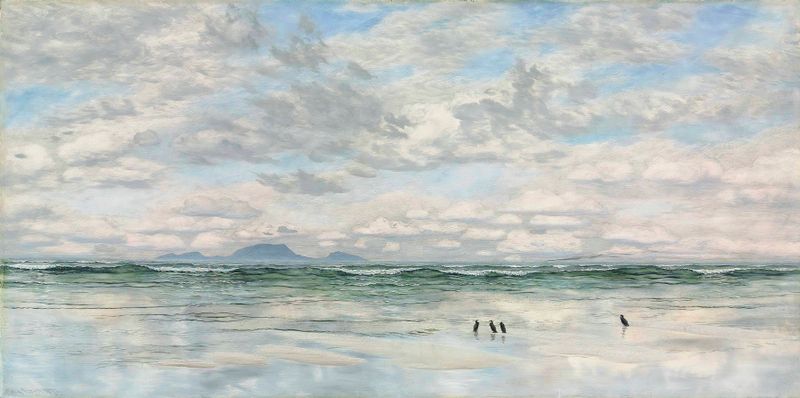
A Summer Day, Whitesands Bay, Pembrokeshire, South Wales
John Brett

Heavy Squall off the Start Lighthouse
John Brett

Kynance
John Brett

Entrance To Yarmouth Harbour
John Brett
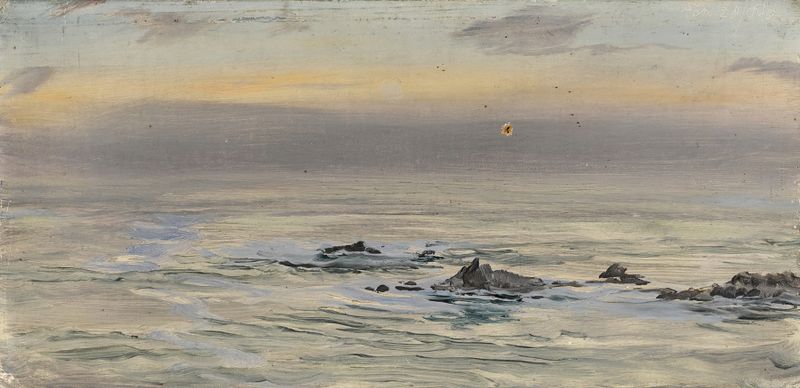
The Close Of A Summer Day
John Brett
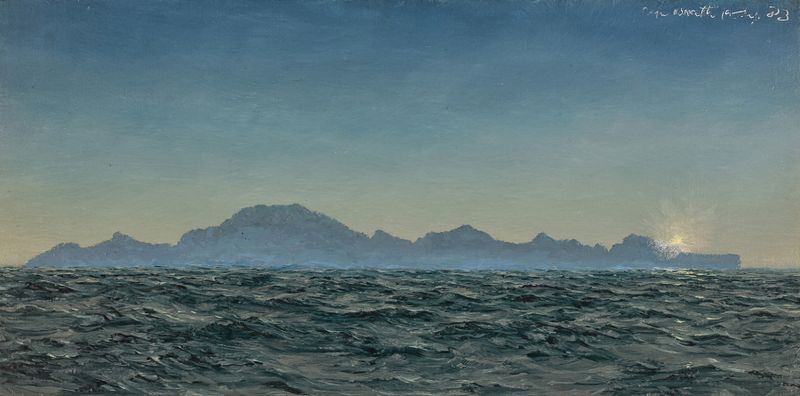
Cape Wrath
John Brett

Man of War Rocks, Coast of Dorset
John Brett
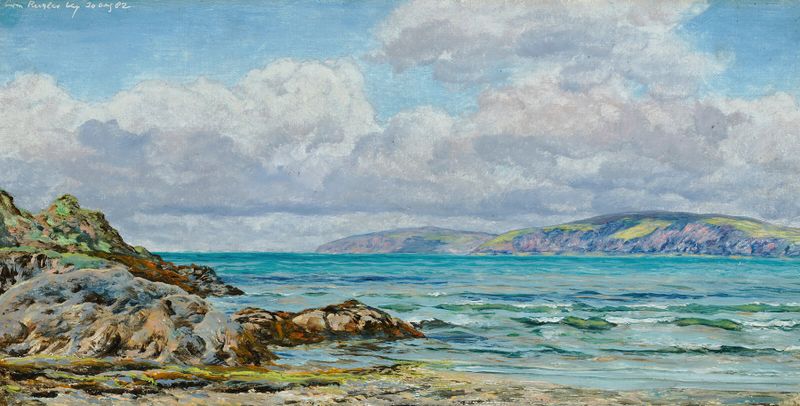
Cwm-yr-Eglwys Bay
John Brett
Newquay, Cornwall
John Brett





