
Cwm-yr-Eglwys Bay — History & Facts
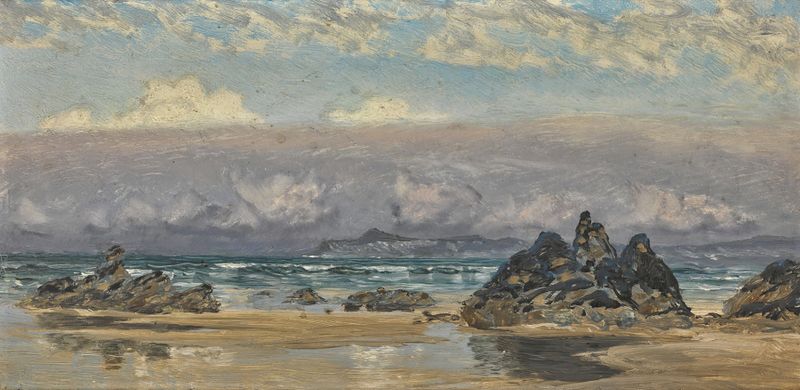
The weight of unspoken sorrow permeates the air in this serene coastal view, inviting contemplation on the fragile nature of existence. Look to the foreground where gentle waves lap at the shore, each cresting ripple reflecting a quiet melancholy. The sandy beach, painted with delicate brushstrokes, leads the viewer’s gaze towards the brooding cliffs that rise in the distance. Notice how the soft, muted colors—grays and greens—evoke a sense of stillness, while the hints of sunlight breaking through the clouds illuminate the water, suggesting a fleeting moment of hope amid the overarching gloom. The contrast between the rugged cliffs and the inviting bay speaks to the duality of beauty and desolation.
Each element, from the distant horizon to the weathered rocks, holds a memory, a reminder of transitions past. The viewer may sense an unfulfilled longing, perhaps reflecting Brett's own turbulent emotions, captured within the layers of paint. The scene feels both expansive and confined; the open sea promises adventure, yet the cliffs stand as barriers to escape. In 1882, the artist found himself at a turning point, grappling with both personal and professional challenges.
Living in England, he was influenced by the Pre-Raphaelite movement yet sought to carve his own path in the realm of landscape painting. At this time, he was exploring the interplay of light and nature, revealing complex emotions through the stillness of a moment—an exploration that resonates deeply within Cwm-yr-Eglwys Bay.
More Artworks by John Brett
Browse all →
The Cornish Coast Near Newquay
John Brett

A View of Felixstowe
John Brett
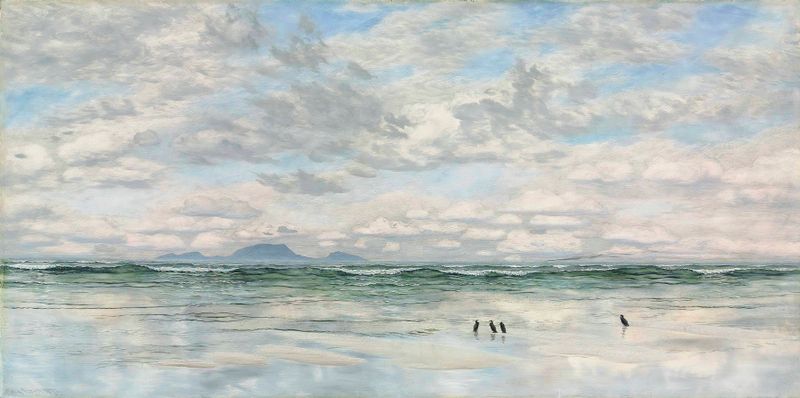
A Summer Day, Whitesands Bay, Pembrokeshire, South Wales
John Brett

Heavy Squall off the Start Lighthouse
John Brett

Kynance
John Brett

Entrance To Yarmouth Harbour
John Brett
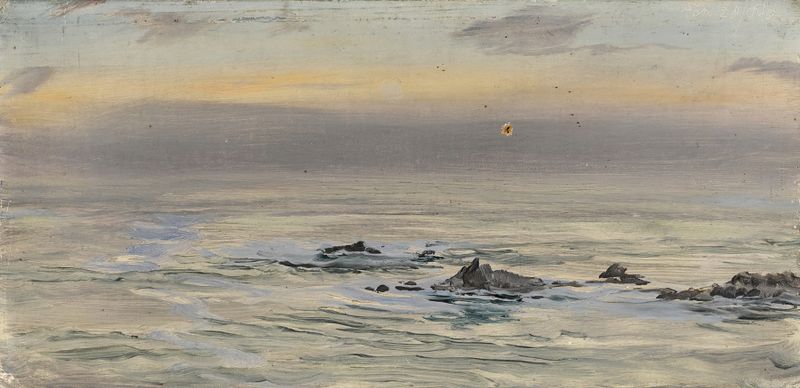
The Close Of A Summer Day
John Brett
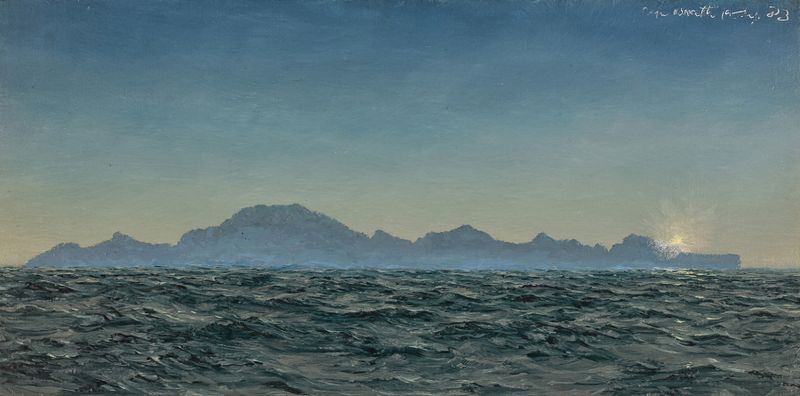
Cape Wrath
John Brett
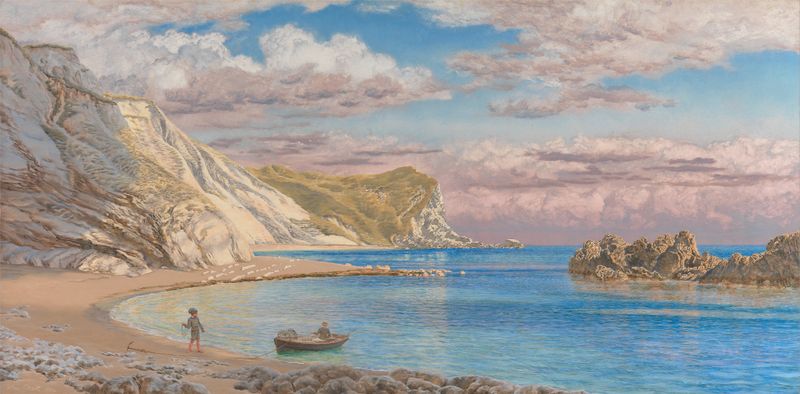
Man of War Rocks, Coast of Dorset
John Brett
Newquay, Cornwall
John Brett





