
The Columns of Augustus at Brundisium — History & Facts
Can paint confess what words never could? In The Columns of Augustus at Brundisium, the vibrant brushstrokes evoke a world teetering on the brink of awakening, inviting us to question the past and envision the future. Look to the left at the majestic columns, rising proudly against the backdrop of a clear blue sky. Their weathered texture contrasts starkly with the soft greens and ochres of the surrounding landscape, drawing the eye to their grandeur. Notice how the light dances upon the stone, illuminating the intricacies of the carvings that tell stories of glory and reverence.
The composition is balanced yet dynamic, as the alignment of the columns suggests a pathway leading toward new horizons. Beyond the surface lies a dialogue between time and memory. The decay of the columns hints at impermanence, reflecting the ephemeral nature of glory. Meanwhile, the flourishing vegetation at their base symbolizes rebirth and resilience, contrasting the stillness of the ancient stone with the vibrancy of life.
This tension evokes a poignant sense of longing—not only for what has been lost but also for what might yet bloom anew. In 1785, Willey Reveley was immersed in studying classical architecture while residing in Italy. This period marked a significant shift in his artistic journey, as he sought to merge the ideals of antiquity with the burgeoning neoclassical movement. Amidst the romantic reverence for the ruins, he captured a moment where history and aspiration entwine, reflecting both personal and collective awakening.
More Artworks by Willey Reveley
Browse all →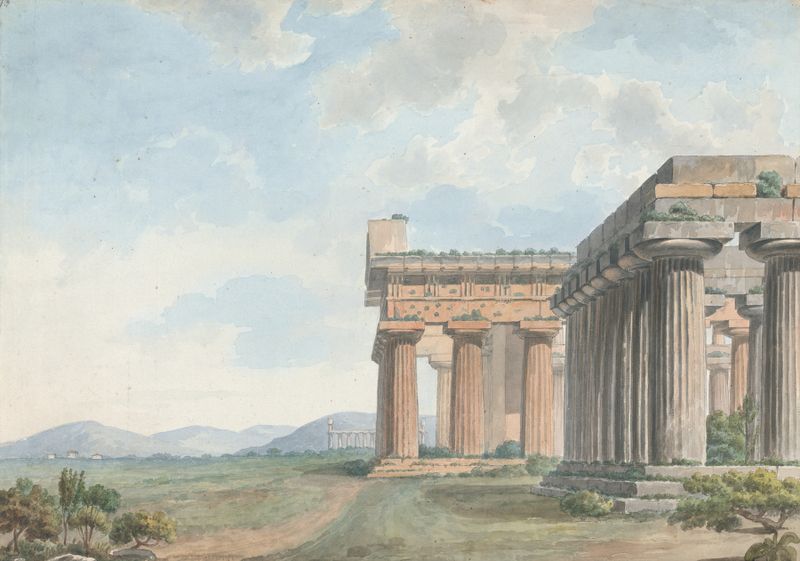
Temple Ruins at Paestum
Willey Reveley
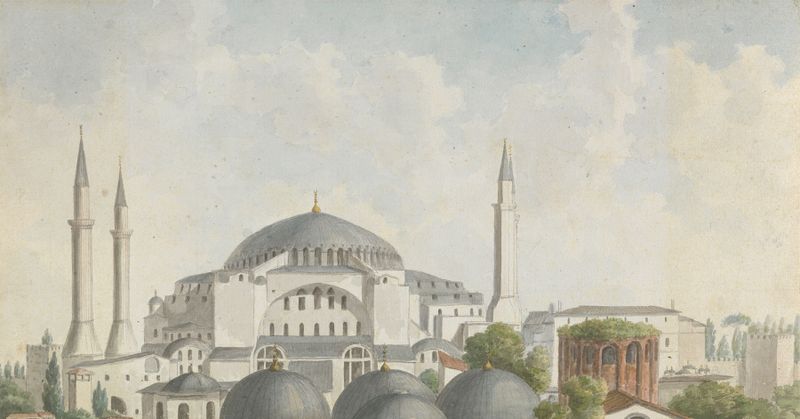
View of the domes and spires of Hagia Sophia, Istanbul
Willey Reveley
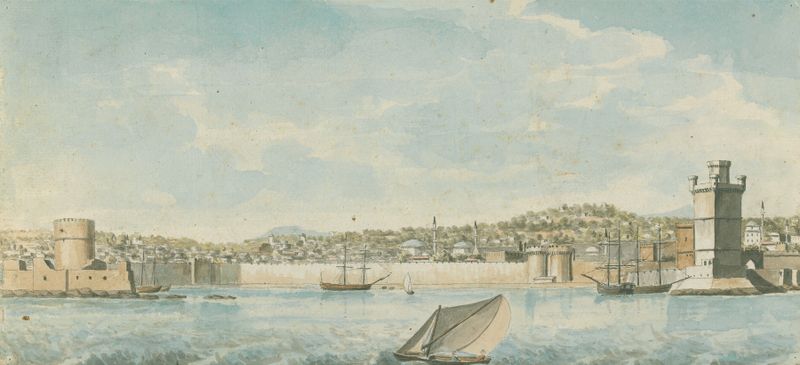
View of a Walled Town and Harbour with Towers Seen From the Sea
Willey Reveley
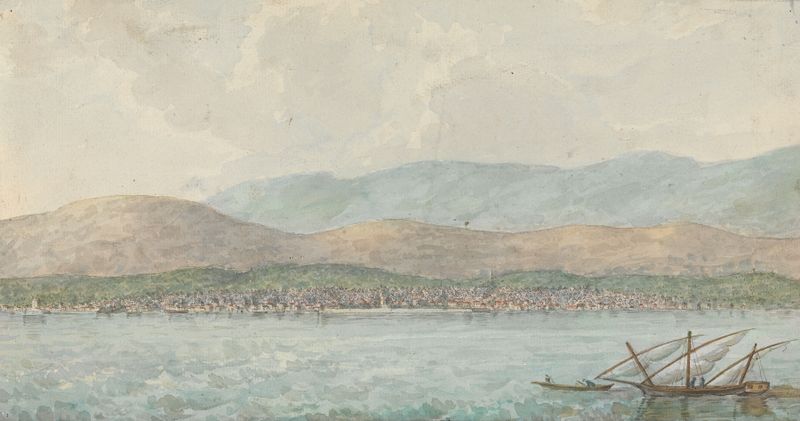
View of a Harbour and Town From the Sea, Turkey
Willey Reveley
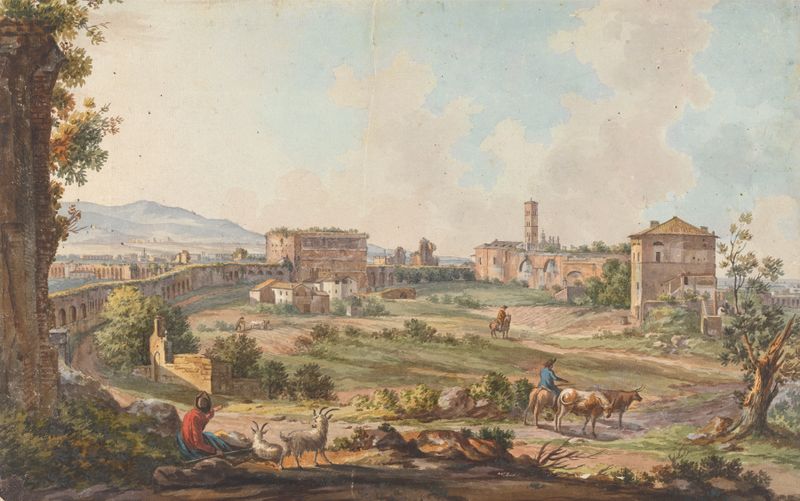
Ruins in Rome with Goats, Cows and Herdsmen
Willey Reveley
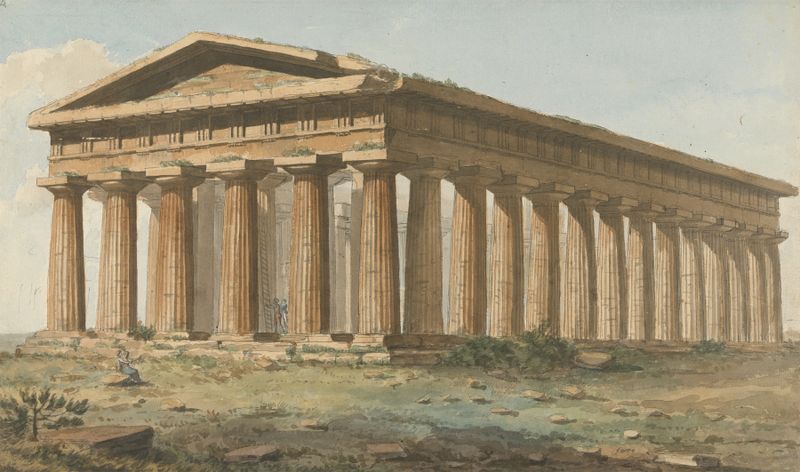
Paestum
Willey Reveley
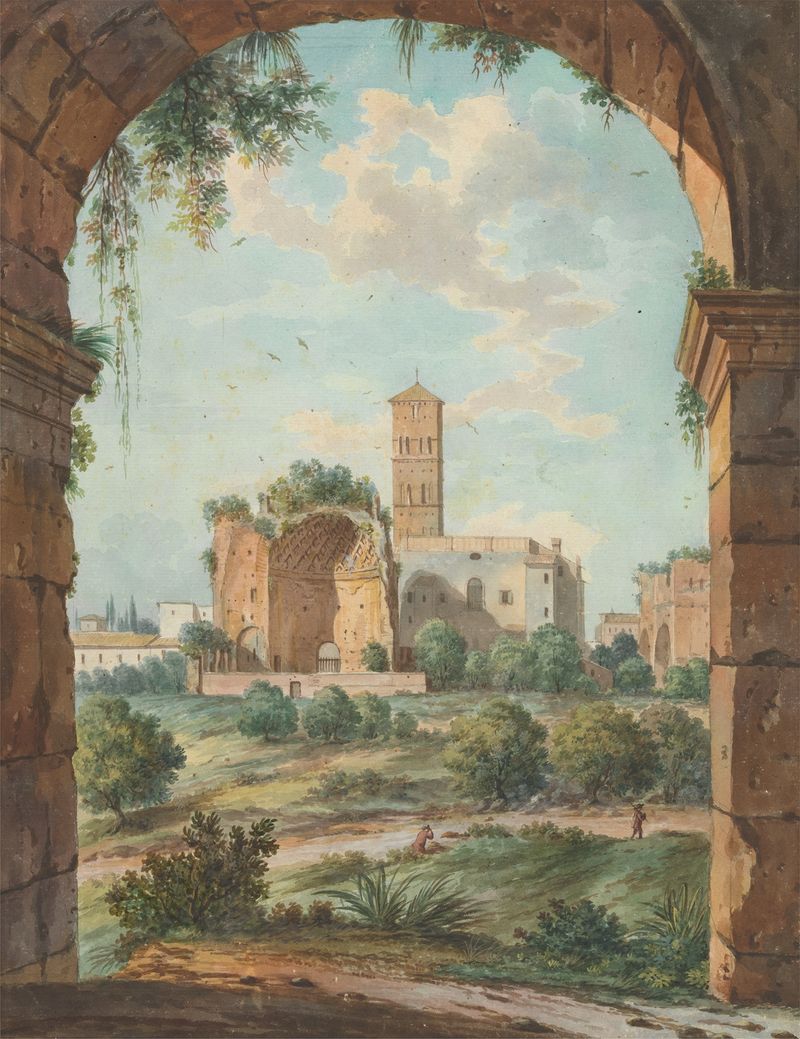
Rome with Ruins seen Through an Archway
Willey Reveley
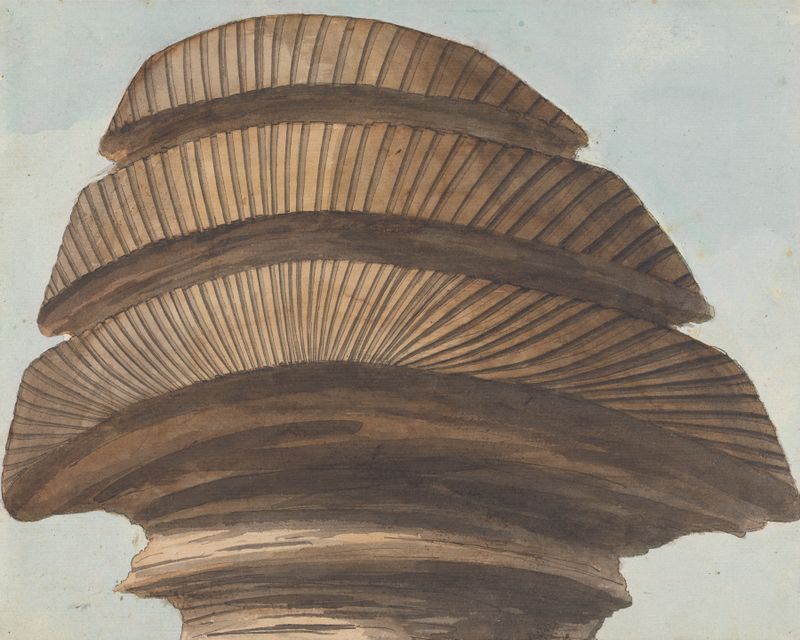
Back View of the Head of the Sphinx
Willey Reveley
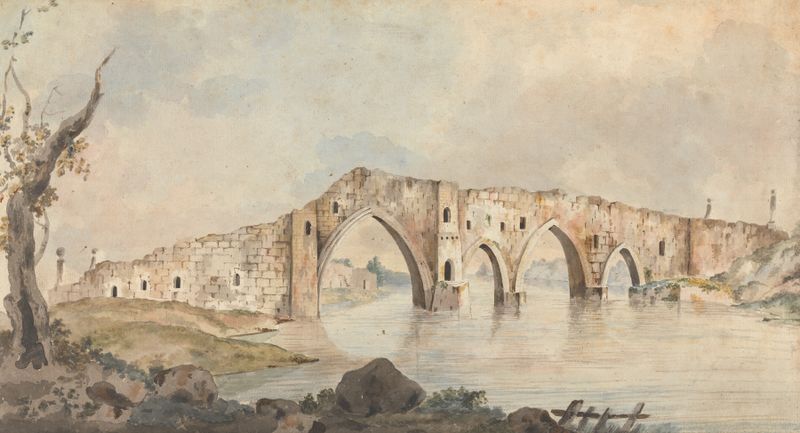
Ruined Bridge with Four Pointed Arches Near Rome
Willey Reveley
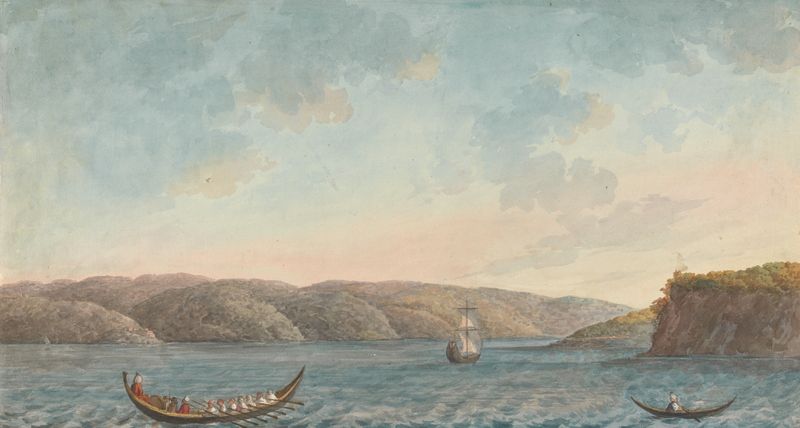
Two Rowing Boats and a Sailboat by a Steep Cliff, Hilly Landscape Seen From the Sea
Willey Reveley
More Architecture Art
Browse all →
The statue of Liberty
Frédéric Auguste Bartholdi

View of Houses in Delft, Known as ‘The Little Street’
Johannes Vermeer

View of Houses in Delft, Known as ‘The Little Street’
Johannes Vermeer

The Cathedral in Rouen. The portal, Grey Weather
Claude Monet

The yellow house
Vincent van Gogh

The Church in Auvers-sur-Oise, View from the Chevet
Vincent van Gogh