
The Death of Socrates — History & Facts
An elderly man sits upright on a bed at the center of the scene, draped in a white robe, his left hand raised in a gesture as if teaching, while his right hand reaches for a cup offered by a young man in red who turns his face away and covers it with his hand. Around the bed, several men of varying ages express anguish and distress through their gestures and postures; one older figure sits at the foot of the bed, slumped and looking down at his lap, while another clutches the knee of the central figure and listens intently. The architecture is stark and geometric, with large stone blocks and a high vaulted arch casting deep shadows, focusing the light on the central figures and highlighting the pale tones of the central figure’s robe and skin.
The color scheme is carefully controlled, with muted reds and ochres at the edges and more vibrant hues concentrated in the center, culminating in the deep red of the young man’s robe and the bluish-white garments of the two calmest figures. The composition is tightly ordered, with figures arranged in a frieze-like band across the foreground, their gestures and gazes leading toward the man on the bed, while the background recedes into shadow. Brushwork is smooth and precise, with crisp outlines and little visible texture, characteristic of the Neoclassical style’s emphasis on clarity and idealized form.
At the lower left corner, several scrolls and a set of broken shackles lie scattered on the floor near the foot of the bed. In the background, two figures are seen ascending a staircase, partially illuminated by dim light entering from an unseen source. The light falls most strongly on the central figure’s torso and the young man in red, while the outer edges and background recede into deep shadow, creating a dramatic contrast. This is The Death of Socrates, painted by Jacques-Louis David in 1787.
Sources: Metropolitan Museum of Art, record 31.45 · Wikidata Q1752990 · Wikipedia: The Death of Socrates · Image source (Wikimedia Commons)
More Artworks by Jacques Louis David
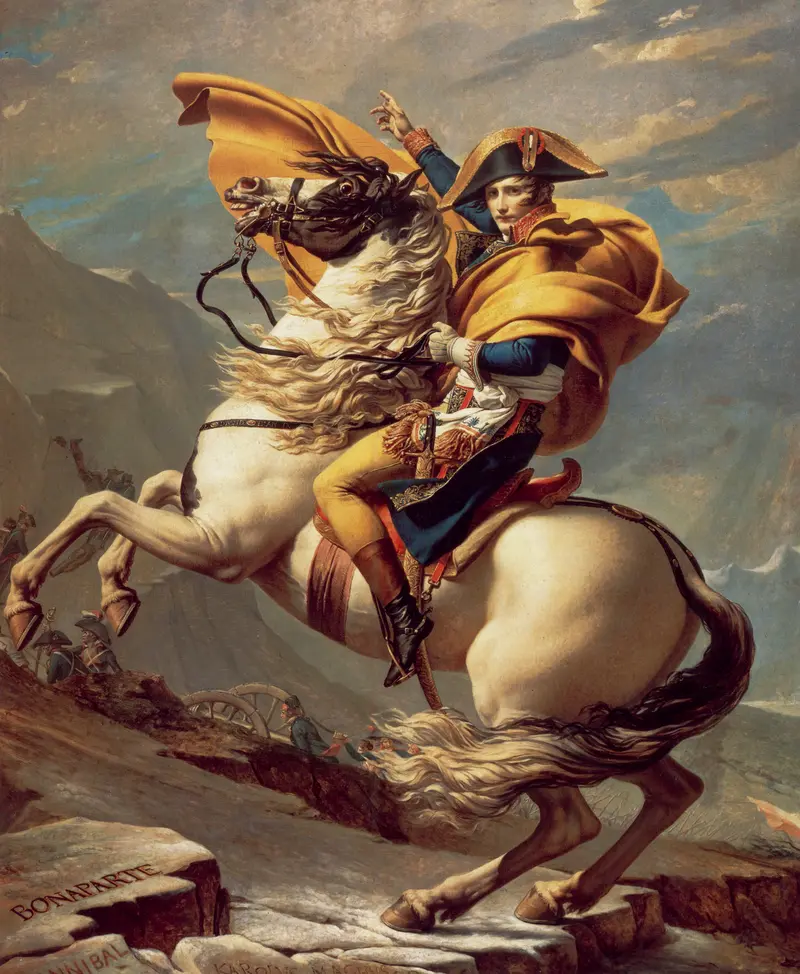
Napoleon Crossing the Alps
Jacques Louis David
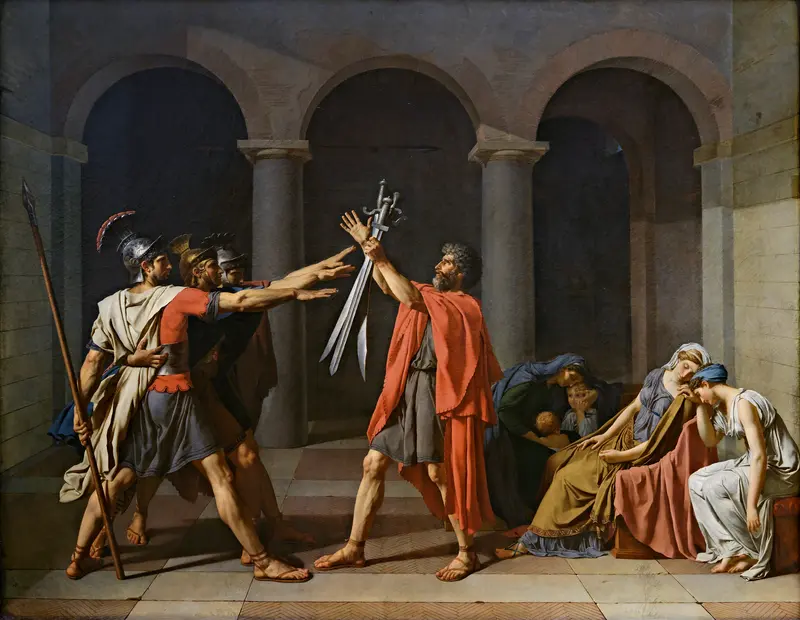
Oath Of The Horatii
Jacques Louis David
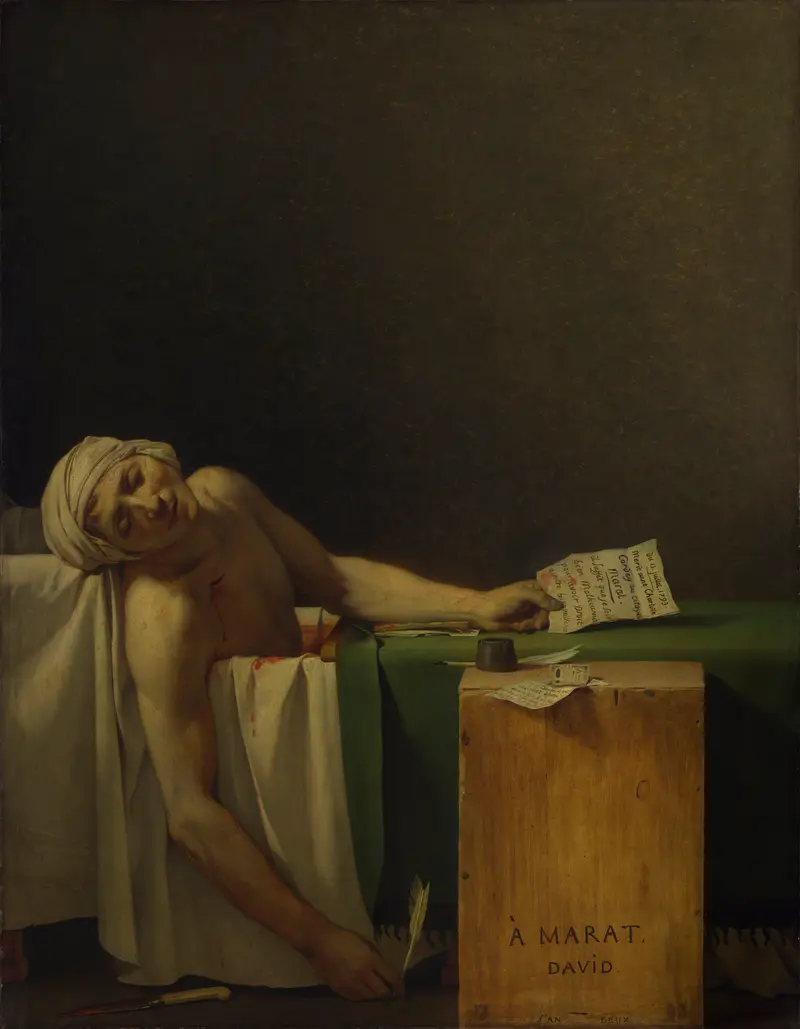
The Death of Marat
Jacques Louis David
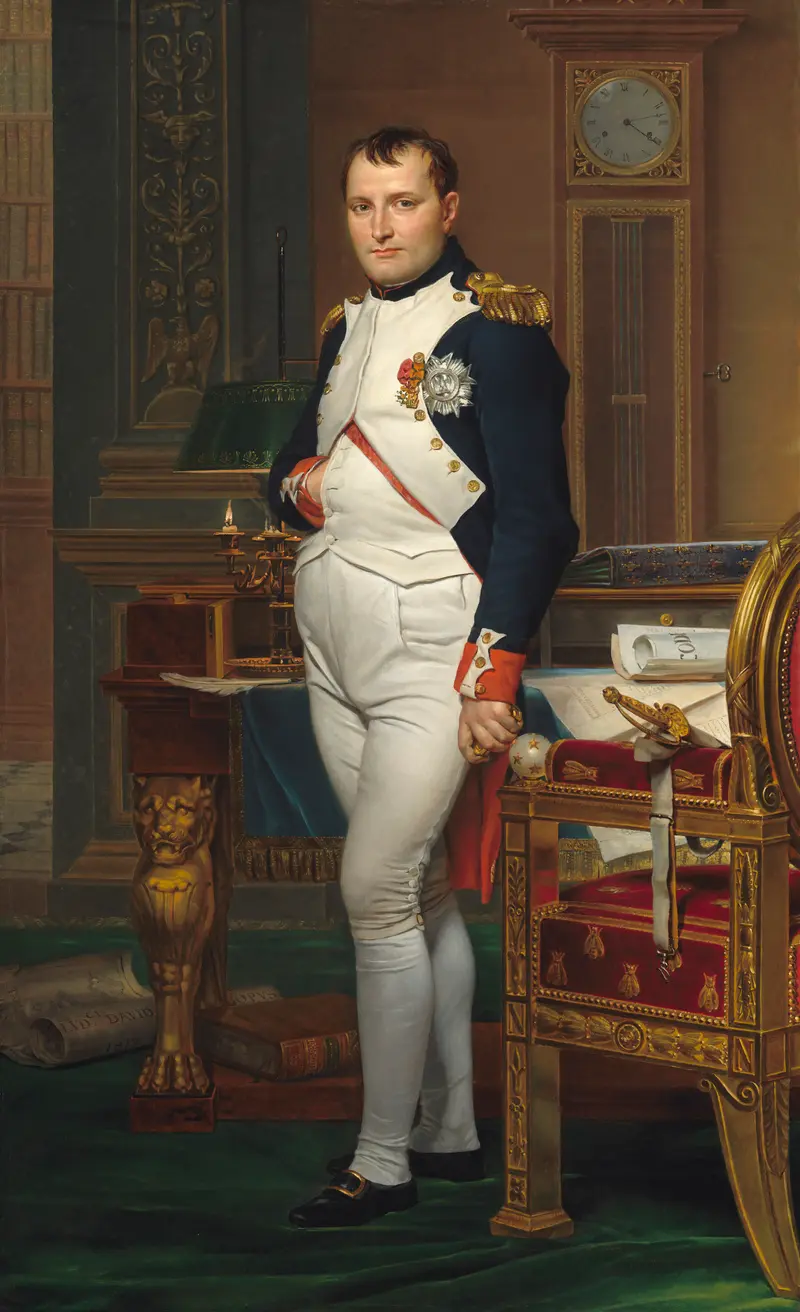
The Emperor Napoleon in His Study at the Tuileries
Jacques Louis David
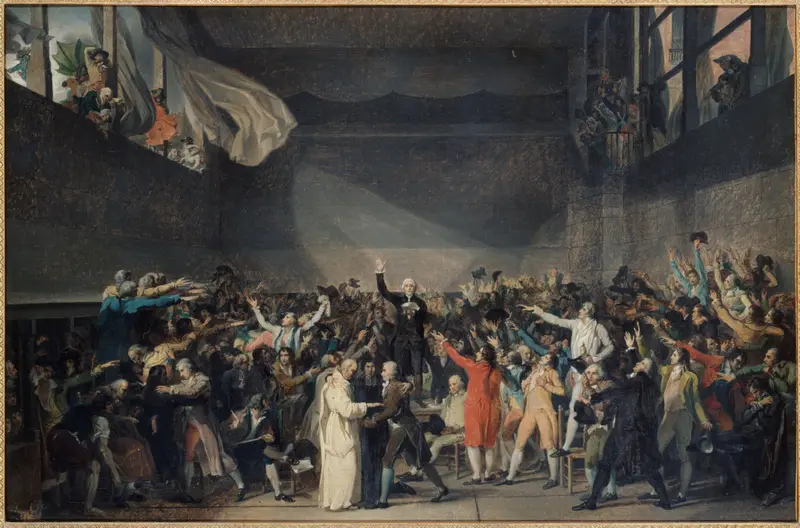
Serment Du Jeu De Paume, Le 20 Juin
Jacques Louis David
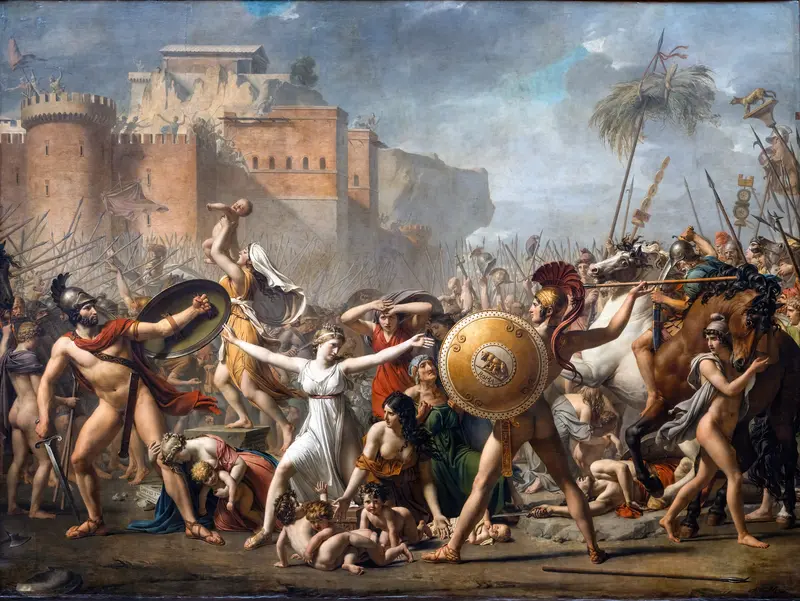
The Intervention Of The Sabine Women
Jacques Louis David
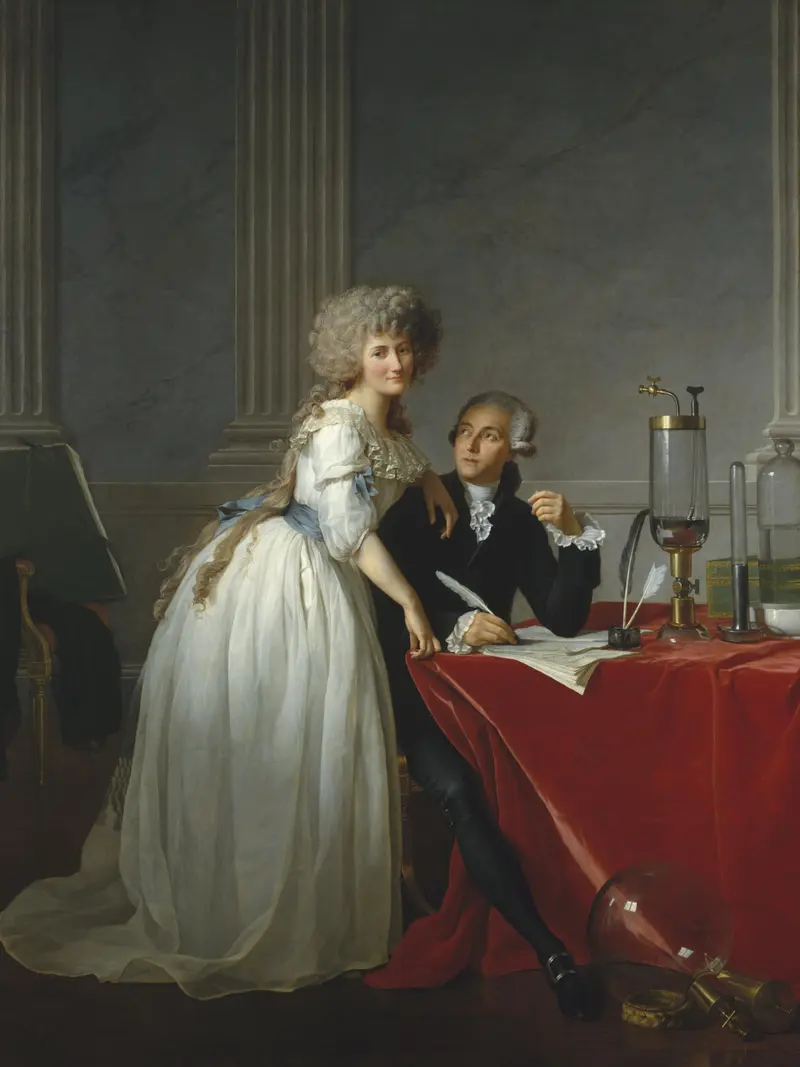
Antoine Laurent Lavoisier (1743–1794) and Marie Anne Lavoisier (Marie Anne Pierrette Paulze, 1758–1836)
Jacques Louis David
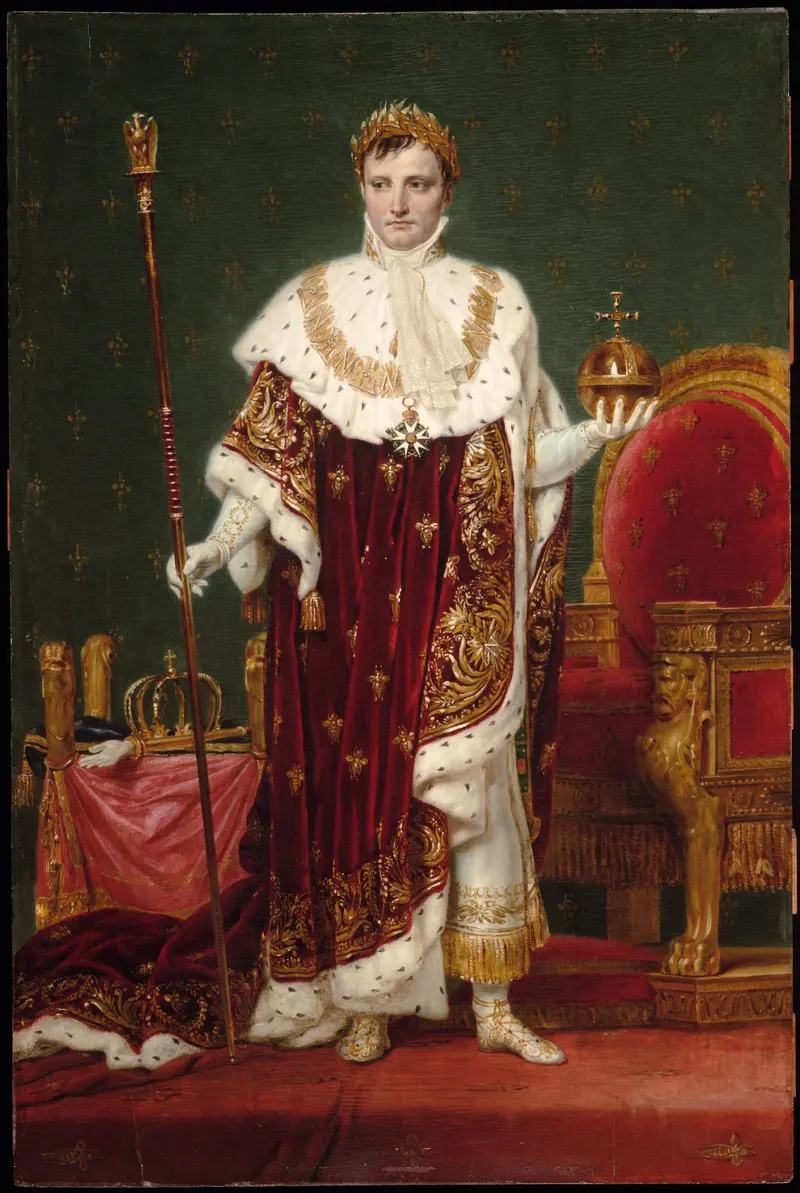
Emperor Napoleon I (1769-1821)
Jacques Louis David
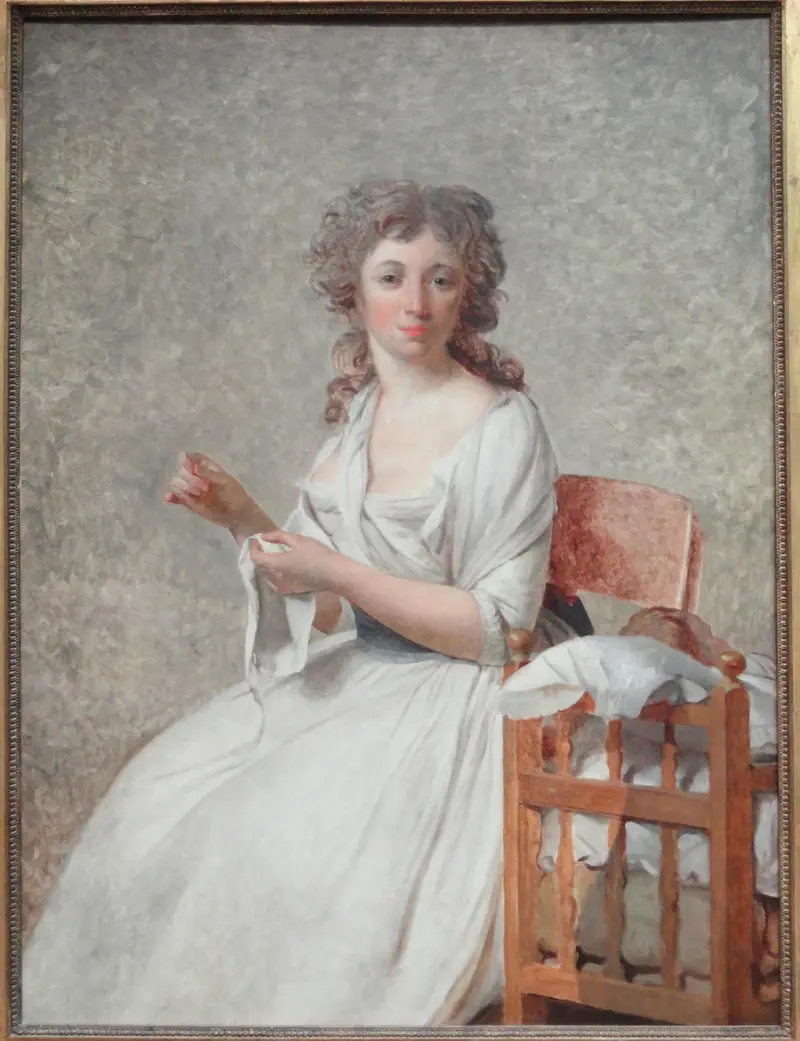
Madame de Pastoret and Her Son
Jacques Louis David
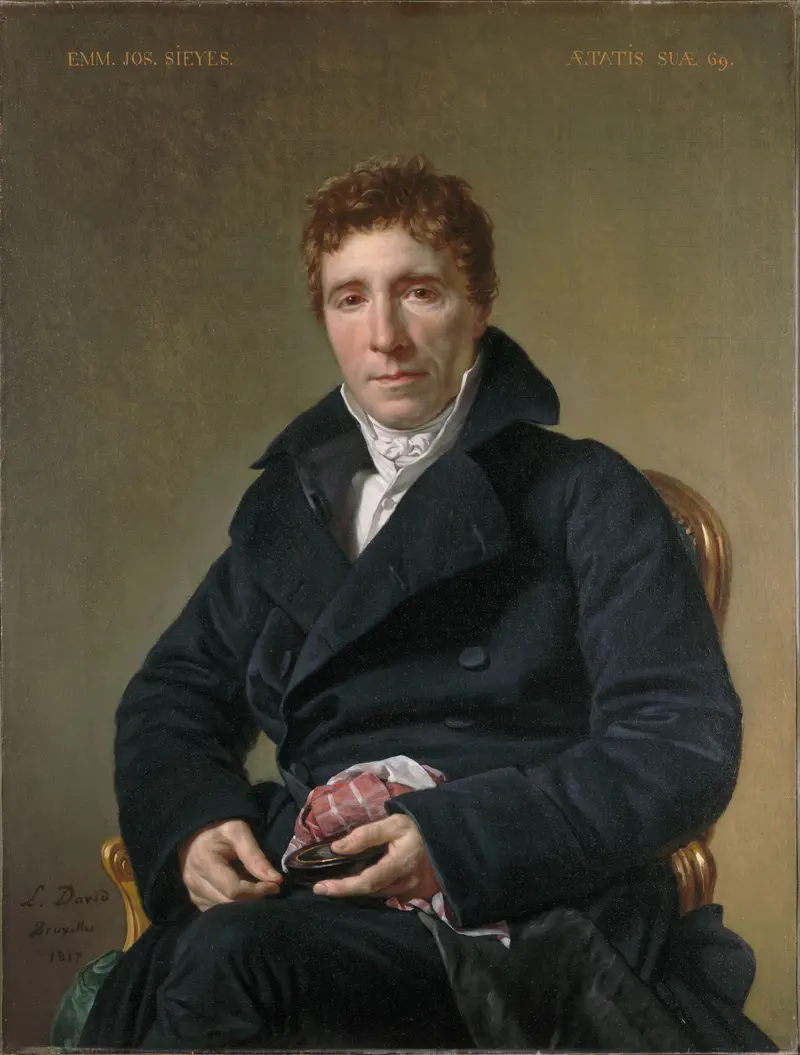
Emmanuel Joseph Sieyès (1748-1836)
Jacques Louis David





