
The Death of Marat: meaning and location
The Death of Marat (in French Marat assassiné, also called La Mort de Marat) is an oil painting by the French artist Jacques-Louis David (1748–1825), made in 1793 and a masterpiece of Neoclassicism. It shows the revolutionary journalist Jean-Paul Marat dead in his bath after Charlotte Corday killed him on 13 July 1793. The original is not in the Louvre but in the Royal Museums of Fine Arts of Belgium in Brussels.
- What it shows: Marat slumped in his bathtub, a white turban around his head, a quill in his right hand and, in his left, the letter Charlotte Corday sent him to be let in. A bloodstained knife, an inkwell and a wooden crate complete the scene, set against a bare background.
- A martyr of the Revolution: according to the Louvre, David fuses history painting, religious painting, a contemporary subject and portrait. Marat’s body is inspired by Caravaggio’s Entombment of Christ (Vatican Museums), and the shroud and the blood recall the Passion.
- The wooden crate: instead of a desk, Marat writes on a rough crate, a sign of the austerity he preached. On it David painted the dedication À MARAT, his signature DAVID and the date L’AN DEUX (Year Two), which the Louvre reads as a mark of the two men’s friendship.
- Commission and first display: the National Convention commissioned the picture the day after the murder. David painted it between 14 July and 14 October 1793 and offered it to the Convention on 14 November 1793; it hung in the assembly hall, paired with his now-lost Le Peletier on his Deathbed, until February 1795.
- Medium, size and provenance: oil on canvas, 165 × 128 cm. David’s grandson bequeathed it in 1886, in memory of the welcome Belgium gave the exiled painter from 1816 until his death, and it entered the Brussels museum in 1893, a hundred years after the murder.
Sources: Royal Museums of Fine Arts of Belgium: collection record (Inv. 3260) · Louvre: “Une icône de la Révolution” (Jacques-Louis David exhibition, 2025–2026) · Defeyt et al., npj Heritage Science 11, 21 (2023) · Louvre collection record (RF 1945 2, studio replica) (date offered to the Convention) · Wikidata Q636537
Questions and answers about the painting
What is the meaning of The Death of Marat?
David turned a political murder into an icon of the Revolution. In the Louvre’s reading, the picture fuses history painting, religious painting, a contemporary subject and portrait: Marat’s body echoes Caravaggio’s Entombment of Christ, the shroud and the blood recall the Passion, and the rough wooden crate stands for the austerity he preached. The Brussels museum adds that David left out the room and the killer, keeping only signs of Marat’s revolutionary work (pen and paper), public spirit (the letter), suffering (the bath) and heroic death (the knife).
Source: Louvre: “Une icône de la Révolution” (Jacques-Louis David exhibition, 2025–2026) · Royal Museums of Fine Arts of Belgium on Google Arts & Culture (text by Frederik Leen, 2001)
Where is David’s painting of Marat? Is it in the Louvre?
The Death of Marat is in the Royal Museums of Fine Arts of Belgium in Brussels (inventory number 3260), which has owned it since 1893; in 2023 it hung in the museum’s Neoclassical gallery, opposite David’s Mars Disarmed by Venus (1824). The Louvre has a full-size replica painted in 1793–1794 by a pupil and assistant of David (RF 1945 2), which differs only in the inscription on the crate; its online record places it in Room 702 (Salle Daru), Denon wing. The Brussels original was lent to the Louvre’s Jacques-Louis David exhibition from 15 October 2025 to 26 January 2026.
Source: Royal Museums of Fine Arts of Belgium: collection record (Inv. 3260) · Royal Museums of Fine Arts of Belgium: “The death of Marat” exhibition (2022) · Defeyt et al., npj Heritage Science 11, 21 (2023) (display in 2023) · Louvre collection record (RF 1945 2, studio replica) · Louvre: “Une icône de la Révolution” (Jacques-Louis David exhibition, 2025–2026)
What happened to Marat on 13 July 1793?
At 7.15 p.m. on 13 July 1793, Charlotte Corday, a young aristocrat from Caen, was let into Jean-Paul Marat’s room at 30 rue des Cordeliers in Paris and killed him with a knife while he sat in his bath, which eased the pain of a skin disease. Marat was a journalist who had published L’Ami du peuple since September 1789 and a deputy of the National Convention. Corday was arrested on the spot, tried and guillotined four days later, on 17 July 1793.
Source: Royal Museums of Fine Arts of Belgium on Google Arts & Culture (text by Frederik Leen, 2001) · Defeyt et al., npj Heritage Science 11, 21 (2023) · Wikidata Q216063 (Charlotte Corday, died 17 July 1793) · Wikidata Q122290 (Jean-Paul Marat)
What does the letter in Marat’s hand say?
The letter in Marat’s left hand is the note Charlotte Corday sent him to be let in, and David painted its words so they can be read: “du 13. juillet, 1793. Marie anne Charlotte Corday au citoyen Marat. il suffit que je sois bien malheureuse pour avoir droit à votre bienveillance” (13 July 1793, Marie Anne Charlotte Corday to citizen Marat: it is enough that I am very unhappy to have a right to your kindness). Infrared images published in 2023 reveal a crumpled sheet first painted in Marat’s right hand, which suggests that David first planned the reverse of the final arrangement.
Source: Wikidata Q636537 (inscriptions) · Louvre: “Une icône de la Révolution” (Jacques-Louis David exhibition, 2025–2026) · Defeyt et al., npj Heritage Science 11, 21 (2023)
Who painted the canvas, and when?
The Death of Marat was painted by Jacques-Louis David between 14 July and 14 October 1793, for the National Convention, which commissioned it the day after the murder. David was a deputy for Paris and Marat’s friend. In the Brussels museum’s English translation, David explained: “I thought it would be interesting to show him as I found him, writing for the happiness and well-being of the people.”
Source: Louvre: “Une icône de la Révolution” (Jacques-Louis David exhibition, 2025–2026) · Defeyt et al., npj Heritage Science 11, 21 (2023) · Royal Museums of Fine Arts of Belgium on Google Arts & Culture (text by Frederik Leen, 2001)
Is the painting in the public domain?
Yes. David died in 1825, so his paintings are free of copyright everywhere. A faithful photograph of a public-domain painting adds no new copyright in the United States or the European Union, so you can download this image and use it in personal or commercial projects. Public Domain Images for Commercial Use explains how.
More Artworks by Jacques Louis David
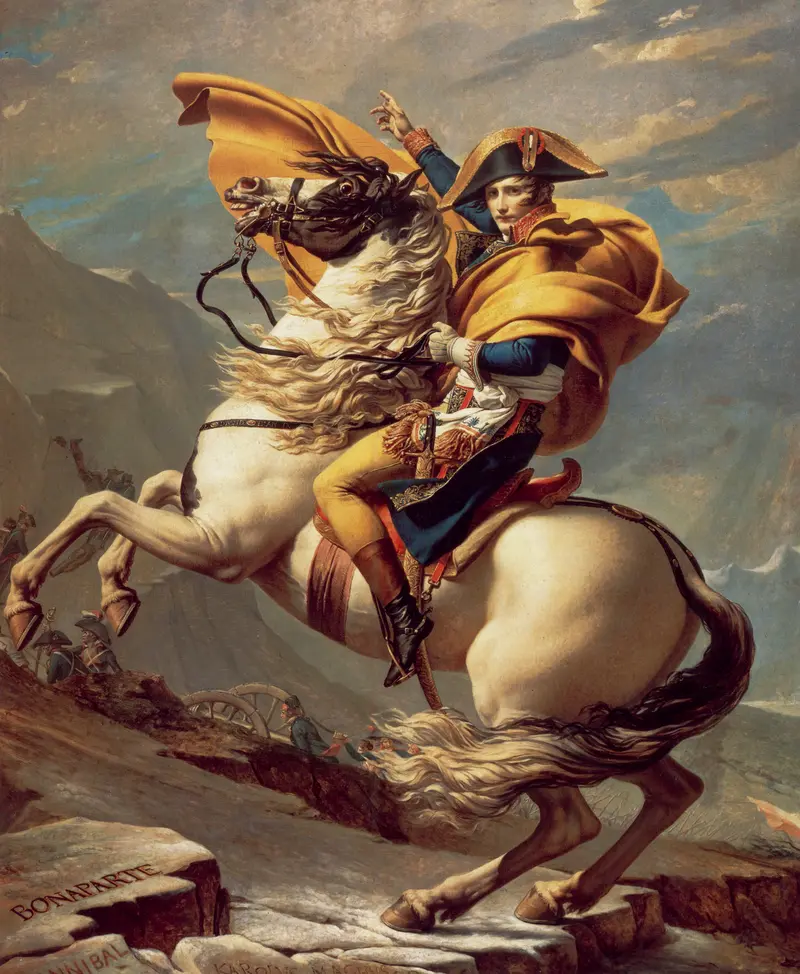
Napoleon Crossing the Alps
Jacques Louis David
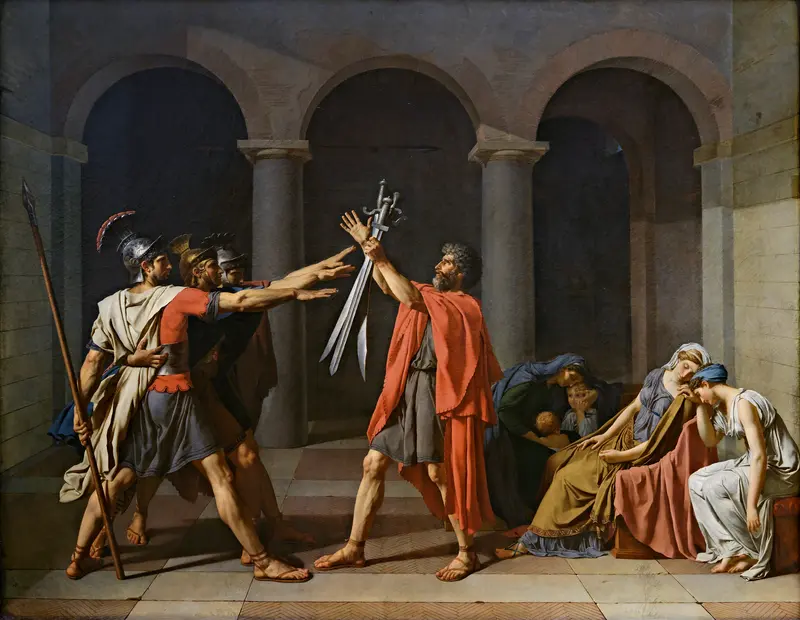
Oath Of The Horatii
Jacques Louis David
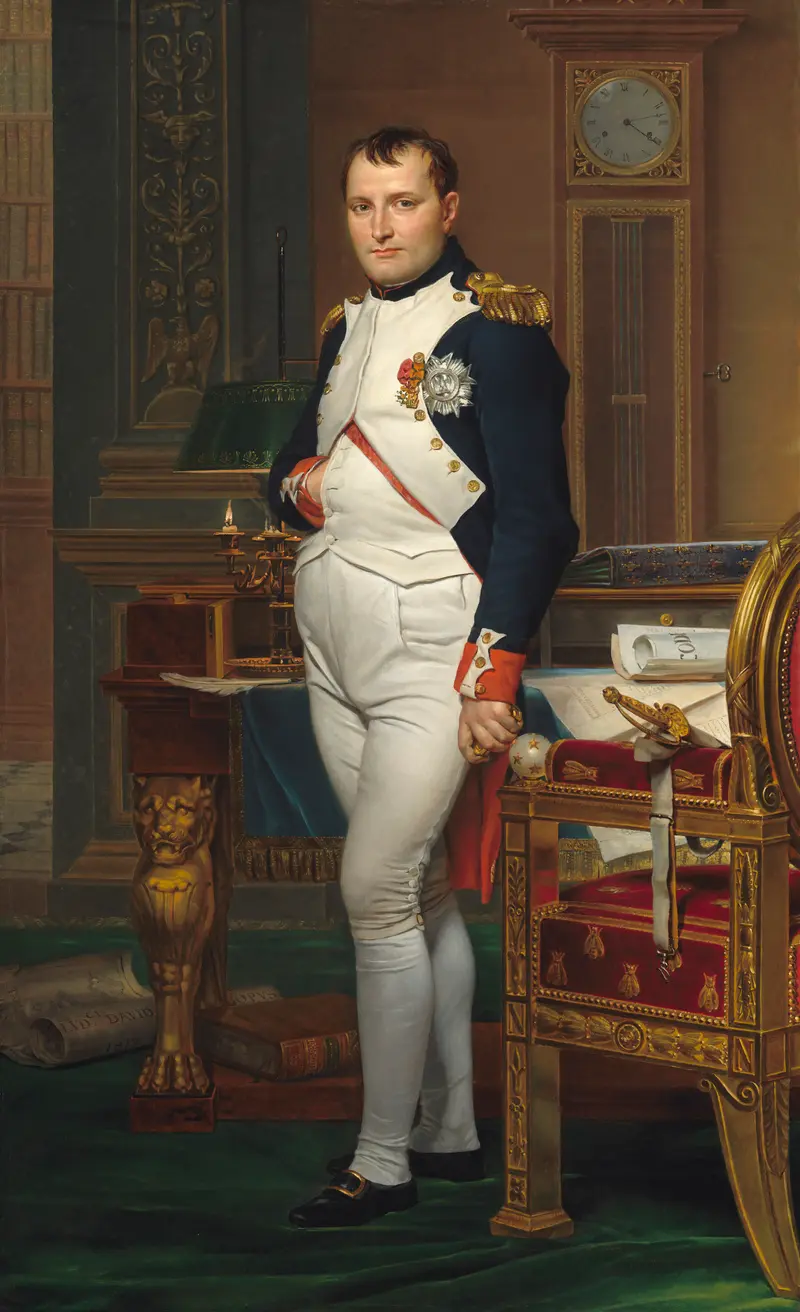
The Emperor Napoleon in His Study at the Tuileries
Jacques Louis David
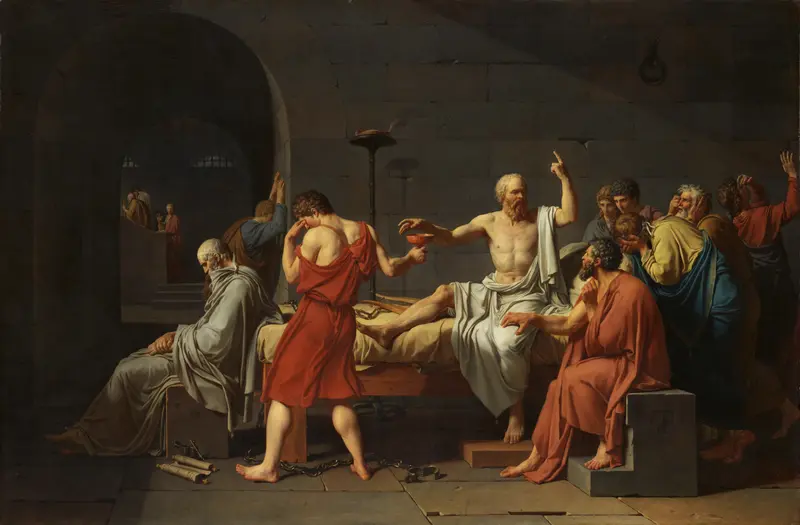
The Death of Socrates
Jacques Louis David
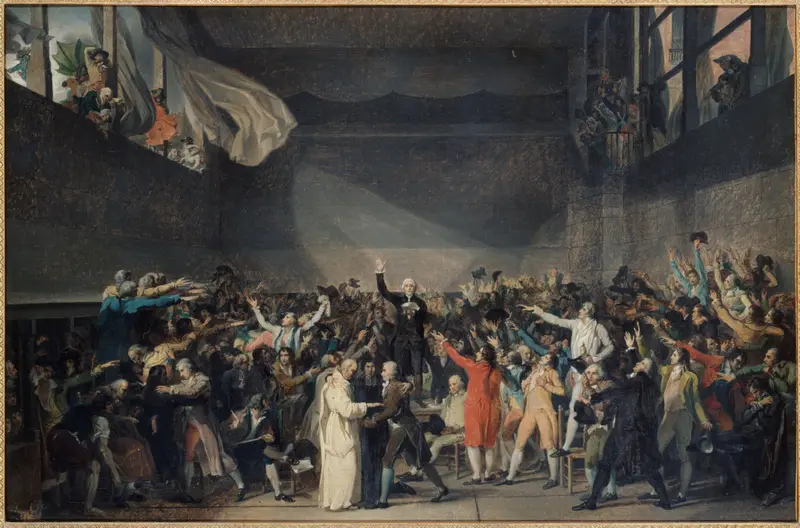
Serment Du Jeu De Paume, Le 20 Juin
Jacques Louis David
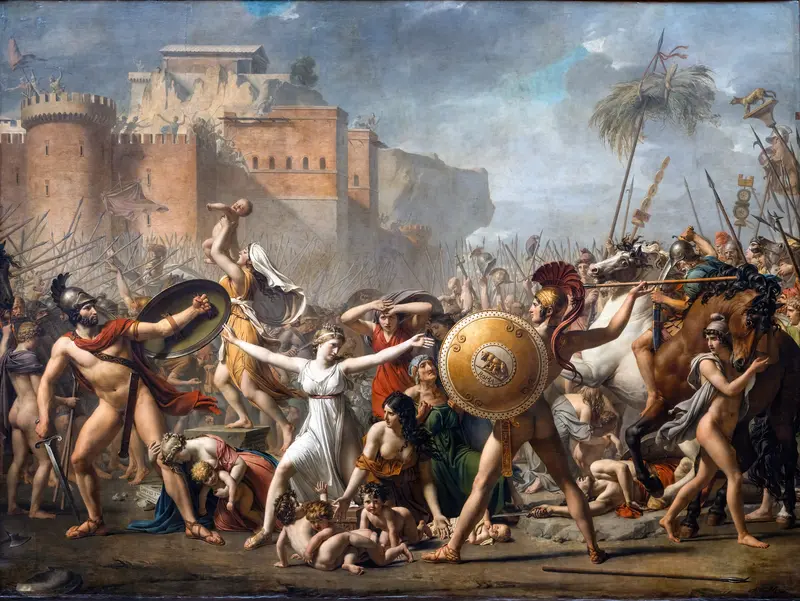
The Intervention Of The Sabine Women
Jacques Louis David
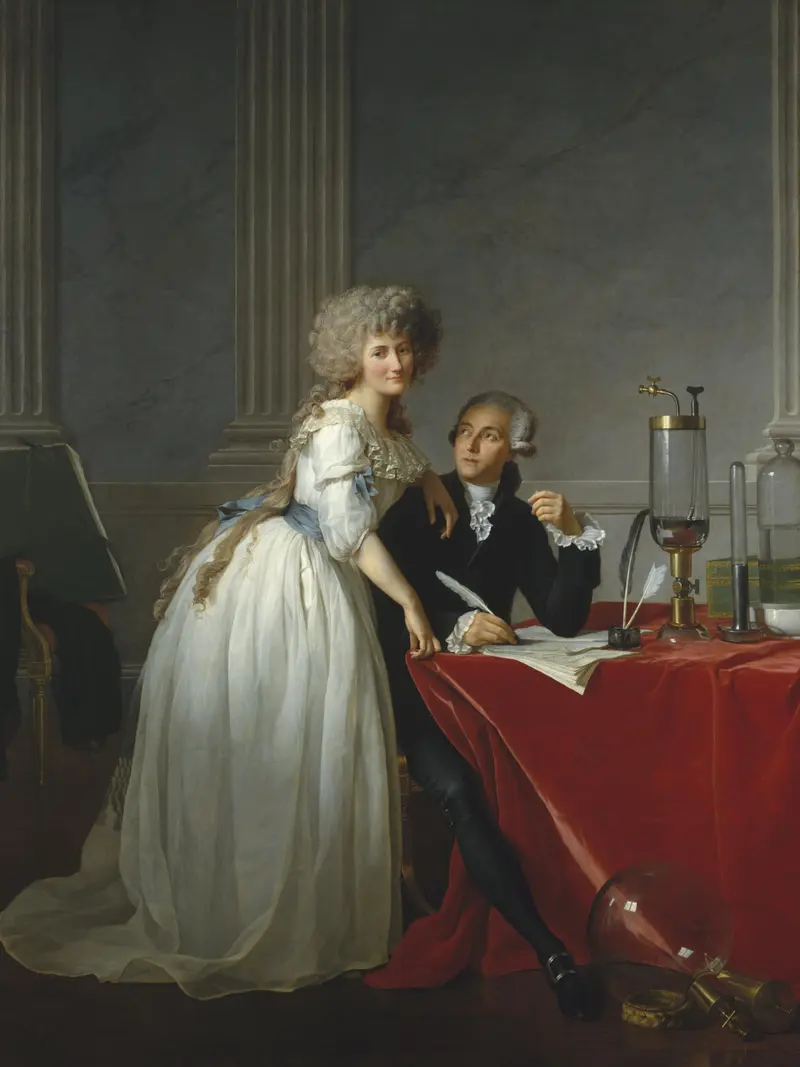
Antoine Laurent Lavoisier (1743–1794) and Marie Anne Lavoisier (Marie Anne Pierrette Paulze, 1758–1836)
Jacques Louis David
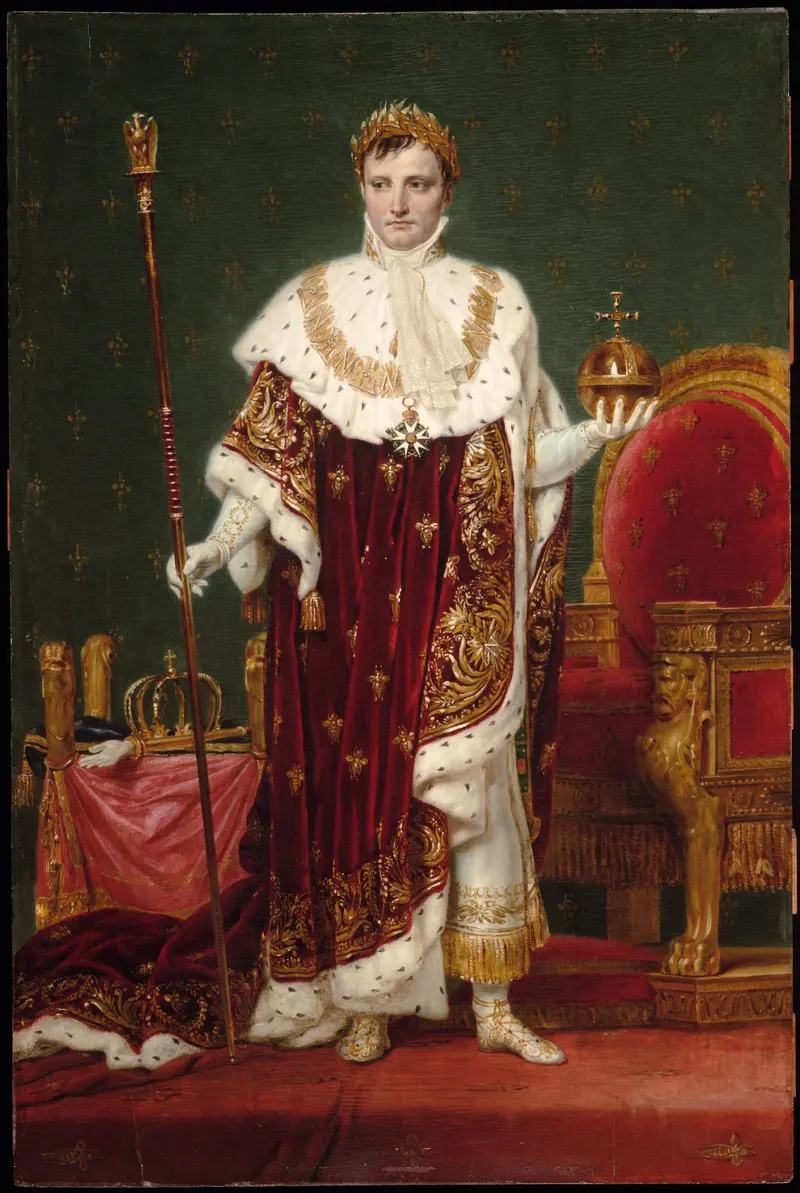
Emperor Napoleon I (1769-1821)
Jacques Louis David
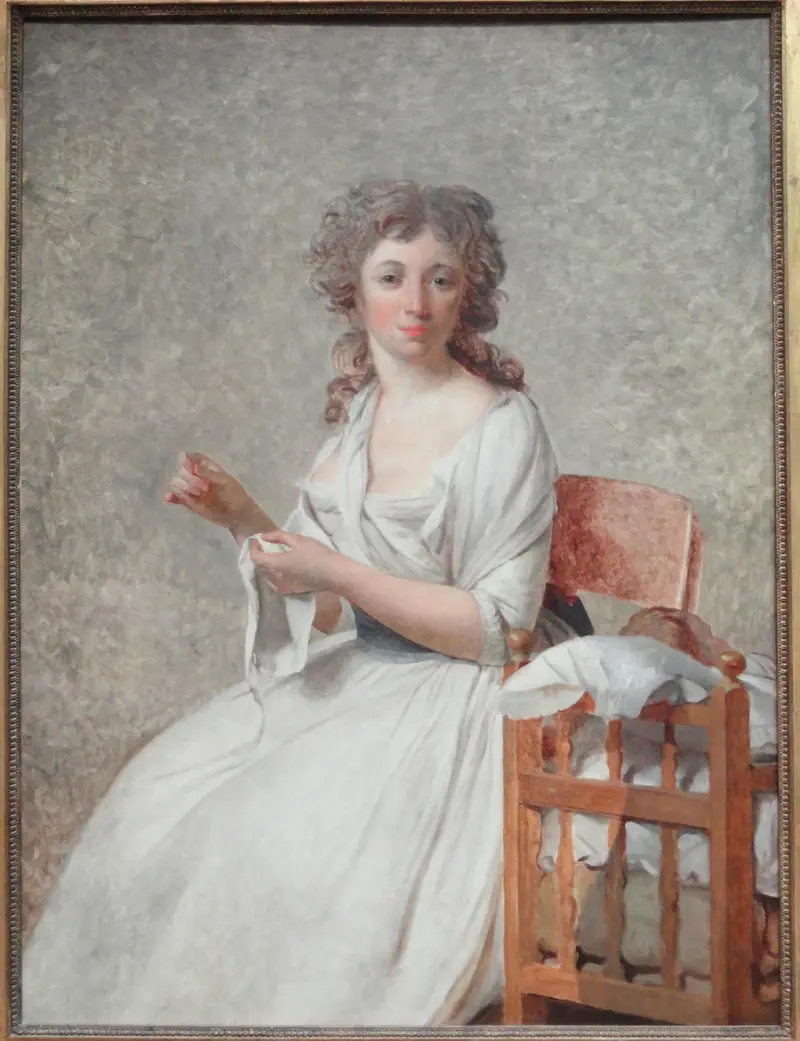
Madame de Pastoret and Her Son
Jacques Louis David
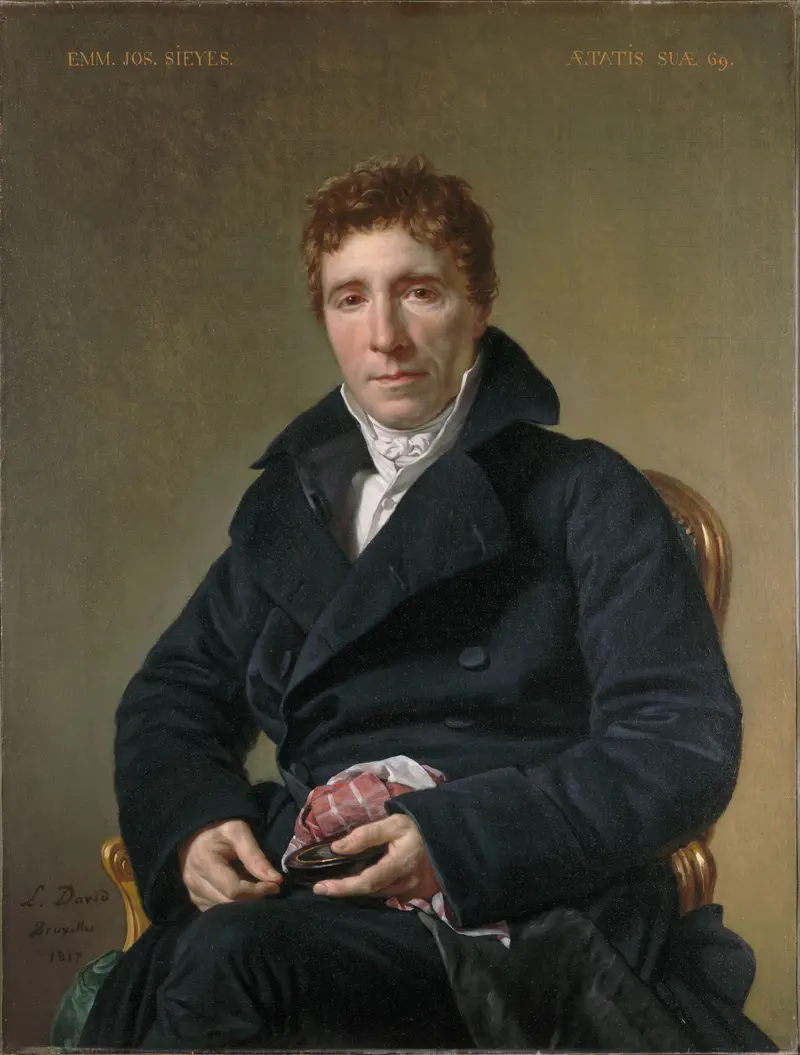
Emmanuel Joseph Sieyès (1748-1836)
Jacques Louis David





