
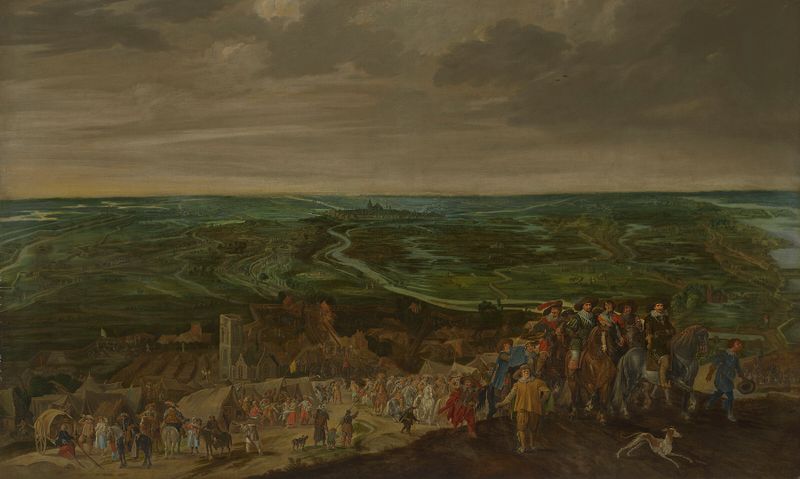
The defeated Spanish Garrison leaving ‘s-Hertogenbosch, 17 September 1629 — History & Facts
When did color learn to lie? In a world where hues evoke emotion and atmosphere, the divine can often feel obscured by earthly interpretations. Look toward the center of the canvas, where a group of defeated soldiers, their faces etched with resignation, trudges through the streets of ‘s-Hertogenbosch. The artist employs a palette of muted tones—grays and browns dominate, creating a somber backdrop that speaks to the weight of loss. Notice how the light subtly highlights the soldiers' armor, reflecting not just their physical burden but also the psychological strife they carry.
The composition draws the eye along their path, leaving a trail of despair and resignation that lingers in the viewer's mind. Deeper still, the painting contrasts glory with ruin, as the once-mighty garrison becomes a symbol of vulnerability and defeat. The empty streets echo with silence, amplifying the soldiers' isolation in a moment of collective shame. The juxtaposition of the soldiers' heavy armor against the stillness of the city creates an emotional tension, a testament to the fragility of power and the divine right that often deludes its bearers. Pauwels van Hillegaert created this work in the early 1630s amidst a turbulent period in Dutch history, marked by the Eighty Years' War.
The fall of ‘s-Hertogenbosch to the Dutch Republic was a pivotal moment, and the artist's depiction of this historical event likely reflects not only the defeat of an enemy but also a commentary on the shifting tides of power and the ever-present specter of vulnerability that accompanies it.
More Artworks by Pauwels van Hillegaert
Browse all →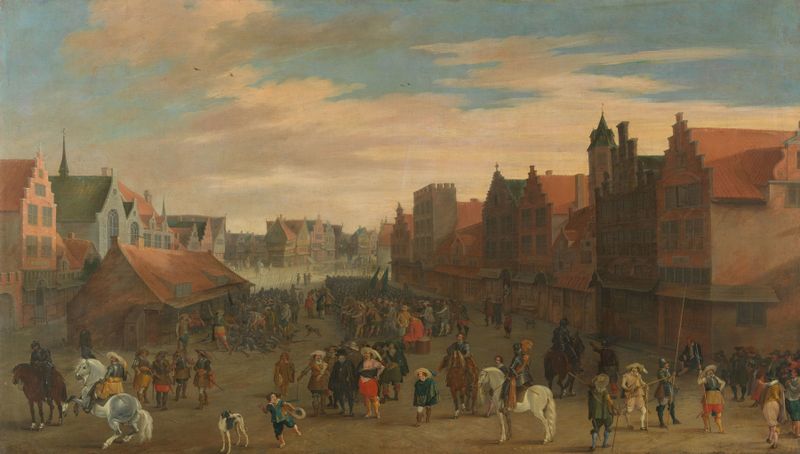
The disbanding of the ‘Waardgelders’ (Mercenaries in the Pay of the Town Government) by Prince Maurits on the Neude, Utrecht, 31 July 1618
Pauwels van Hillegaert
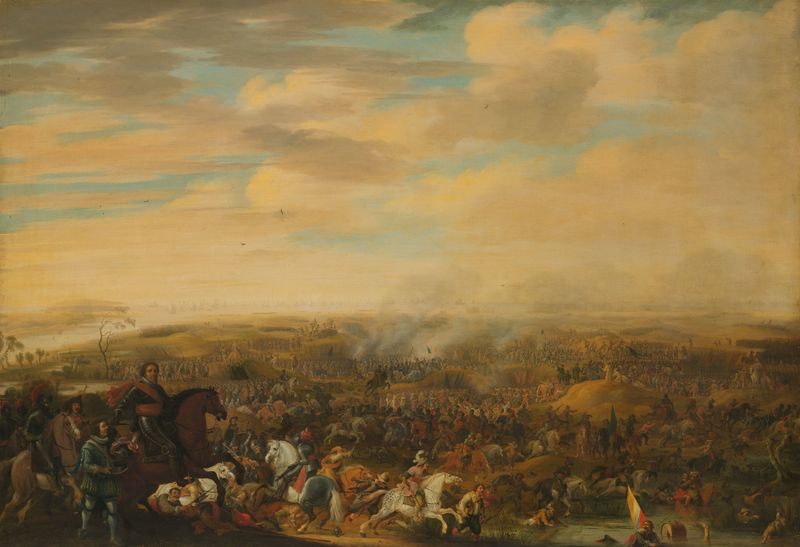
Prince Maurice at the Battle of Nieuwpoort, 2 July 1600
Pauwels van Hillegaert
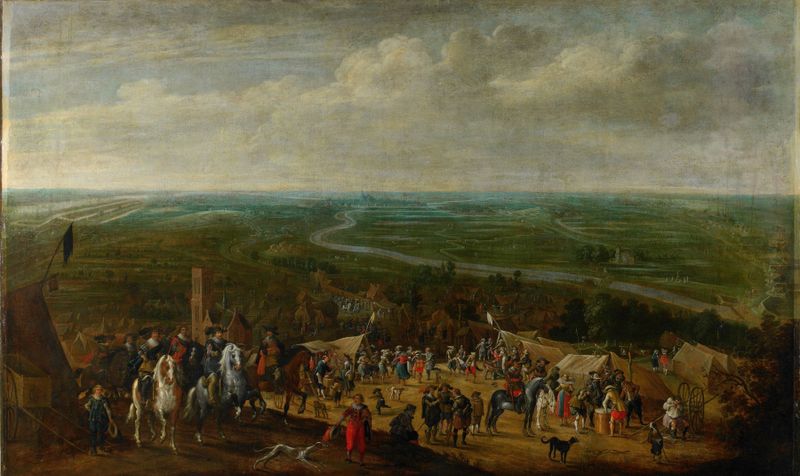
Prince Frederik Hendrik at the Siege of ‘s-Hertogenbosch, 1629
Pauwels van Hillegaert
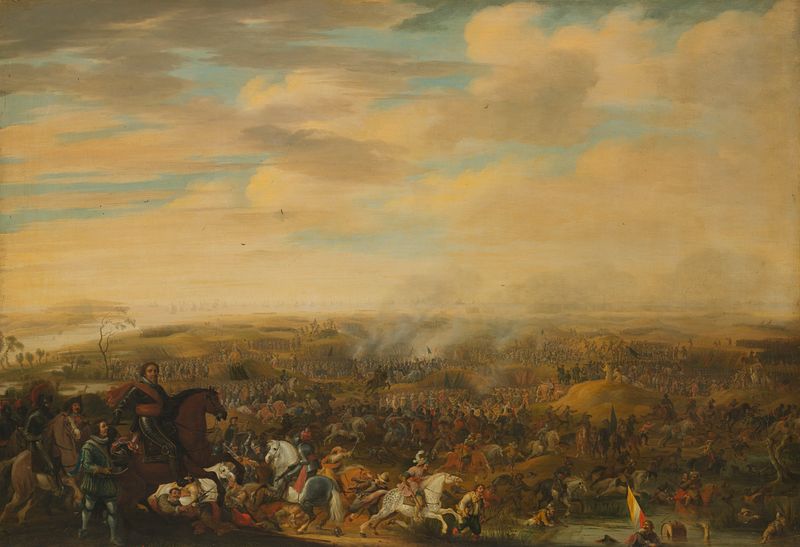
Prince Maurice at the Battle of Nieuwpoort, 2 July 1600
Pauwels van Hillegaert
The Siege of ‘s-Hertogenbosch, viewed from the encampment at Vught
Pauwels van Hillegaert
More Historical Art
Browse all →
The Night Watch Militia Company of District II under the Command of Captain Frans Banninck Cocq
Rembrandt van Rijn

Lincoln Memorial
Henry Bacon

The Third of May 1808
Francisco de Goya

Isaac and Rebecca, Known as ‘The Jewish Bride’
Rembrandt van Rijn

The Charge of the Mamelukes (1814)
Francisco de Goya

De vier ruiters van de apocalyps
Albrecht Dürer