
The disbanding of the ‘Waardgelders’ (Mercenaries in the Pay of the Town Government) by Prince Maurits on the Neude, Utrecht, 31 July 1618 — History & Facts
Could a single brushstroke hold eternity? In the deft hands of an artist, the very act of painting can become an obsession, a portal into the lives and struggles of those captured on canvas. Look closely at the center of the composition where figures stand in uneasy formation—merchants and soldiers alike, their expressions a tapestry of anxiety and authority. Notice how the muted colors of their clothing contrast sharply with the brilliant azure sky overhead, suggesting an impending storm both literally and metaphorically. The artist skillfully employs light to illuminate the faces of the officials, highlighting their resolve while casting deeper shadows on the mercenaries, whose postures convey a mix of defiance and resignation. The tension of the moment is palpable; the scene is not merely a transaction of power but a confrontation between loyalty and betrayal.
The disbanding of the mercenaries signifies a loss of purpose, underscored by the stark absence of weapons, which transforms their identity from fighters to dispossessed men. Small details—like the clasped hands of one soldier or the distant figures retreating into the shadows—speak volumes of the emotional weight this decision carries, invoking feelings of nostalgia and despair. Pauwels van Hillegaert created this work in 1627 amidst a period of political turmoil in the Netherlands. The early 17th century was marked by intense conflict and shifting allegiances, both in war and in the realm of art.
The painting serves as a historical resonance of the socio-political landscape, capturing a moment that would echo through the annals of time—a fleeting yet poignant reminder of human struggle and transformation.
More Artworks by Pauwels van Hillegaert
Browse all →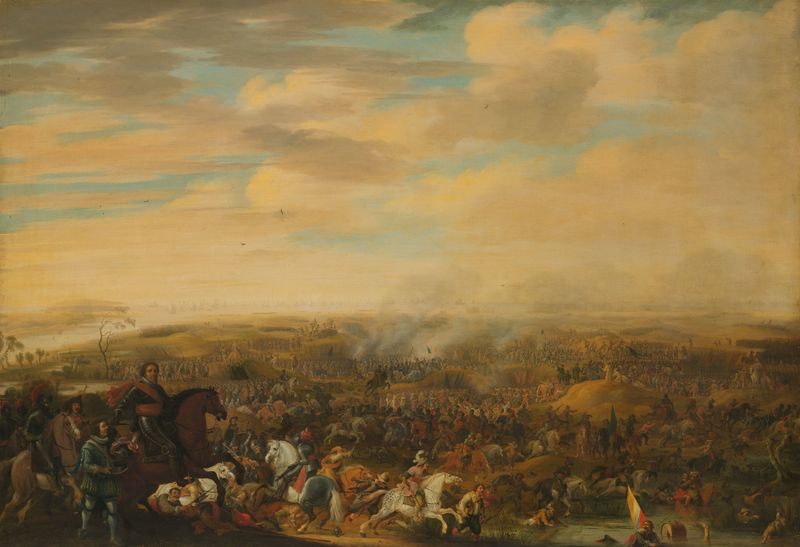
Prince Maurice at the Battle of Nieuwpoort, 2 July 1600
Pauwels van Hillegaert
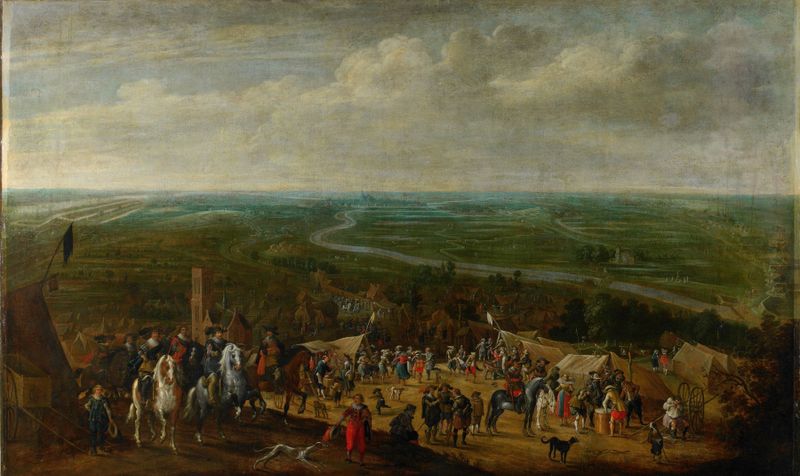
Prince Frederik Hendrik at the Siege of ‘s-Hertogenbosch, 1629
Pauwels van Hillegaert
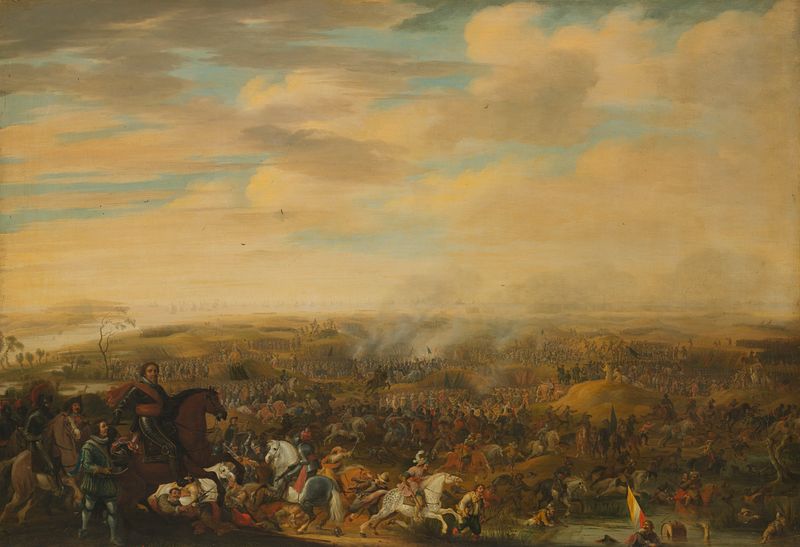
Prince Maurice at the Battle of Nieuwpoort, 2 July 1600
Pauwels van Hillegaert
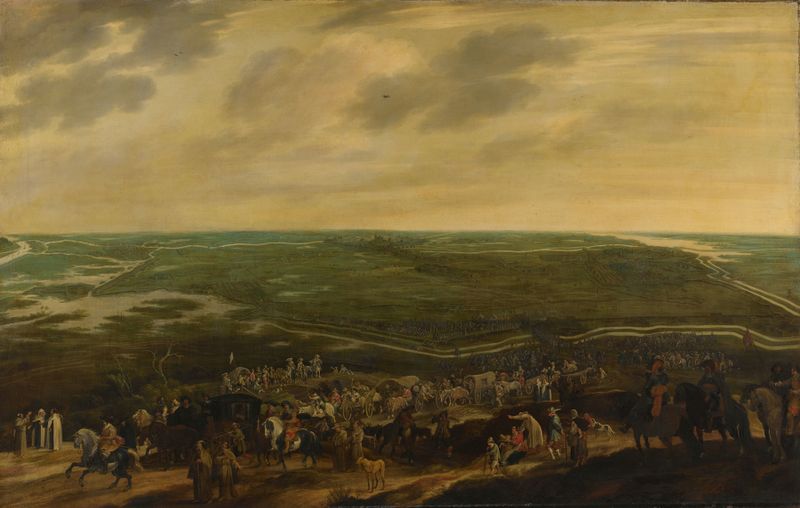
The defeated Spanish Garrison leaving ‘s-Hertogenbosch, 17 September 1629
Pauwels van Hillegaert
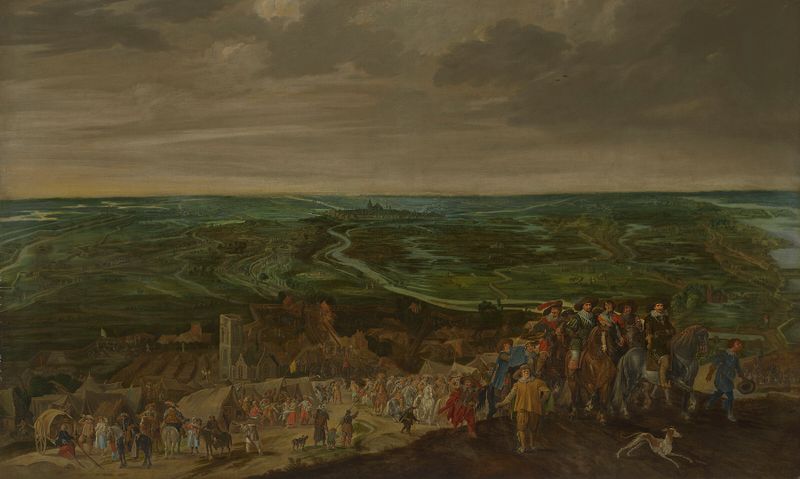
The Siege of ‘s-Hertogenbosch, viewed from the encampment at Vught
Pauwels van Hillegaert
More Historical Art
Browse all →
The Night Watch Militia Company of District II under the Command of Captain Frans Banninck Cocq
Rembrandt van Rijn

Lincoln Memorial
Henry Bacon

The Third of May 1808
Francisco de Goya

Isaac and Rebecca, Known as ‘The Jewish Bride’
Rembrandt van Rijn

The Charge of the Mamelukes (1814)
Francisco de Goya

De vier ruiters van de apocalyps
Albrecht Dürer