
The Docking Basin in the Barge Canal in Leidschendam — History & Facts
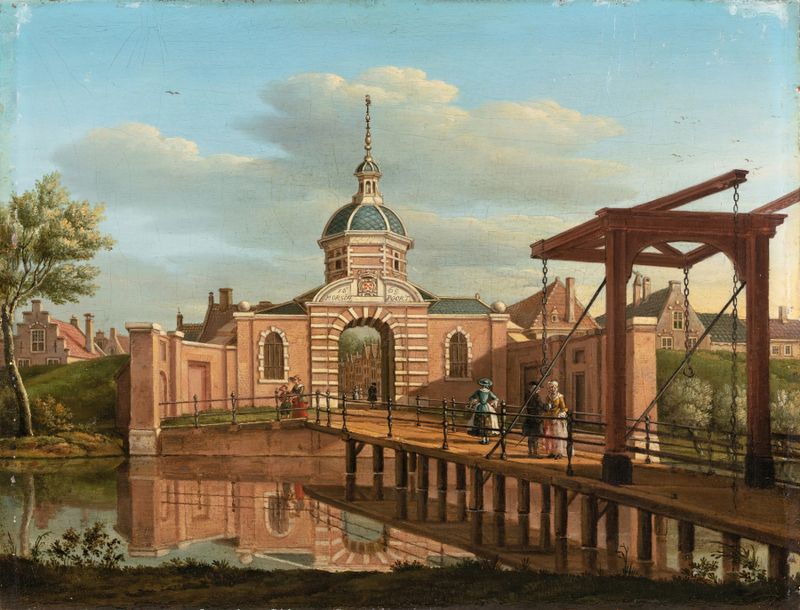
In the stillness of The Docking Basin in the Barge Canal in Leidschendam, innocence unfolds like a delicate petal, revealing the hidden narratives within its tranquil embrace. Look to the left at the gently swaying boats, their wooden forms softened by the evening light. Notice how the soft pastel hues of the sky blend with the serene reflections in the water, creating a seamless dialogue between the elements. The subtle brushwork captures the essence of the moment, drawing the viewer’s eye to the delicate ripples that dance at the water’s edge, evoking a sense of calm and reverie. Within this idyllic scene, the contrast between nature and artifice emerges.
The quiet solitude of the canal speaks to a simpler time, while the presence of man-made structures hints at the encroachment of modernity upon unblemished landscapes. Each vessel resting at the dock carries its own story, yet their stillness together resonates with the innocence of a world untouched by haste. The harmony of colors and composition invites contemplation, urging us to reflect on the fleeting nature of peace. In 1756, Paulus Constantijn la Fargue painted this piece in the picturesque village of Leidschendam, a setting that thrived on the waterways of Holland.
It was a period marked by a flourishing interest in landscape painting, as artists sought to capture the essence of Dutch life. La Fargue, influenced by his predecessors, aimed to evoke the serene beauty of his surroundings while weaving themes of tranquility into an evolving artistic narrative.
More Artworks by Paulus Constantijn la Fargue
Browse all →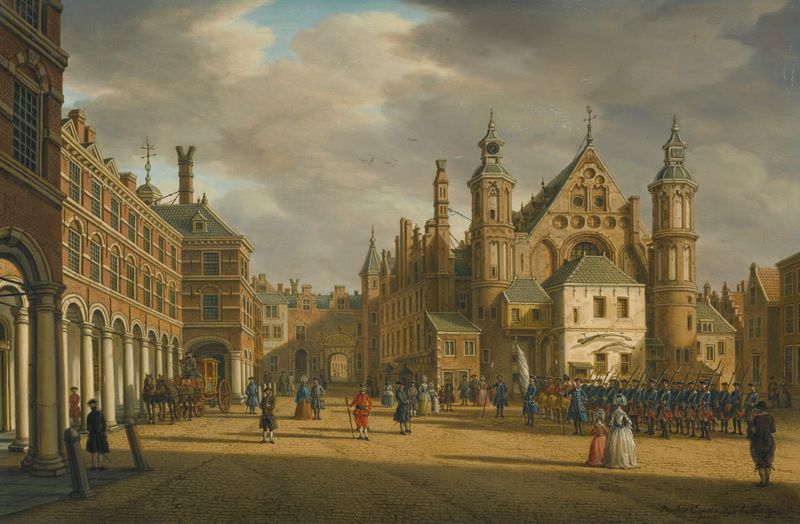
The Hague, A View Of The Binnenhof Looking North With The Ridderzaal
Paulus Constantijn la Fargue
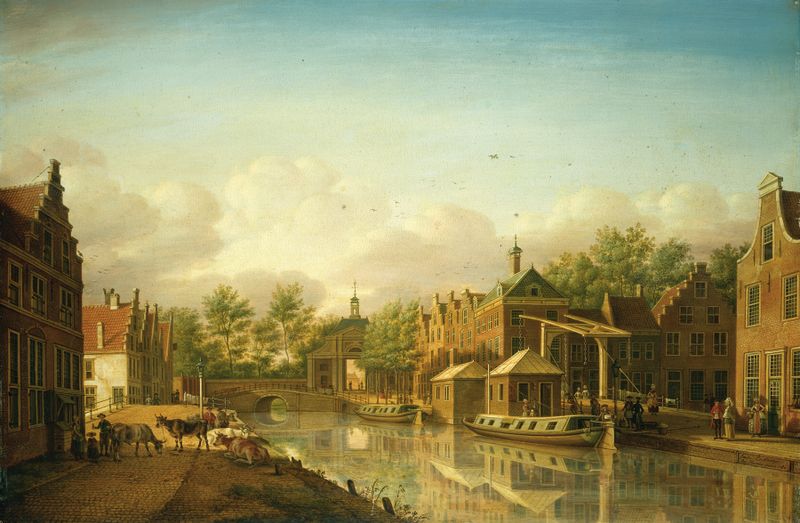
The Haarlem Gate in Leyden as Seen From the City
Paulus Constantijn la Fargue

A View Of Marepoort, Leiden
Paulus Constantijn la Fargue
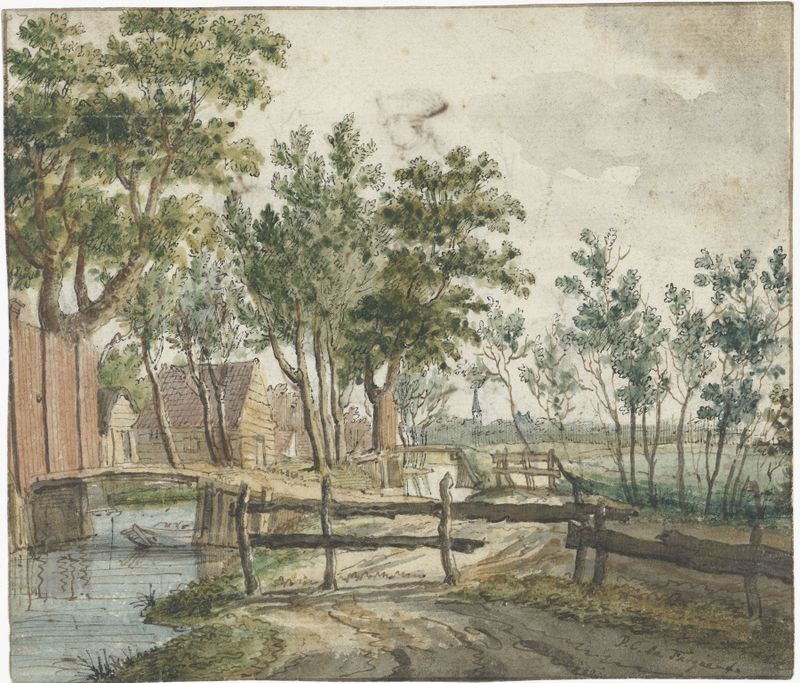
Landelijk vaart bij Voorburg
Paulus Constantijn la Fargue
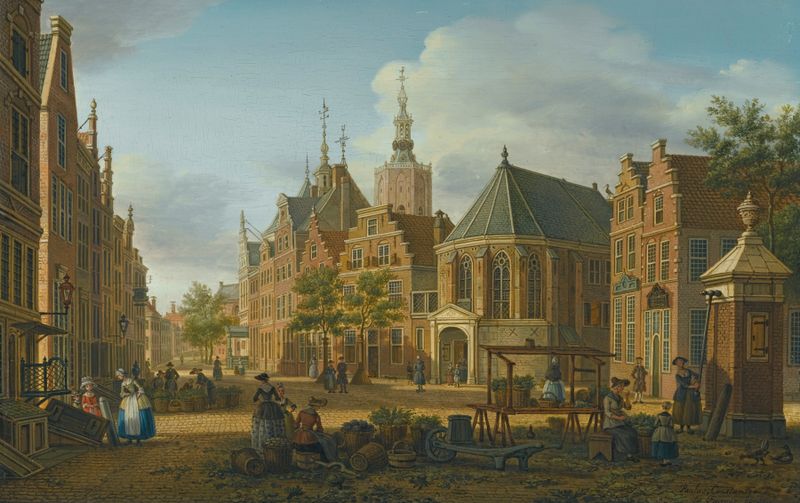
The Hague, A View Of The Groenmarkt Near The Westeinde Looking West
Paulus Constantijn la Fargue
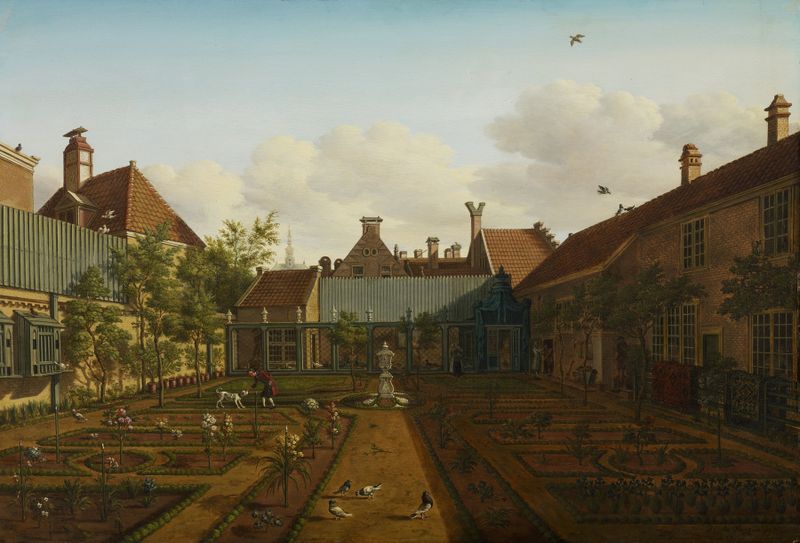
View of a Town House Garden in The Hague
Paulus Constantijn la Fargue
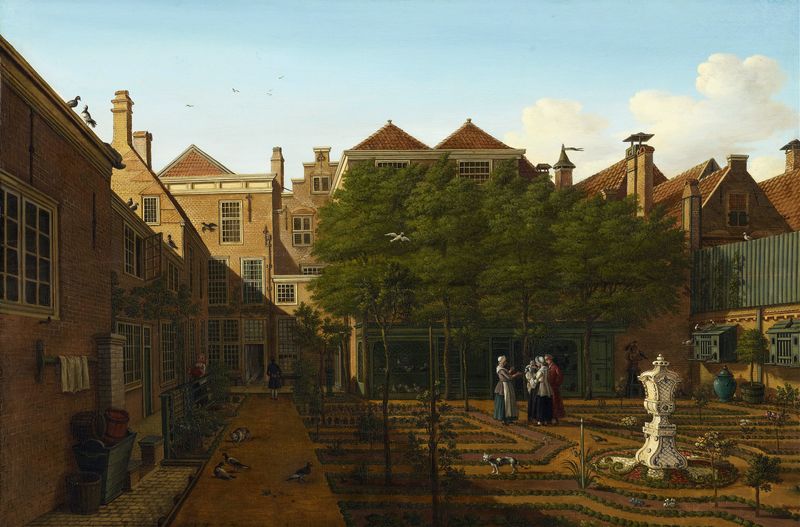
View of a Town House Garden in The Hague
Paulus Constantijn la Fargue
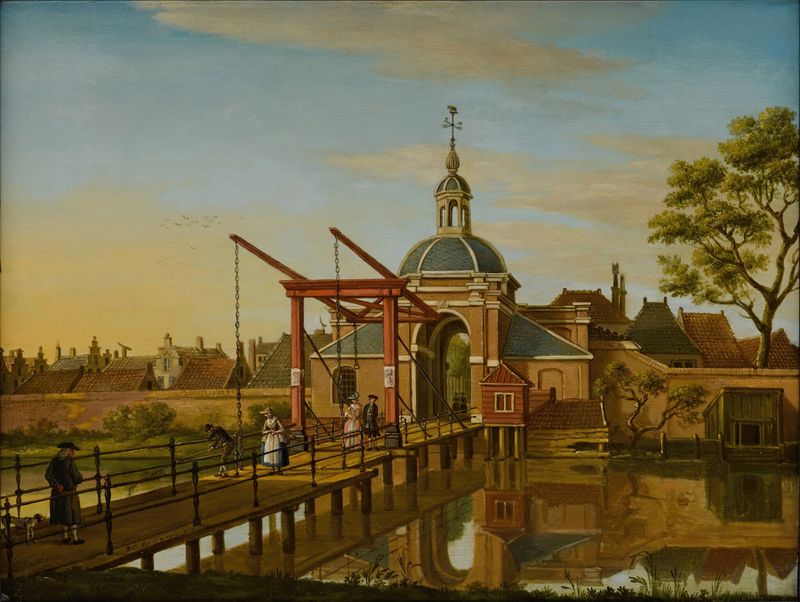
Leiden, a view of Koepoort, seen from the road to Zoeterwoude
Paulus Constantijn la Fargue
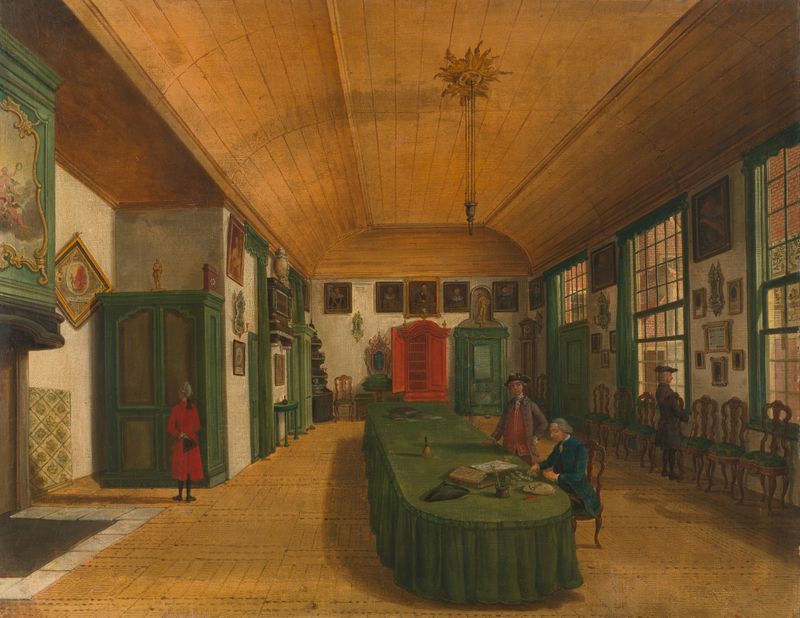
The Hall of the Artistic Society 'Kunst wordt door Arbeid verkregen' (Art is Acquired through Labor) in Leiden
Paulus Constantijn la Fargue
A View Of Morspoort, Leiden
Paulus Constantijn la Fargue





