
The Entrance into Borrowdale — History & Facts
Can paint confess what words never could? In Francis Towne's vision, the sweeping landscapes breathe with a divine essence, inviting viewers to a silent communion with nature. Look to the foreground, where a gentle stream meanders, its surface glistening under a soft, diffused light. The rolling hills rise majestically on either side, shrouded in a delicate mist that suggests both mystery and serenity. Notice the subtle gradations of green and brown, the way Towne skillfully navigates the interplay of shadow and light, creating a sense of both depth and tranquility in the scene. Beneath the surface lies a profound tension between the vastness of the landscape and the intimacy of the stream.
The winding waterway serves as a lifeline, connecting the viewer to the soul of the earth, while the distant, towering mountains evoke a sense of the sublime. This contrast between the familiar and the awe-inspiring speaks to the human experience — an exploration of our place within the grandeur of nature, where divinity and earthly beauty coexist. Francis Towne created this piece during the late 18th century, a time when Romanticism began to reshape the artistic landscape in Europe. His travels in Italy and the English countryside enriched his perspective, allowing him to capture the essence of the natural world amidst shifts in artistic expression.
This period marked a deepening appreciation for nature’s beauty and complexities, which Towne conveyed through his delicate brushwork and emotional resonance.
More Artworks by Francis Towne
Browse all →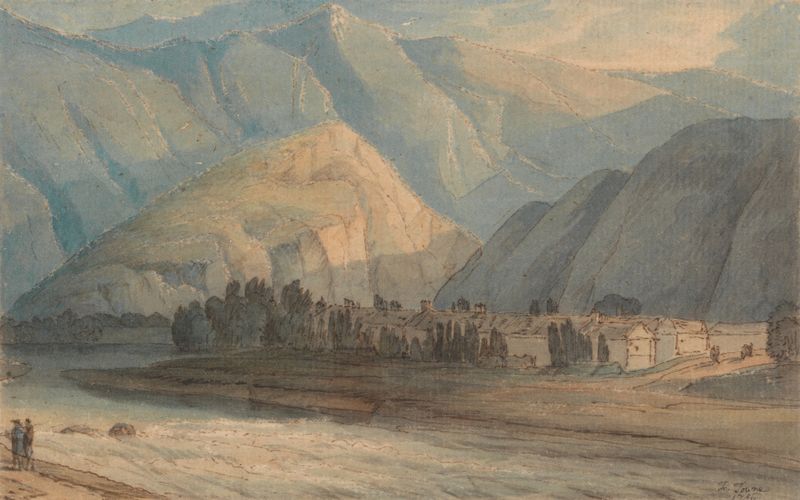
The Grange at the Head of Keswick Lake
Francis Towne

Vauxhall Stairs, from Millbank, July 5, 1797
Francis Towne

View in Borrowdale of Eagle Crag and Rosthwaite
Francis Towne

View of Lake Como with Monte Leoni
Francis Towne
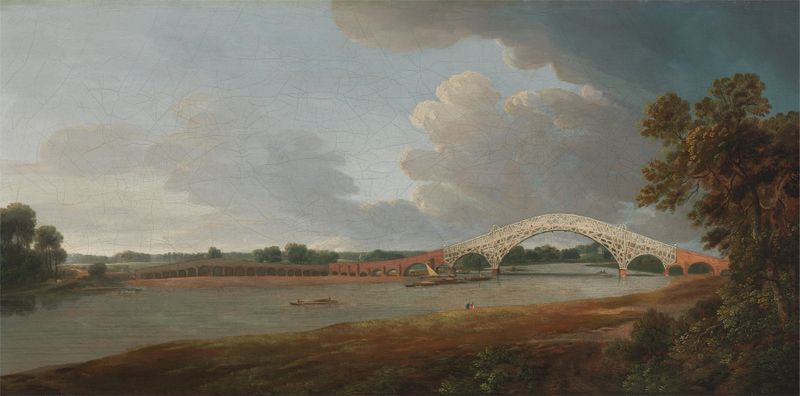
Old Walton Bridge
Francis Towne
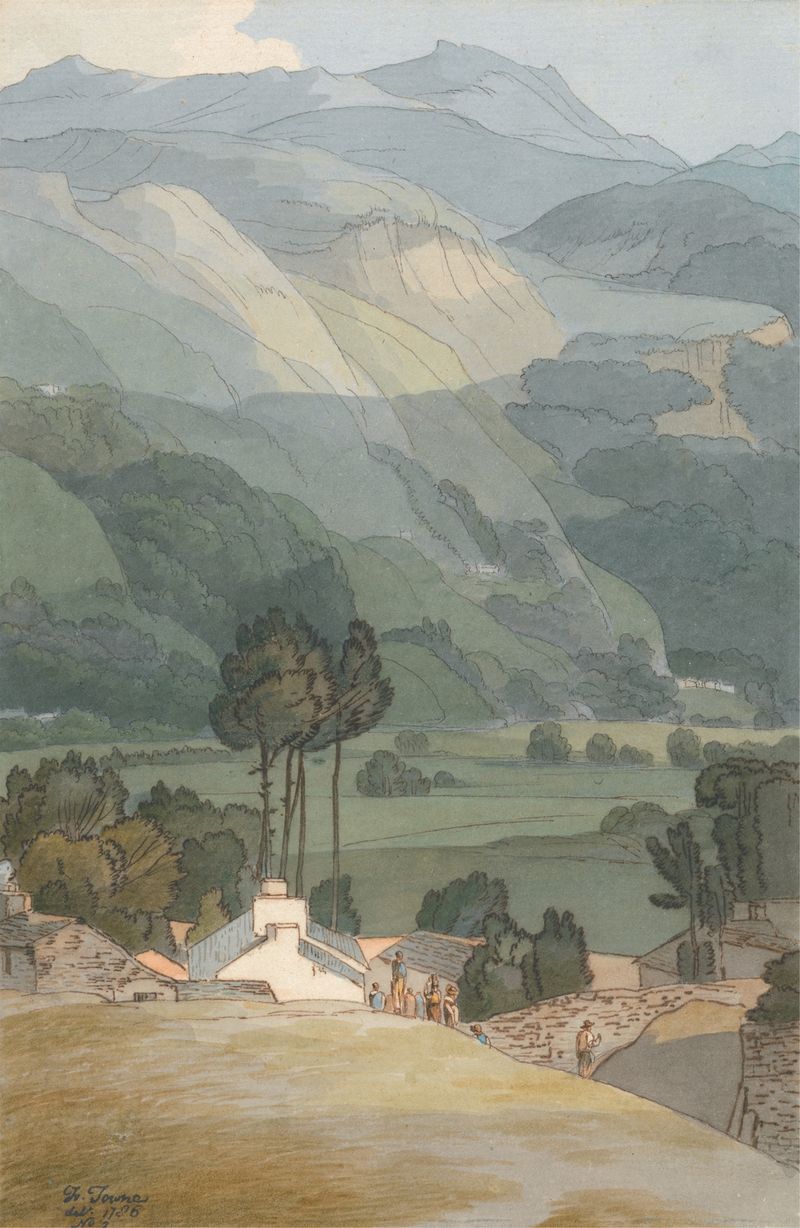
Ambleside
Francis Towne
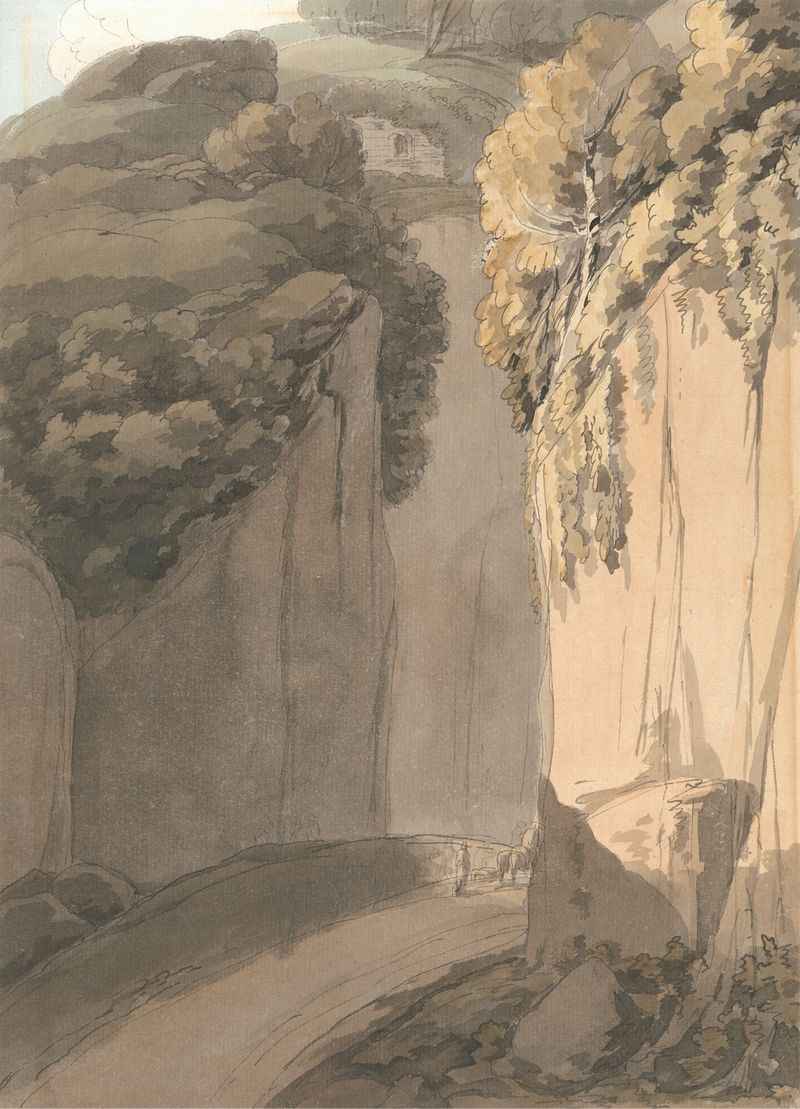
Entrance to the Grotto at Posilippo, Naples
Francis Towne

The Claudian Aquaduct, Rome
Francis Towne

A View Near the Arco Scuro, Looking Towards the Villa Medici, Rome
Francis Towne

View of the Rhydaer
Francis Towne





