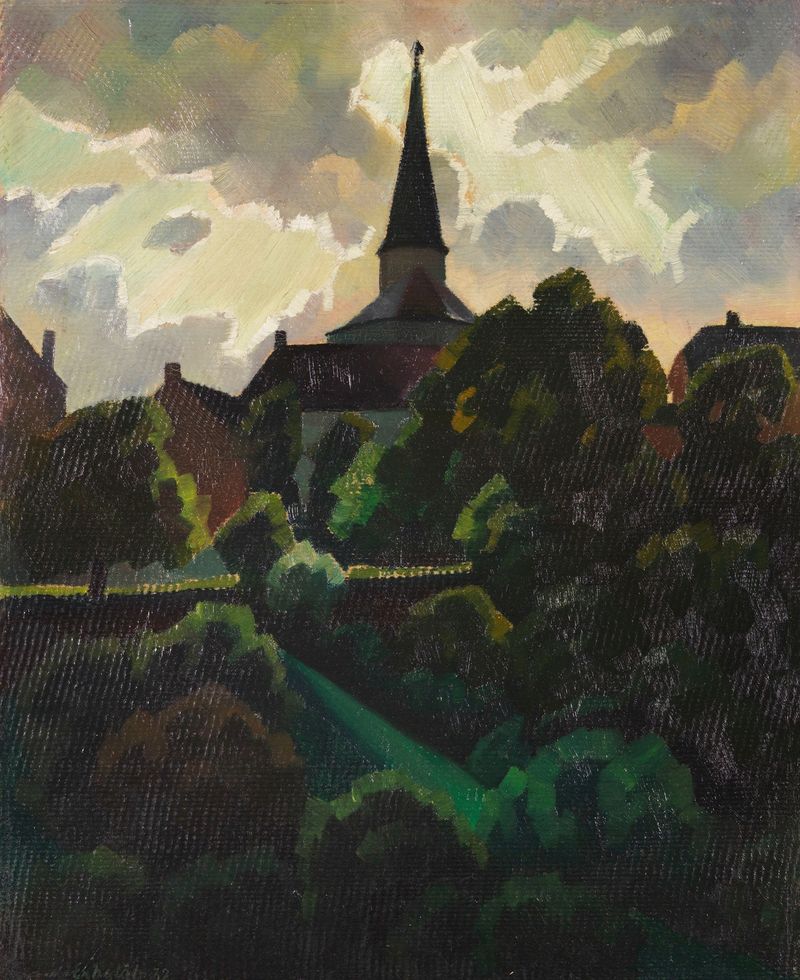
The Factory — History & Facts
In a world where silence often hides stories of toil and industry, one captures the essence of labor's quiet strength on canvas. Look to the left at the towering smokestacks, their solemn presence cutting through the hazy skyline. The muted palette of greys and ochres evokes a sense of industrial melancholy, while soft brushstrokes suggest a blanket of silence enveloping the factory. Notice how the light, diffused and grim, casts long shadows across the ground, contrasting with the rigid geometry of the structures.
This tension between light and shadow beautifully highlights the burden of progress, urging the viewer to confront the stillness beneath the clamor of machinery. Dig deeper into the painting's emotional layers, where the starkness of the factory layout echoes both a sense of isolation and collective struggle. The absence of human figures amplifies the silence, inviting reflection on the workers’ invisible presence. The juxtaposition of the industrial environment against the muted colors suggests a lost vibrancy, a reminder of what has been sacrificed in the name of progress.
Here, Erbslöh captures not just a physical space but a poignant commentary on the human experience within it. In 1921, Erbslöh painted this work in Germany, a period marked by significant social and economic upheaval following World War I. As artists grappled with the repercussions of the conflict, many turned their gaze towards industrial subjects, seeking to evoke the spirit of a changing nation. This piece reflects both his personal evolution and the broader artistic movement of the time, as he sought to encapsulate the relentless march of industrialization in a world striving to reconcile the past with the future.