
The Fence — History & Facts
Nostalgia is captured in the soft hues and delicate strokes that evoke a sense of longing for simpler times. The viewer is transported into a memory, a moment suspended between the past and the present, where nature and humanity intertwine harmoniously. Look to the center of the canvas, where a weathered fence stands sturdy amidst the lush greenery. Notice how the light dances across the painted surface, casting gentle shadows that reveal the texture of the wood and the vibrancy of the surrounding foliage.
Pissarro employs a palette of muted greens and warm browns, the colors blending seamlessly to create an inviting atmosphere. The loose brushwork conveys movement, as if the wind whispers through the leaves, inviting you to step into this tranquil scene. In this artwork, contrasts emerge between the rigidity of the fence and the fluidity of nature. The fence, a symbol of boundaries and human intervention, suggests both protection and confinement.
Meanwhile, the surrounding landscape embodies freedom and life, bursting forth in a kaleidoscope of shades that evoke a sense of nostalgia. This interplay reflects the duality of human experience—yearning for connection to the natural world while navigating the constraints we create. Created in 1872, during a significant transitional period in art, Pissarro was exploring Impressionism while living in rural France. The artist sought to capture the essence of everyday life, drawing inspiration from his own surroundings.
This was a time when artists began to break away from traditional techniques, favoring light and color over defined forms. Pissarro’s work stands as a testament to that evolving spirit, balancing the beauty of nature with the human touch.
More Artworks by Camille Pissarro
Browse all →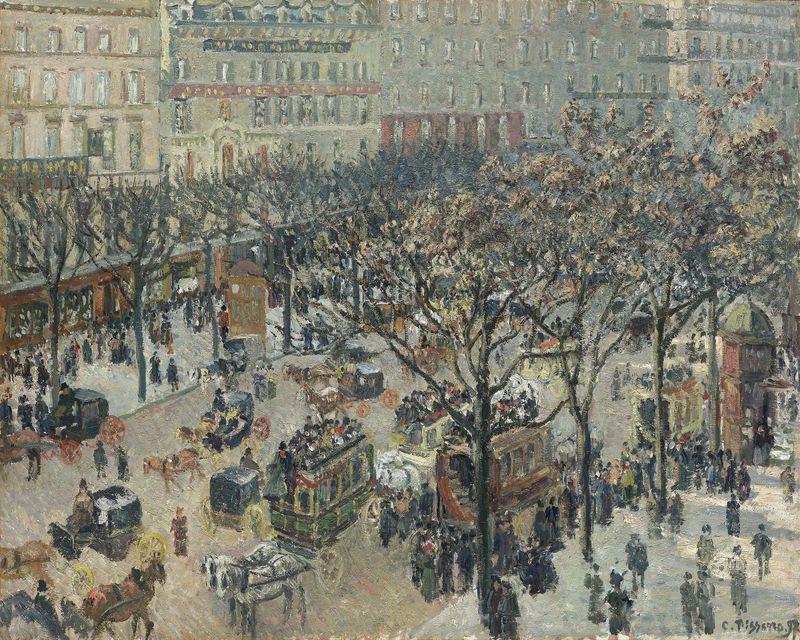
Boulevard des Italiens,Morning_Sunlight
Camille Pissarro
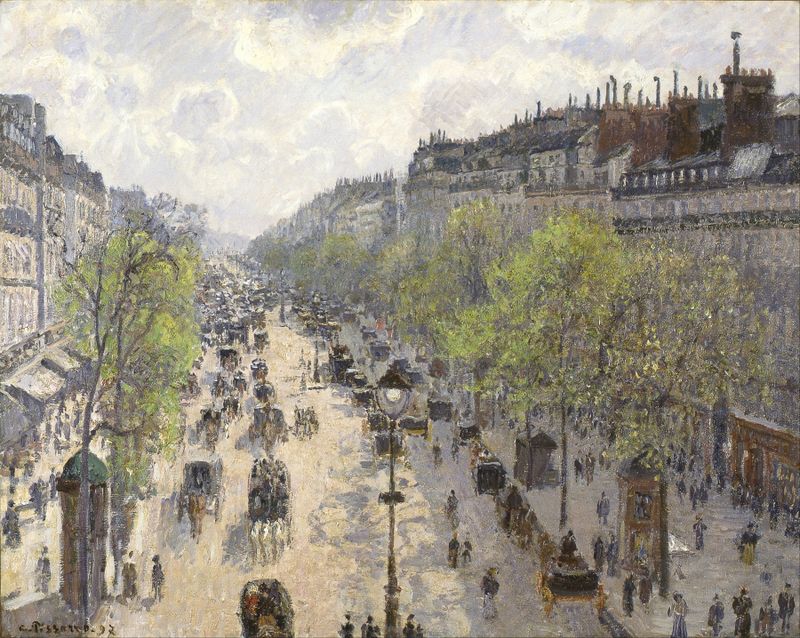
Boulevard Montmartre, Spring
Camille Pissarro
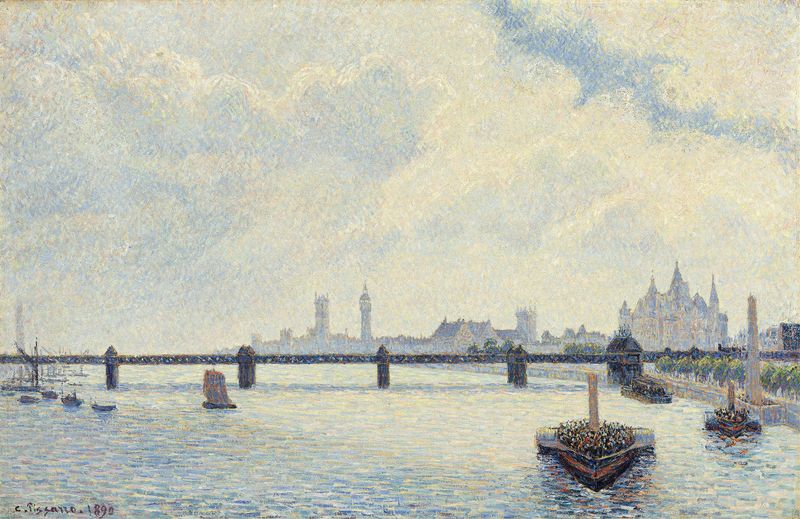
Charing Cross Bridge,London
Camille Pissarro
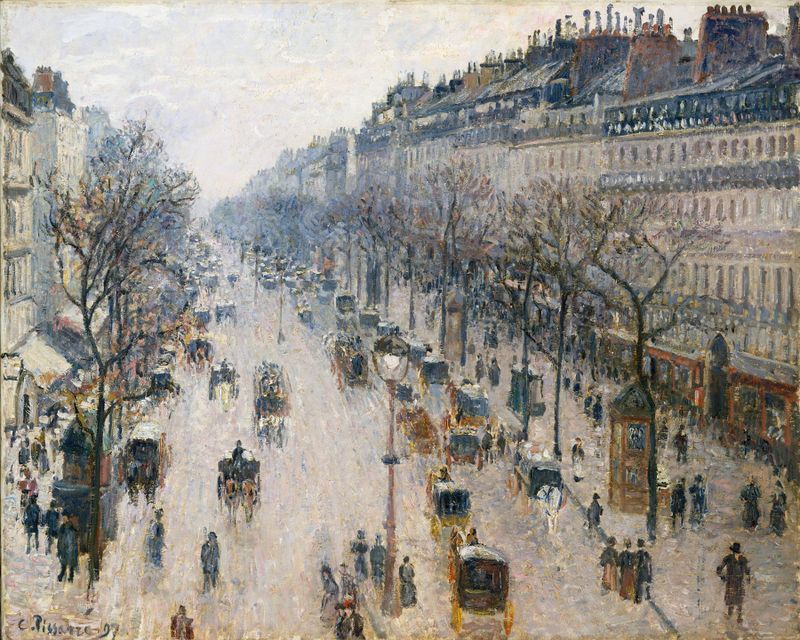
The Boulevard Montmartre on a Winter Morning
Camille Pissarro
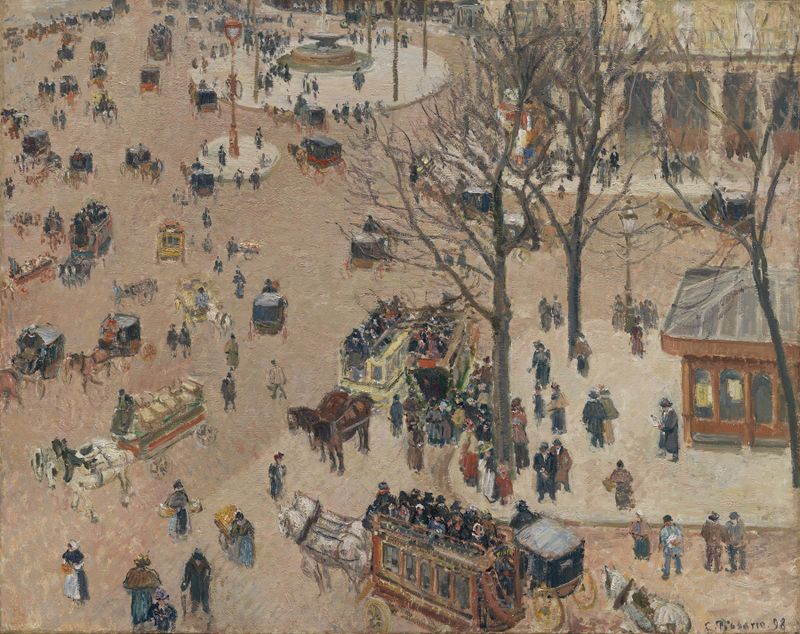
La Place du Théâtre Français
Camille Pissarro

Rue Saint-Lazare, Paris
Camille Pissarro
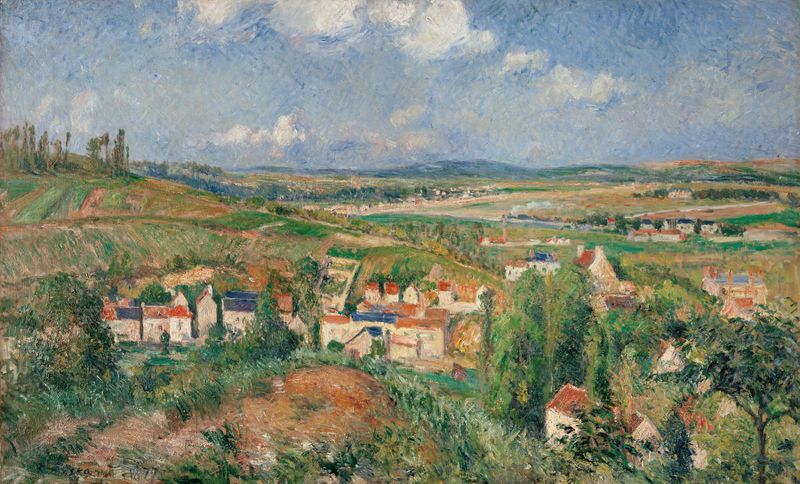
L’hermitage En Été, Pontoise
Camille Pissarro

Place du Theatre Francais,Fog Effect
Camille Pissarro
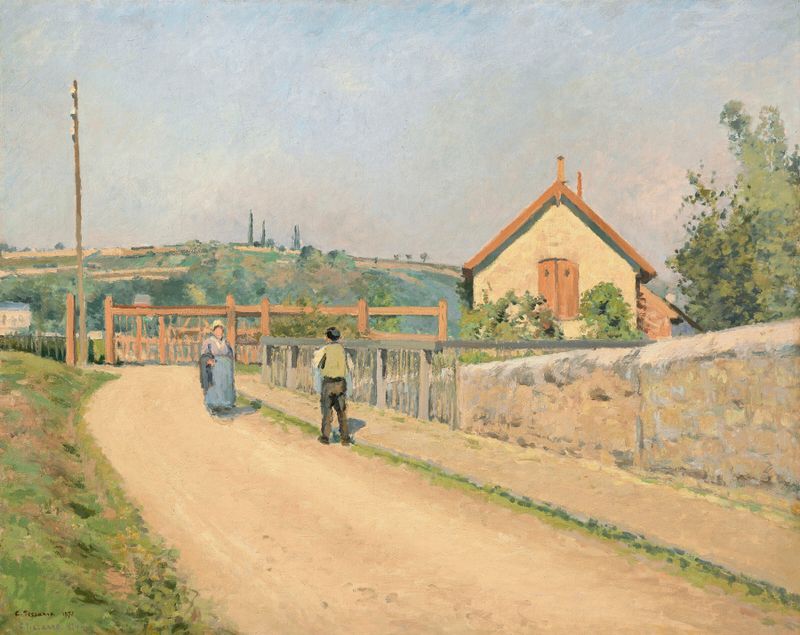
La barrière du chemin de fer, aux Pâtis près Pontoise
Camille Pissarro
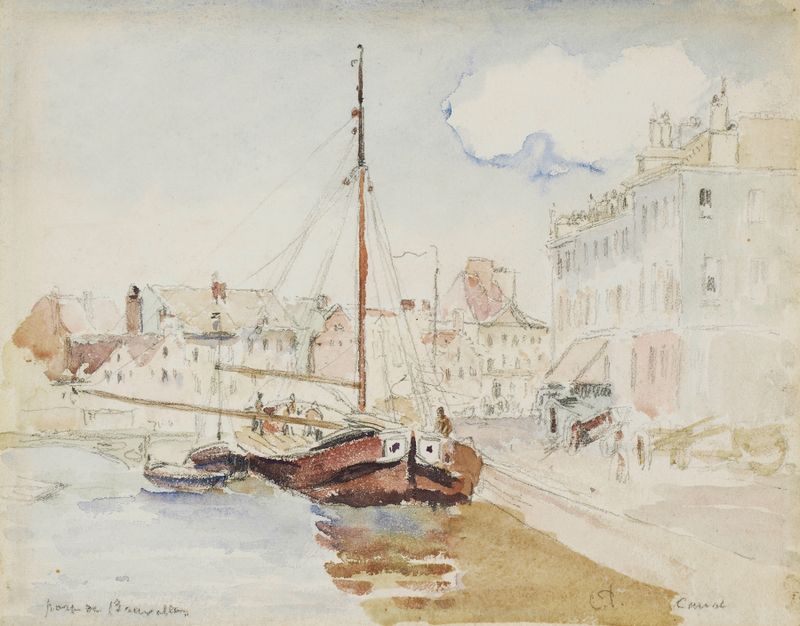
Port de Bruxelles
Camille Pissarro





