The Fleet — History & Facts
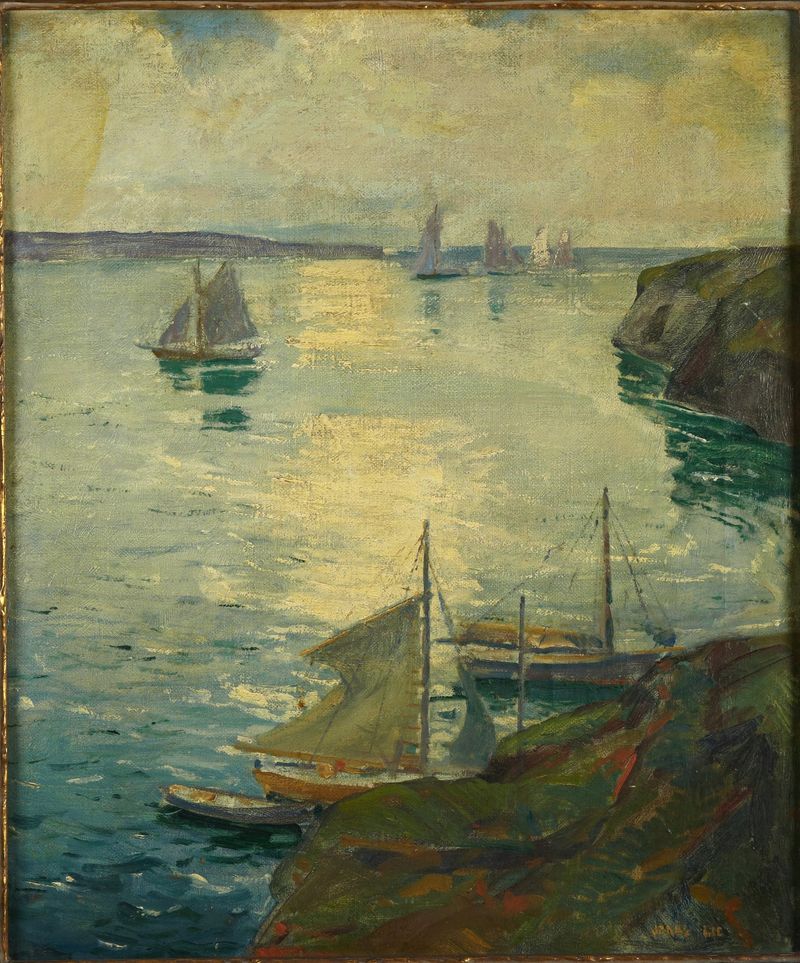
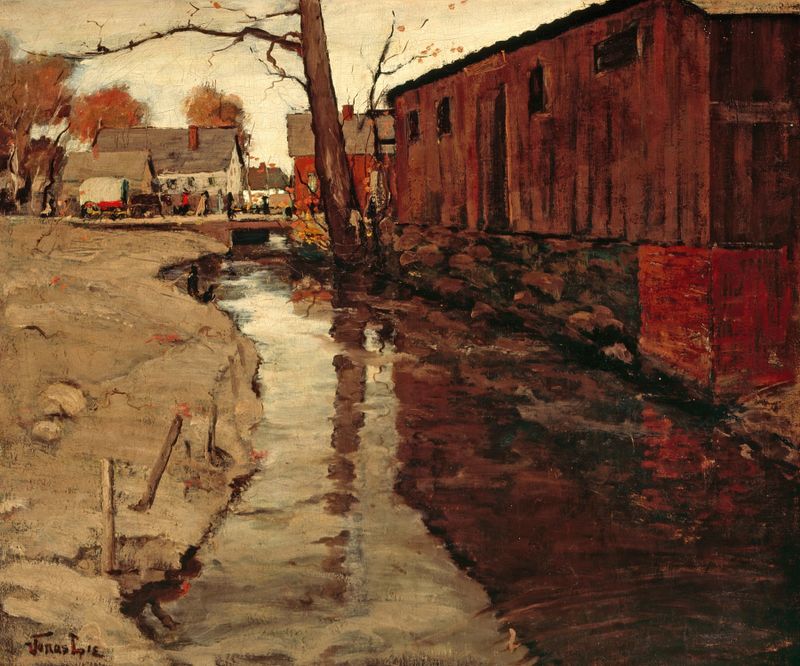
Can beauty exist without sorrow? In The Fleet, Jonas Lie captures a poignant interplay of hope and melancholy, inviting viewers to ponder the complexities of existence while presenting a seemingly serene maritime scene. Look to the left at the gentle waves lapping against the dock, where boats rest with quiet dignity. The vibrant blues and greens create a contrast with the soft golden hues of the setting sun, which casts long shadows and imbues the painting with a warm glow. Pay attention to the brushwork; it is both fluid and deliberate, seamlessly merging the sky and sea, suggesting an intimate connection between the two.
The arrangement of boats in varying sizes draws the eye across the canvas, leading to the horizon where promise and mystery await. Beneath this tranquil surface lies a tension between stillness and movement; the fleet of boats stands ready yet remains untouched, a metaphor for unfulfilled dreams. The interplay of light and shadow not only emphasizes the beauty of the scene but also hints at the fleeting nature of hope, suggesting that tranquility and uncertainty coexist. Each vessel, anchored in place, symbolizes aspirations that are both tangible and elusive, evoking a sense of longing that resonates deeply. In 1925, Lie created this work while residing in the United States, where he was influenced by both American Impressionism and his Norwegian heritage.
The post-World War I era, marked by social changes and artistic exploration, provided him with a backdrop of both upheaval and opportunity. During this time, Lie sought to evoke emotion through his landscapes, striving to encapsulate the complex feelings of nostalgia and hope that his subjects inspired.