
The Fountain — History & Facts
Could a single brushstroke hold eternity? In The Fountain, the interplay of light and shadow creates an inviting yet elusive void, drawing viewers into a world where nature and artifice harmoniously coexist. Look to the center, where the fountain emerges as a focal point, its cascading water shimmering in the gentle sunlight. Notice how the artist meticulously delineates the surrounding architecture, capturing both the grandeur and decay of the stone structures that cradle it. The warm palette of ochres and greens invites us to feel the warmth of the sun, while the delicate brushwork suggests movement — a whisper of water dancing against timeless stone. Yet beneath its serene surface lies a tension between nature and the artificial.
The vibrant life of the surrounding trees contrasts sharply with the rigid symmetry of the architectural elements, prompting a reflection on humanity's intrusion into the natural world. The stillness of the water echoes the void, a metaphor for the passage of time and the fleeting nature of beauty, leaving us to ponder what is lasting in a world so transient. During the late 18th century, Hubert Robert painted this work amid the rise of Neoclassicism and the romantic ideals that celebrated the beauty of nature. Living in Paris, he experienced a vibrant art scene, influenced by his travels through Italy, where he developed a profound appreciation for classical ruins.
This painting reflects a moment of personal and artistic exploration, as Robert sought to blend the sublime with the constructed, capturing the duality inherent in both nature and humanity.
More Artworks by Hubert Robert
Browse all →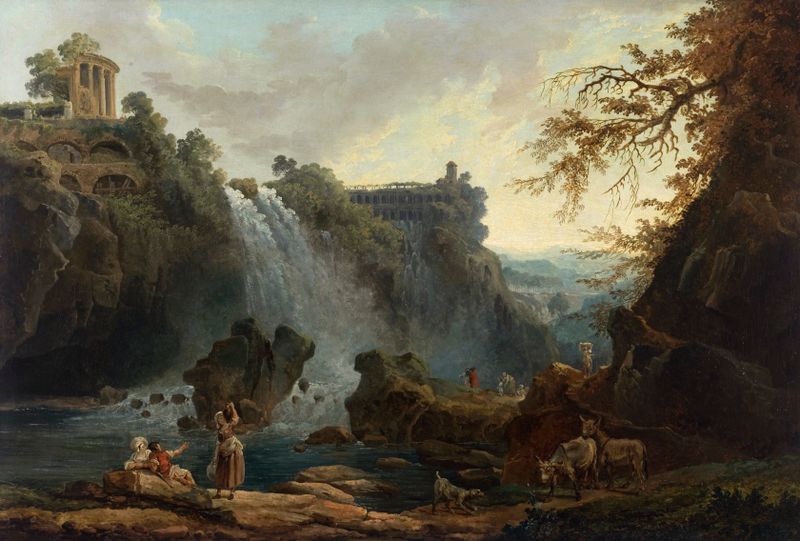
Les Cascatelles de Tivoli
Hubert Robert
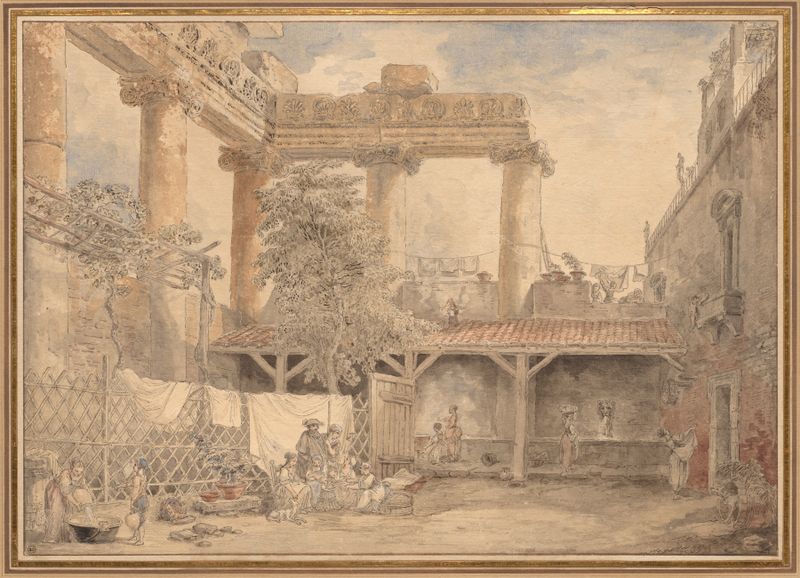
Roman Ruins, Villa Pamfili
Hubert Robert

The Rustic Bridge, Château de Méréville, France
Hubert Robert

The Portico of a Country Mansion
Hubert Robert

Architectural Capriccio
Hubert Robert

The Obelisk
Hubert Robert
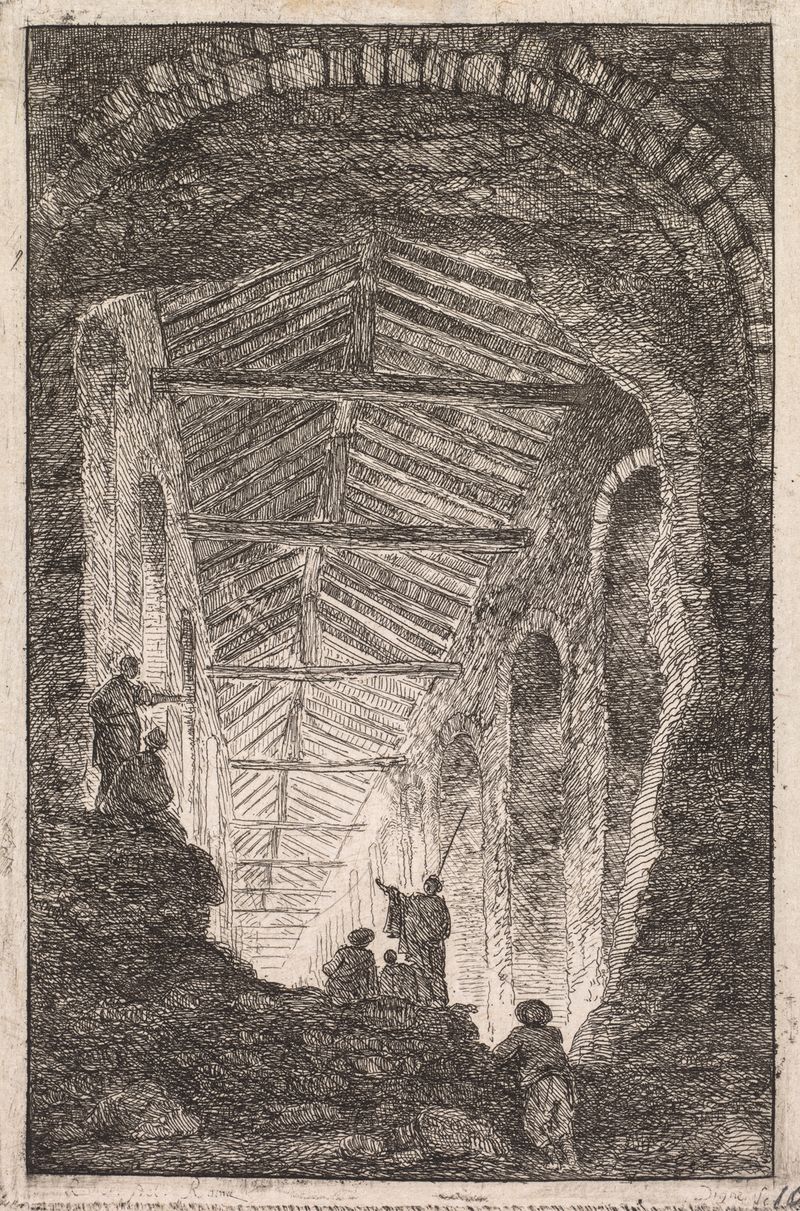
The Antique Gallery
Hubert Robert

L’incendie de l’Opéra, vu des jardins du Palais-Royal, le 8 juin 1781
Hubert Robert
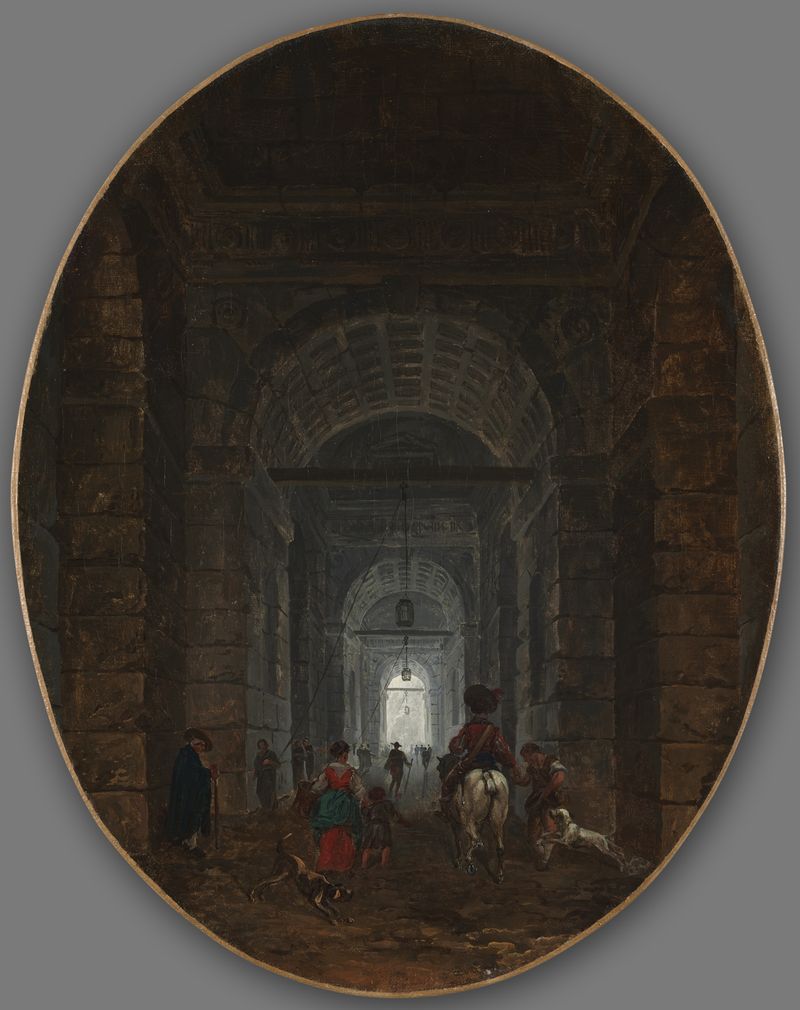
The Grotto of Posillipo
Hubert Robert

Architectural Capriccio with ruins of the Temple of Saturn and the Colosseum in the background
Hubert Robert





