
The Fountains — History & Facts
Could a single brushstroke hold eternity? In the delicate interplay of nature and architecture, The Fountains offers a glimpse into a world where harmony reigns supreme, inviting viewers to pause and reflect on balance in life. Look to the left at the cascading water, glistening against the muted hues of the surrounding stones. The artist masterfully orchestrates light and shadow, creating a tranquil scene where the cool blue of the water contrasts with the warm earth tones of the structures. Notice how the gentle curves of the fountains' basins draw the eye upward toward the imposing ruins, suggesting a dialogue between the man-made and the natural.
Each element is meticulously arranged, echoing the classical ideals of symmetry and proportion. Deeper within this serene composition lie contrasts that speak volumes. The water, representing vitality and renewal, flows effortlessly amidst the crumbling ruins, symbolizing the passage of time and the resilience of nature. There’s a subtle tension between decay and beauty; while the stones age and fracture, the lush greenery surrounding them remains vibrant.
This interplay not only emphasizes the balance of existence but also invites contemplation of impermanence and regeneration. At the time Hubert Robert painted The Fountains in 1787-88, he was based in Paris, deeply influenced by the Enlightenment's ideologies. This period saw a flourishing of neoclassical themes, as artists sought to reconcile nature with human achievement. Robert, known for his imaginative landscapes and depictions of ruins, was at the forefront of this movement, blending meticulous detail with a visionary approach to architectural harmony, resonating with the cultural ethos of his era.
More Artworks by Hubert Robert
Browse all →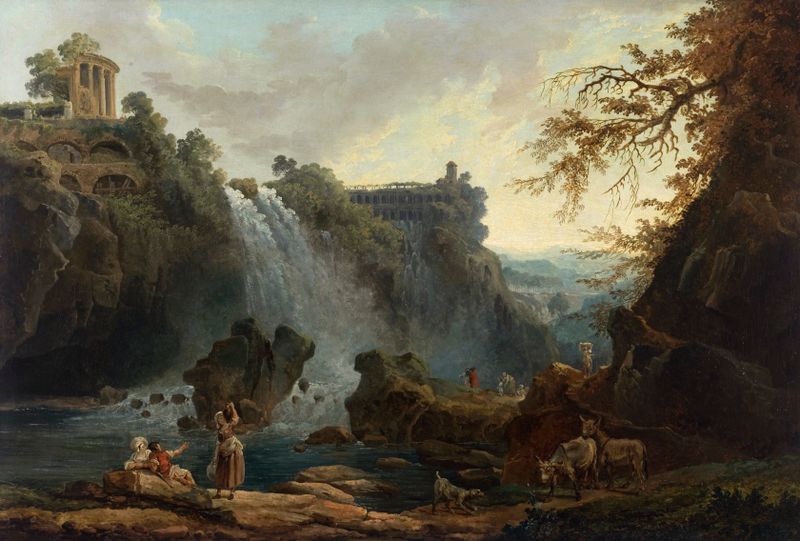
Les Cascatelles de Tivoli
Hubert Robert
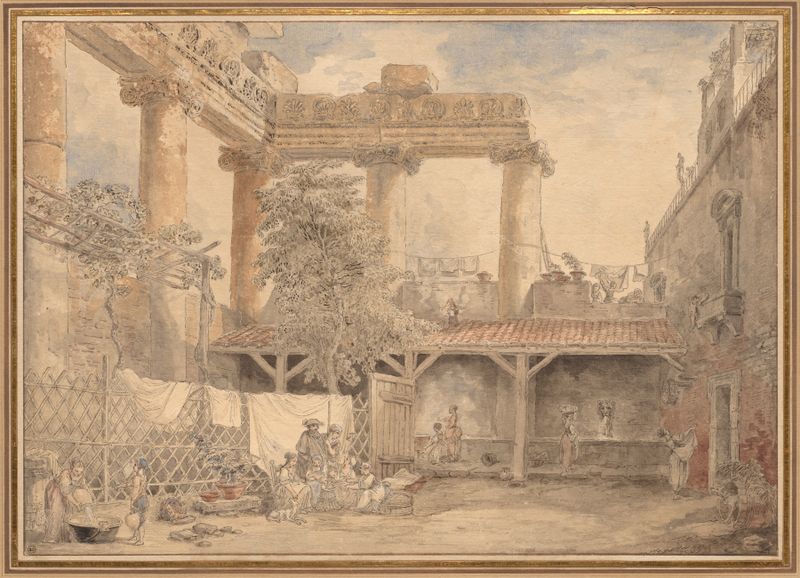
Roman Ruins, Villa Pamfili
Hubert Robert

The Rustic Bridge, Château de Méréville, France
Hubert Robert

The Portico of a Country Mansion
Hubert Robert

Architectural Capriccio
Hubert Robert

The Obelisk
Hubert Robert
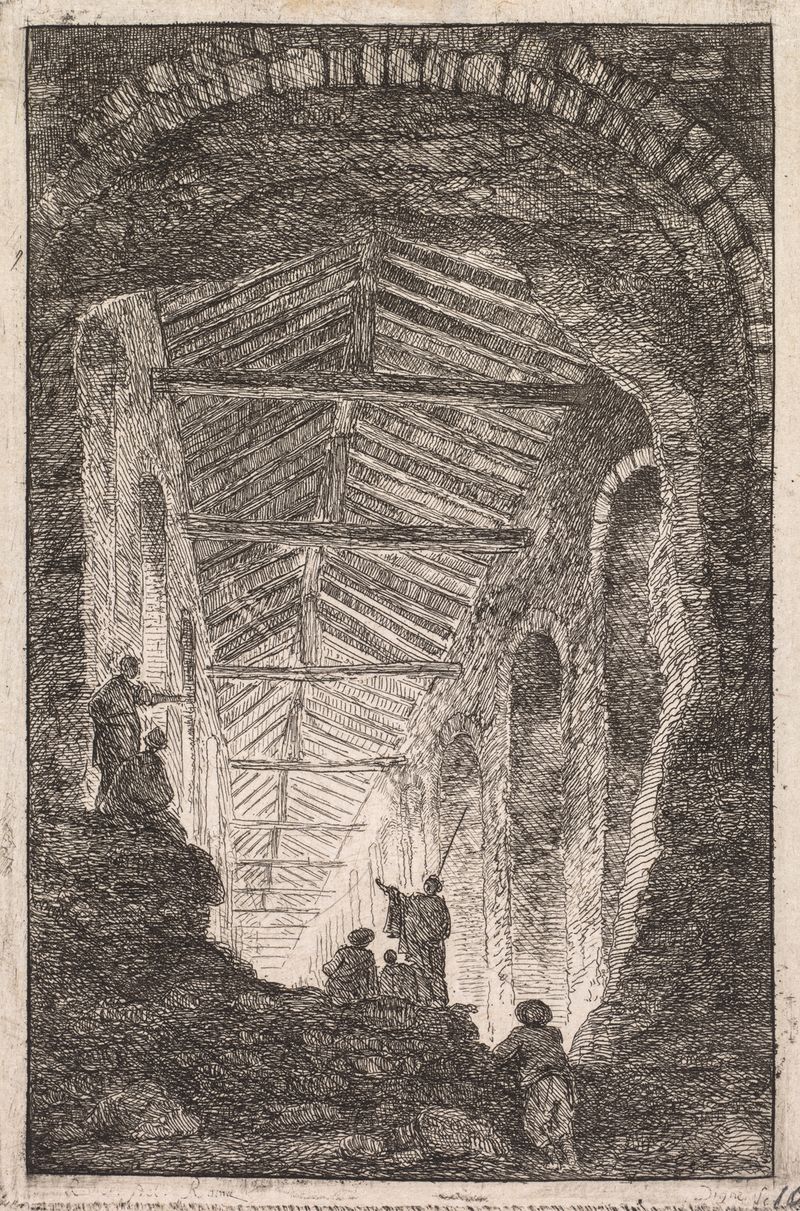
The Antique Gallery
Hubert Robert

L’incendie de l’Opéra, vu des jardins du Palais-Royal, le 8 juin 1781
Hubert Robert
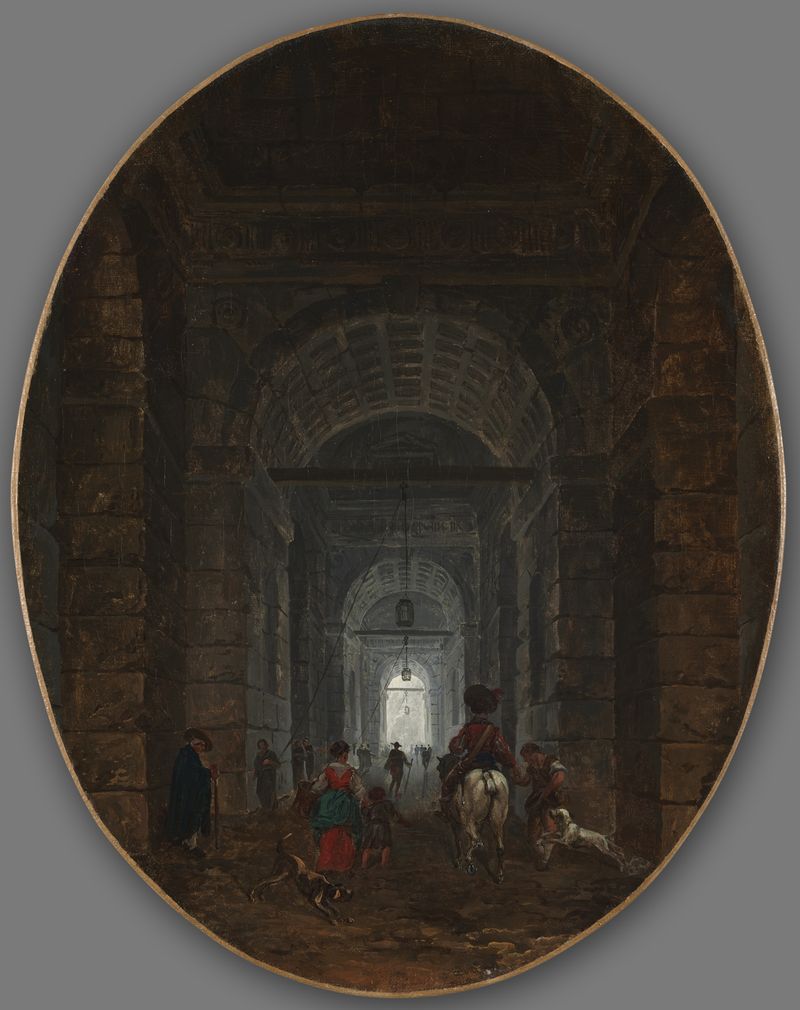
The Grotto of Posillipo
Hubert Robert

Architectural Capriccio with ruins of the Temple of Saturn and the Colosseum in the background
Hubert Robert





