
The Fountains — History & Facts
In the gentle splashes of water and whispers of stone, longing echoes through the heart of the viewer, inviting them to explore realms of memory and desire. Focus on the grandeur of the architecture as it looms in the background, its classical forms softened by age. Look to the left, where a fountain cascades in glimmering rivulets, capturing the sunlight and reflecting it back as jewels of light. Notice the delicate interplay of shadows and highlights on the marble, a testament to the artist's meticulous attention to texture and detail, creating a serene yet dynamic atmosphere.
The palette, infused with earthy tones and gentle pastels, evokes a sense of nostalgia, as if the scene is a fleeting moment from a bygone era. Delve into the contrasts within the painting: the rigidity of the stone structures versus the fluidity of the water; the stillness of the figures juxtaposed with the vibrant movement of nature. Each element speaks to the tension between permanence and impermanence, encapsulating a longing for connection amidst the serenity. The lone figure gazing into the fountain embodies a yearning for introspection, suggesting a narrative of solitude and contemplation, inviting viewers to engage with their own histories. In 1787, Hubert Robert painted The Fountains during a time of burgeoning neoclassicism in art, reflecting both the grandeur of the past and a fascination with nature.
Living in Paris, he was a prominent figure in the artistic community, navigating the juxtaposition of Enlightenment ideals with the complexities of a changing society. His work often explored themes of architecture and ruin, providing a poignant commentary on the transitory nature of beauty and existence, which resonates deeply in this artwork.
More Artworks by Hubert Robert
Browse all →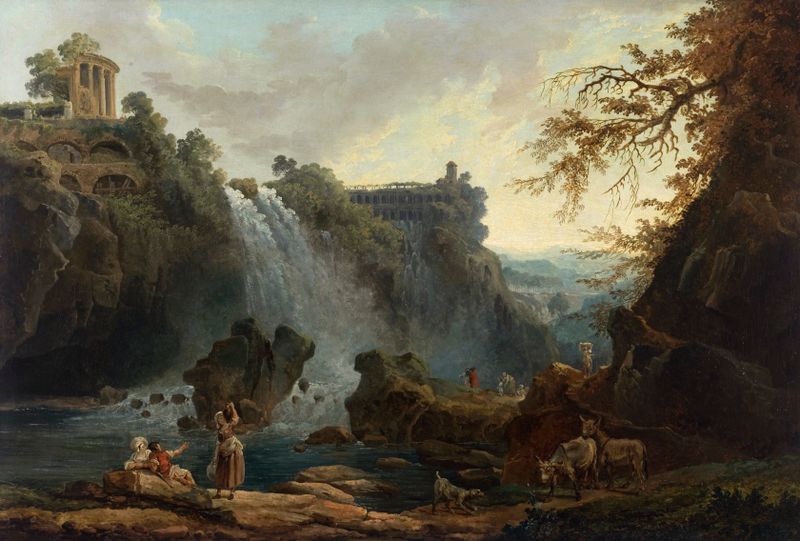
Les Cascatelles de Tivoli
Hubert Robert
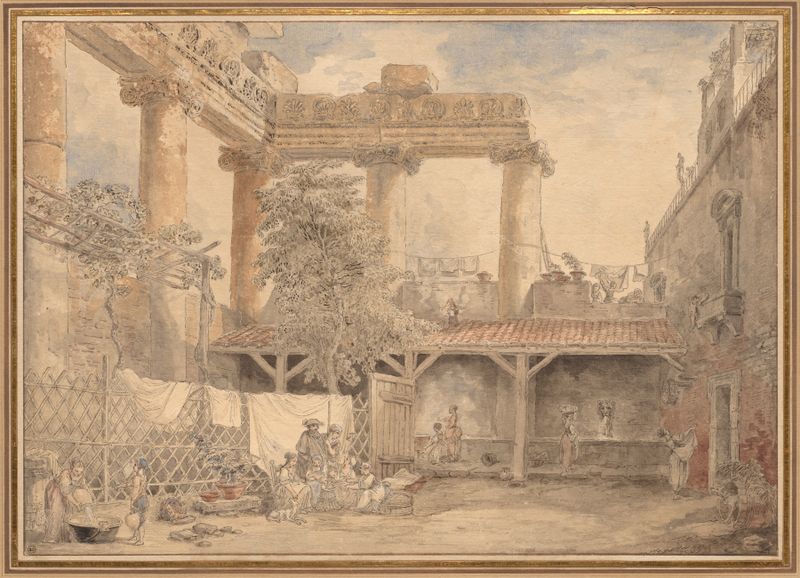
Roman Ruins, Villa Pamfili
Hubert Robert

The Rustic Bridge, Château de Méréville, France
Hubert Robert

The Portico of a Country Mansion
Hubert Robert

Architectural Capriccio
Hubert Robert

The Obelisk
Hubert Robert
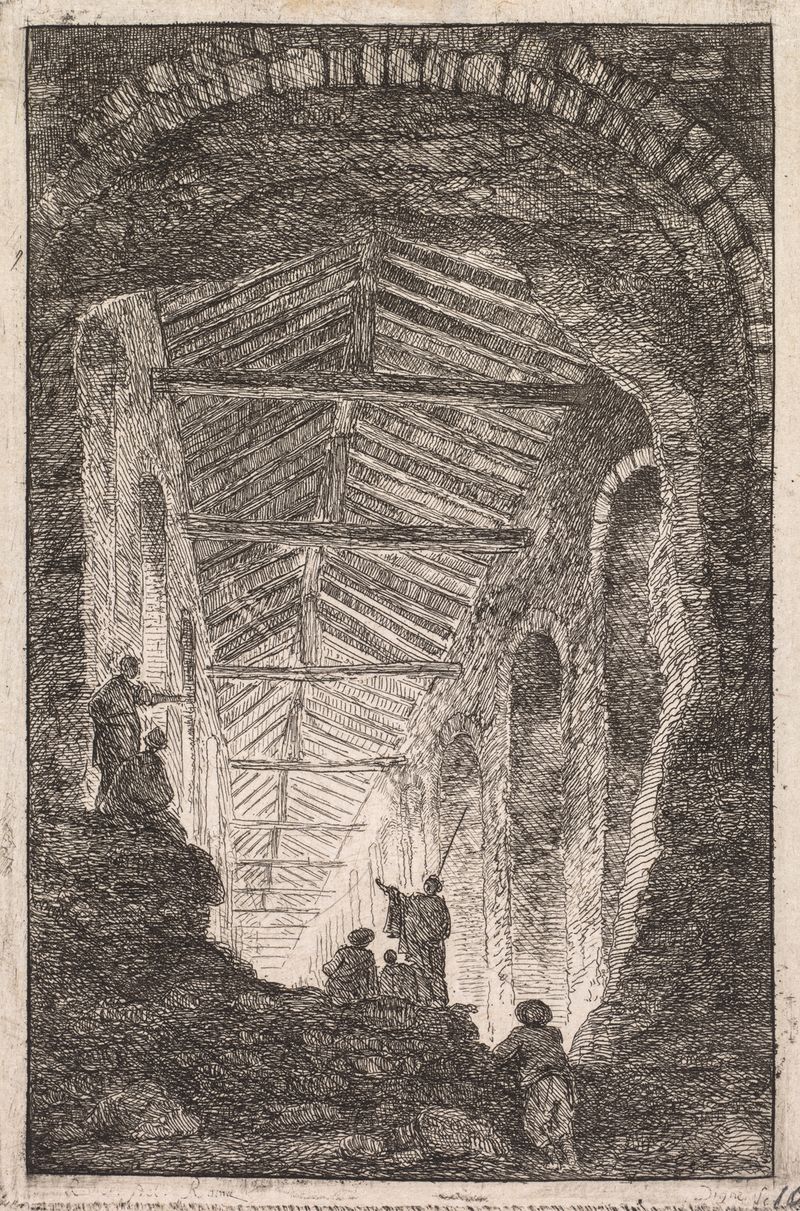
The Antique Gallery
Hubert Robert

L’incendie de l’Opéra, vu des jardins du Palais-Royal, le 8 juin 1781
Hubert Robert
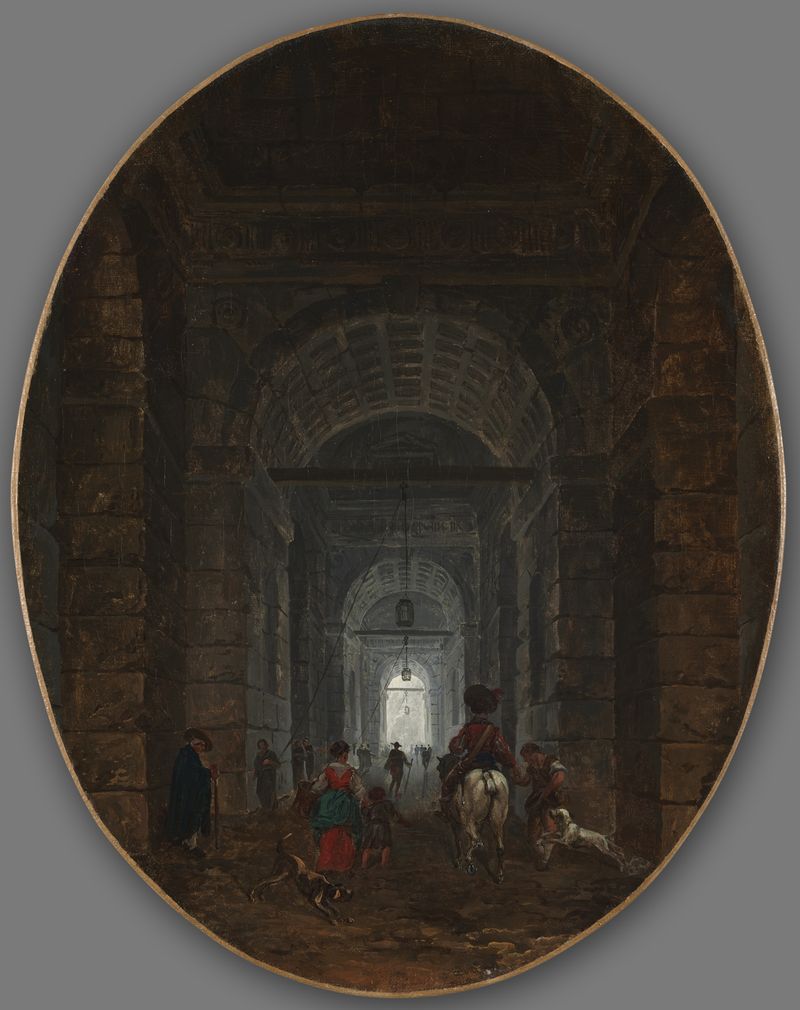
The Grotto of Posillipo
Hubert Robert

Architectural Capriccio with ruins of the Temple of Saturn and the Colosseum in the background
Hubert Robert
More Architecture Art
Browse all →
The statue of Liberty
Frédéric Auguste Bartholdi

View of Houses in Delft, Known as ‘The Little Street’
Johannes Vermeer

View of Houses in Delft, Known as ‘The Little Street’
Johannes Vermeer

The Cathedral in Rouen. The portal, Grey Weather
Claude Monet

The yellow house
Vincent van Gogh

The Church in Auvers-sur-Oise, View from the Chevet
Vincent van Gogh