
The Garden Gate — History & Facts
The sun spills through the archway, casting dappled light across the cobblestone path. A figure pauses at the garden gate, hand resting lightly on the wrought iron, as if caught between worlds. The lush greenery whispers secrets, promising both refuge and revelation beyond the threshold. Look to the left at the vibrant blooms, their colors splashing against the soft greens of the foliage.
The artist deftly uses light and shadow to guide your gaze; the sunlit petals seem to dance, while the shaded textures of ivy create a harmonious contrast. Notice how the gate itself, with its intricate design, draws the eye upward, inviting you to step closer into this serene pastoral moment. Yet, beneath the idyllic surface lies a poignant tension: the figure's hesitation at the entrance suggests a choice laden with significance. The garden symbolizes both beauty and the unknown, a crucible of transformation that reflects the spirit of discovery.
The interplay of light not only illuminates the scene but also hints at the duality of revelation—a blend of serenity and the thrill of what lies ahead. Painted between 1760 and 1765, this piece emerged during a transformative time in French art, as Hubert Robert was establishing himself within the context of the burgeoning Rococo movement. Living in Paris, he was influenced by the ideals of beauty and nature, often navigating between the romantic notions of pastoral life and the burgeoning interest in the picturesque. This period of his work offers a glimpse into both personal exploration and artistic development—capturing the essence of a world on the brink of change.
More Artworks by Hubert Robert
Browse all →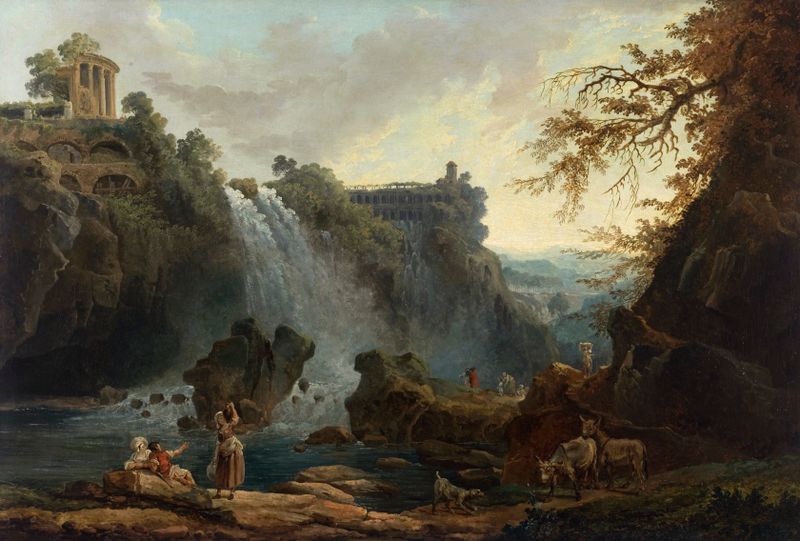
Les Cascatelles de Tivoli
Hubert Robert
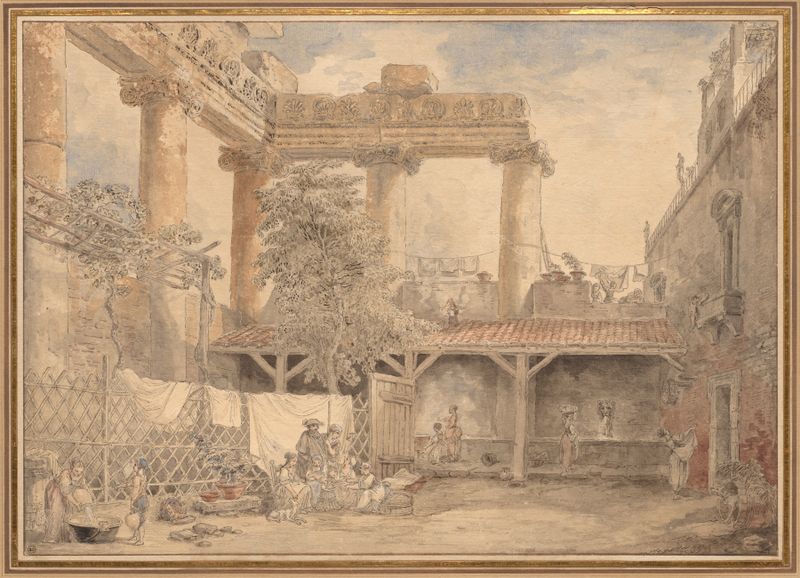
Roman Ruins, Villa Pamfili
Hubert Robert

The Rustic Bridge, Château de Méréville, France
Hubert Robert

The Portico of a Country Mansion
Hubert Robert

Architectural Capriccio
Hubert Robert

The Obelisk
Hubert Robert
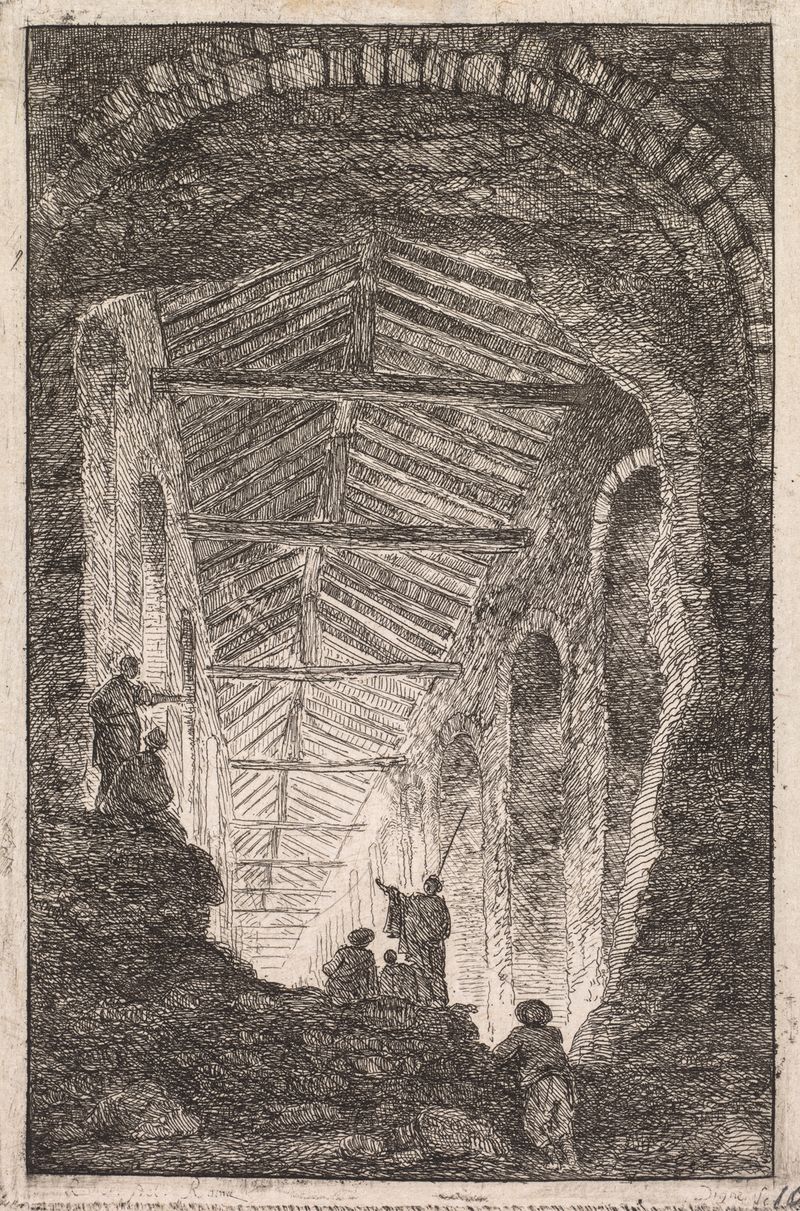
The Antique Gallery
Hubert Robert

L’incendie de l’Opéra, vu des jardins du Palais-Royal, le 8 juin 1781
Hubert Robert
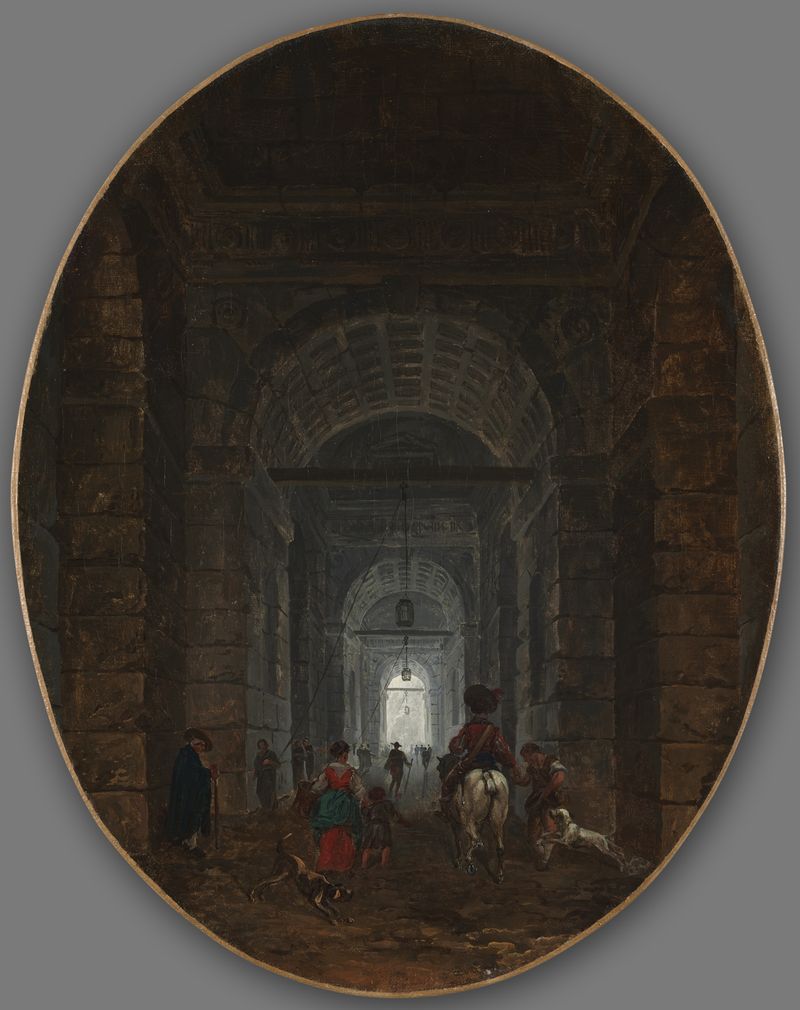
The Grotto of Posillipo
Hubert Robert

Architectural Capriccio with ruins of the Temple of Saturn and the Colosseum in the background
Hubert Robert





